

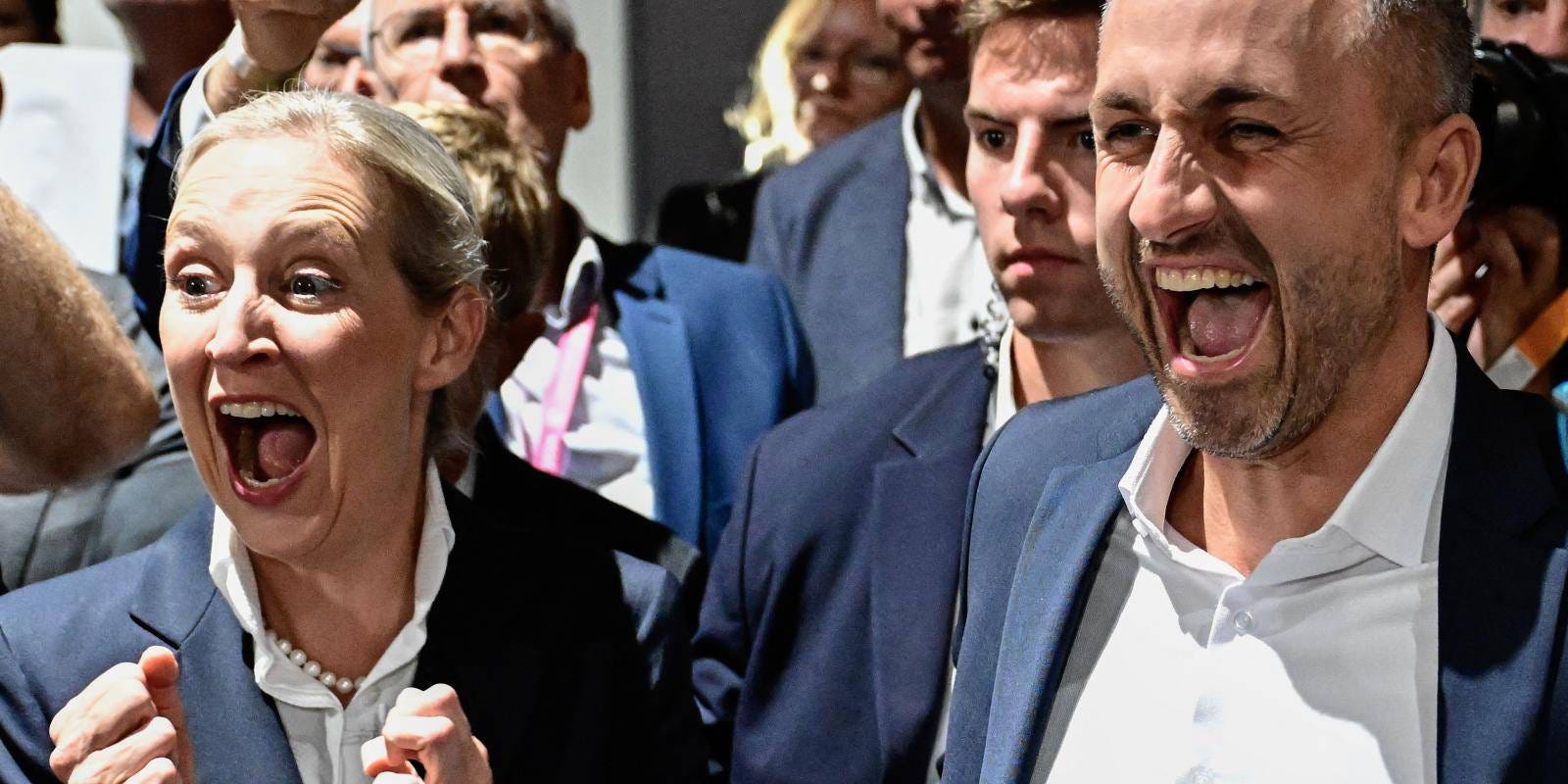
The right-wing populist party Alternative für Deutschland (AfD) delivered a major blow to Germany’s political establishment on Sunday, securing its strongest election result to date in the eastern state of Saxony-Anhalt. Known for its pro-Germany, anti-globalist, and anti-mass migration platform, the party secured an unexpected 43.8% of the vote.
Voter turnout surged to 77.8% from 60.3% in the 2021 election. Meanwhile, Chancellor Friedrich Merz’s Christian Democratic Union (CDU) suffered significant losses, dropping approximately 19 percentage points.
Despite the landslide victory, the AfD remains slightly shy of total control. Marion Mühlberger, a senior economist at Deutsche Bank, notes that the party will hold 39 seats in the 83-member legislature, falling three seats short of an absolute majority. The remaining 39 seats are split among the CDU, Social Democrats, Greens, and the Left.
This parliamentary math leaves the five seats held by the populist left-wing BSW party in a decisive “kingmaker” position.
What Comes Next? Two Potential Paths
With no party achieving an absolute majority, political strategists predict two likely outcomes for Saxony-Anhalt:
Option 1: An AfD Minority Government Tolerated by the BSW Under this scenario, the newly formed parliament would elect an AfD leader as state premier without entering a formal coalition. The BSW shares some political overlap with the AfD—including a desire to revamp energy policy, reassess sanctions against Russia, and reform public broadcasting—but BSW leadership has ruled out forming an official coalition. If the BSW abstains during crucial leadership votes, it could passively enable an AfD minority government to take power.
Option 2: A Snap Election If coalition negotiations stall or fail to produce a state premier, the region could face a snap election. AfD’s lead candidate in Saxony-Anhalt, Ulrich Siegmund, has already expressed a preference for this route, stating that the party is “not prepared to make far-reaching compromises to form a coalition.” For the AfD, a snap election could capitalize on the narrative that establishment parties are actively trying to keep them out of power, potentially driving them toward the absolute majority they barely missed.
Economic and National Implications
Analysts are split on how the AfD’s regional power could impact the broader economy. Deutsche Bank’s Mühlberger believes an AfD-led government in Saxony-Anhalt would have “materially detrimental ramifications,” potentially driving away direct investment and exacerbating skilled-worker shortages due to the party’s hardline immigration policies. However, because the state contributes less than 2% to Germany’s total GDP, she notes that structural economic damage is unlikely to spill over to the national level.
Conversely, a recent report by Nomura analyst Andrzej Szczepaniak suggests that global markets are currently less concerned with right-wing populism than they are with the high-spending policies associated with populist left-wing parties.
For Chancellor Friedrich Merz, the immediate challenge is containing the AfD’s momentum ahead of crucial state elections in Berlin and Mecklenburg-Vorpommern later this month. Current betting markets put the AfD’s odds of winning in Mecklenburg-Vorpommern at a staggering 82%, signaling that the political ground in Germany continues to shift rapidly.