

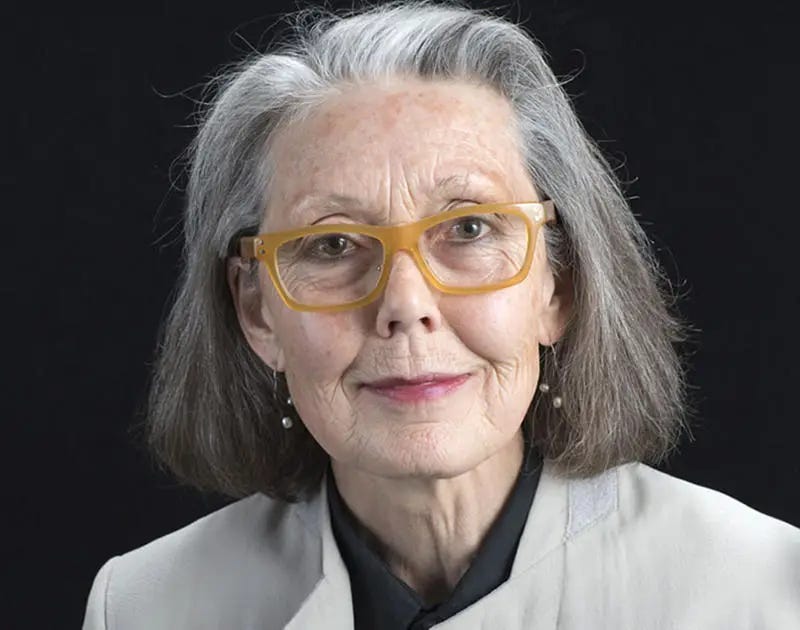
Canadian writer Anne Carson has won the 2026 Nobel Prize in Literature, recognizing a body of work that bridges ancient Greek literature and contemporary literary experimentation. The Swedish Academy announced the award on October 8, praising her “bold and inventive oeuvre” for creating new forms of contemporary literature through a playful dialogue with the classical tradition.
Carson, 76, is known for work that crosses conventional boundaries between poetry, prose, translation, scholarship and drama. Her award recognizes a distinctive literary approach that brings ancient myths and texts into conversation with modern questions of love, grief, identity and human experience.
A Literary Career That Defies Easy Classification
Born in Toronto in 1950, Carson developed an international reputation for writing that resists traditional categories. Her work often combines the precision of a classical scholar with the freedom of a poet, using fragments, visual elements, unusual structures and unexpected shifts between genres.
Rather than simply retelling ancient stories, Carson reinterprets them, connecting the literature of antiquity with contemporary life. Her writing has attracted readers across poetry, literary criticism, theater and translation.
The Nobel Prize places her among a select group of writers whose work has helped shape international literary culture. Carson is the 19th woman to receive the Nobel Prize in Literature, according to contemporary reporting. <Cite refs={[“turn520751search5”,“turn520751search6”]} />
‘Autobiography of Red’ and Other Notable Works
One of Carson’s best-known books is Autobiography of Red, published in 1998. Described as a novel in verse, it reimagines a Greek myth involving Herakles and Geryon as an unconventional coming-of-age story.
Her other influential works include Eros the Bittersweet, an exploration of desire through ancient Greek literature, and Nox, an experimental book reflecting on the death of her brother. She is also widely recognized for If Not, Winter: Fragments of Sappho, which translates the surviving fragments of the ancient Greek poet while preserving the significance of what has been lost.
Carson’s bibliography extends beyond conventional poetry collections. She has written essays, translations, dramatic works and pieces developed in collaboration with visual artists and performers. Her 2024 collection Wrong Norma is among her more recent publications. <Cite refs={[“turn520751search1”,“turn520751news8”,“turn520751search5”]} />
Classical Literature Meets the Modern World
Carson’s academic background in classics has been central to her writing. She studied at the University of Toronto, where she earned her bachelor’s degree in 1974, master’s degree in 1975 and doctorate in 1981. She later taught classics and literature at universities in Canada and the United States.
Her work draws heavily on ancient Greek texts, but its approach is rarely that of a conventional academic translation. Carson uses the structure, language and surviving fragments of classical works as starting points for new literary forms.
That combination has helped distinguish her writing from more traditional approaches to poetry and literary scholarship. The Swedish Academy’s citation emphasized precisely this interaction between classical tradition and contemporary invention. <Cite refs={[“turn520751search1”,“turn520751search3”]} />
A Surprised Reaction to the Nobel Announcement
Carson was reportedly taken by surprise when she learned she had won. Speaking to Icelandic broadcaster RÚV, she reacted with characteristic humor, saying, “Crazy, I think they’re all crazy,” when asked how she felt about the award.
She has a home in Iceland and also lives in Michigan, where she has continued her academic and literary work. The Nobel Prize includes an award of 12 million Swedish kronor, along with a medal and diploma. <Cite refs={[“turn520751news7”,“turn520751search5”,“turn520751search6”]} />
A Major Recognition for Canadian Literature
Carson’s Nobel win has drawn congratulations from Canadian leaders and academic institutions. Prime Minister Mark Carney described the award as a proud moment for Canada, highlighting Carson’s ability to bring ancient stories to new audiences and transform how readers think about literature.
The University of Toronto also celebrated the achievement, recognizing Carson as an alumna whose work reflects the influence of her classical studies while moving well beyond conventional academic boundaries.
The award adds a major international distinction to a career already recognized with honors including MacArthur and Guggenheim fellowships, two Griffin Poetry Prizes and the Order of Canada. <Cite refs={[“turn520751search4”,“turn520751search1”]} />
Carson’s Nobel Prize underscores the continuing place of literary experimentation in global culture. By bringing ancient texts into contact with contemporary forms, she has developed a body of work that challenges the boundaries between scholarship, poetry and storytelling—and invites readers to encounter the classical world in unfamiliar ways.