

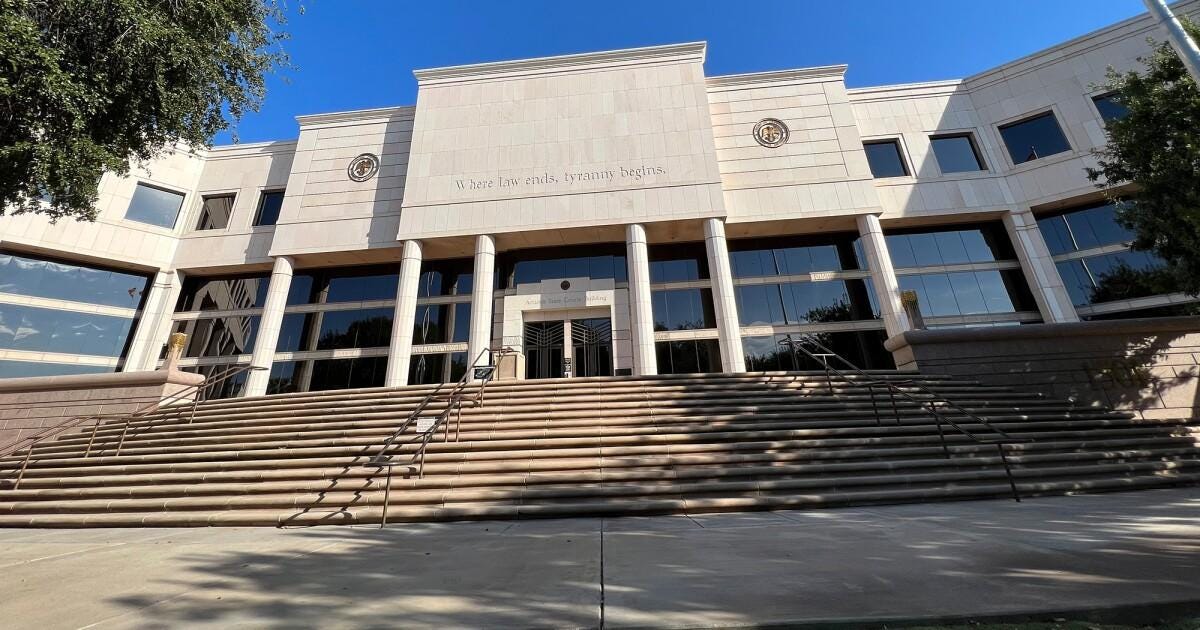
A cyberattack targeting Arizona’s court system exposed personal information tied to roughly 1.3 million people, along with tens of thousands of protection orders and more than 150,000 confidential foster-care records, according to state court officials.
The attack occurred Sept. 24 and appears to have begun after a court employee clicked a malicious link in an email, investigators have said. Court technology personnel detected the intrusion and shut it down roughly two hours later.
The Arizona Supreme Court said the attackers copied information from a backup server but did not alter or delete court records. Officials also said there is currently no evidence that the stolen information has been publicly distributed or used.
Millions of court records potentially compromised
The largest portion of the compromised information came from Arizona’s Fines/Fees and Restitution Enforcement, or FARE, program.
The system contains records involving people who were referred for collection of unpaid court-ordered fees, fines or restitution associated with traffic and criminal cases. The records span as far back as three decades.
Information copied during the attack included names, case numbers and Social Security numbers.
The breach did not affect everyone who has interacted with Arizona’s courts. The state said the affected FARE records relate specifically to people whose court-ordered financial obligations were referred to the collection program.
Protection orders and foster-care records also exposed
The incident extends beyond financial and criminal court information.
Hackers also obtained records associated with nearly 30,000 active and inactive orders of protection. Such records can contain particularly sensitive information involving people seeking protection from alleged abusers.
More than 150,000 Foster Care Review Board reports dating to 2010 were also copied.
Those reports are generated in cases involving children in the state’s foster-care system and provide recommendations to juvenile court judges. They can contain information about children, parents, other participants in dependency proceedings and the circumstances surrounding individual cases.
For people whose protective-order or child-welfare information may have been exposed, the potential consequences extend beyond identity theft concerns.
One Arizona woman who has a protective order told ABC15 that learning her personal information may have been copied forced her to reconsider how she protects herself and her family.
Attack was stopped within hours
Arizona court technology staff discovered the intrusion on Sept. 24 and took steps to stop it approximately two hours after it began.
The court system subsequently began notifying individuals whose information officials believe was copied. The Arizona Supreme Court has also established an online verification system that allows people referred to the FARE debt-collection program to check whether their information was affected.
Officials have emphasized that the attack has not disrupted court proceedings.
“No records were altered or deleted,” according to the court’s description of the incident, and information involving jurors, witnesses and court employees was not among the stolen data identified by investigators.
FBI investigation continues
Arizona Supreme Court Chief Justice Ann Scott Timmer said the court system immediately engaged with the FBI following the attack.
In an initial Sept. 25 announcement, Timmer said court officials were working to identify affected individuals while cooperating with federal investigators. The court initially withheld additional technical details to avoid compromising the investigation.
The attack does not appear to have involved ransomware, according to earlier reporting on the incident, and no hacking group has publicly claimed responsibility.
The investigation is continuing, and officials have not established that the copied information has been misused.
A warning for government systems
The breach highlights the risks faced by government agencies that maintain enormous archives of sensitive personal information.
In Arizona’s case, the compromised records span decades and include financial, criminal, family and child-welfare information. The incident also demonstrates how a single phishing message can provide an entry point into systems containing millions of records.
For affected residents, Arizona court officials are urging people to pay attention to breach notifications and use the state’s verification tools when appropriate.
The court system says its official cybersecurity information hub will remain the primary source for updates as the investigation continues.