

Providing weapons to Taiwan to protect its freedom and secure its role as a global semiconductor provider is squarely in the national interest of the United States, a senior Taiwanese diplomat stated on Saturday.
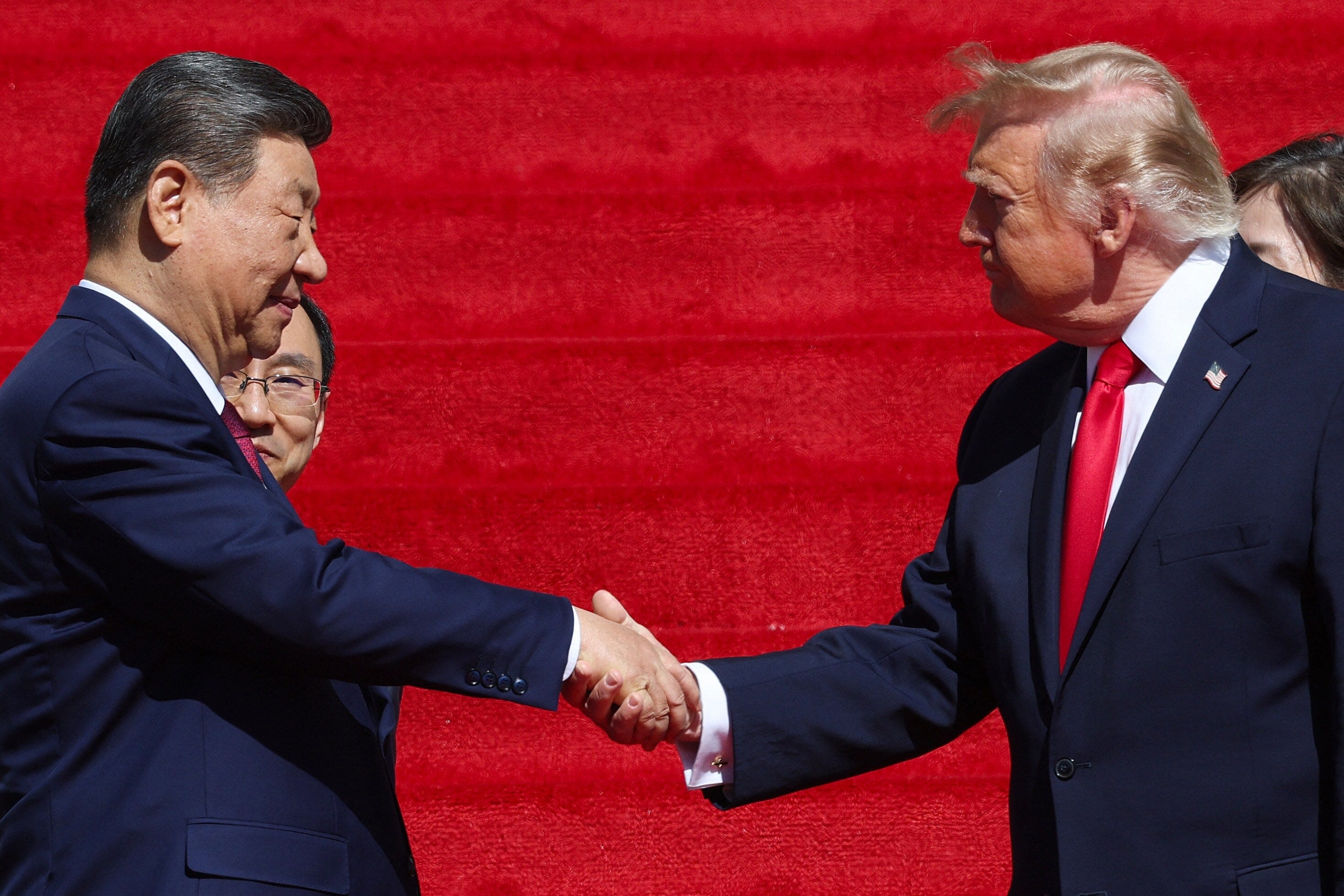
The comments follow the conclusion of a three-day summit between U.S. President Donald Trump and Chinese President Xi Jinping in Washington. While the highly publicized meeting showcased personal diplomacy, it ended with no major public breakthroughs on contentious issues, including the status of Taiwan [cite: 1.1.4]. Beijing views the democratically governed island as its own territory, and Xi reportedly told Trump he hoped the U.S. would adhere to the “correct position” of opposing Taiwan’s independence.
Speaking to reporters in Taipei, Deputy Foreign Minister Francois Wu questioned whether yielding on Taiwan would benefit Washington. Maintaining military sales, giving the island the capability to defend itself from Chinese rule, and “allowing Taiwan’s semiconductor industry to continue contributing to the world, these are important US interests,” Wu emphasized.
The Stakes for Advanced Chips
Taiwan is the primary global producer of the advanced semiconductors that power the ongoing artificial intelligence revolution.
The island’s government, which vehemently rejects Beijing’s sovereignty claims, has been in “continuous communication” with Washington regarding the summit [cite: 1.1.4]. The Trump administration previously approved a historic $11 billion arms sale to Taiwan in December, and a second package worth roughly $14 billion is currently pending.
Following a meeting with Xi in Beijing this past May, Trump indicated he was holding the pending weapons package in abeyance [cite: 1.1.4]. As of Saturday, he had not publicly clarified his stance on the pending sales following the Washington summit [cite: 1.1.4]. Wu acknowledged the uncertainty, noting that the government must pay close attention, particularly as Trump and Xi are expected to meet twice more this year at the APEC and G20 summits.
Assurances from the U.S.
Despite the lack of public announcements from the Oval Office, U.S. diplomats have moved to reassure Taipei.
David Perdue, the U.S. ambassador to China, told CNBC on Friday that there has been no change in Trump’s Taiwan policy [cite: 1.1.4]. Perdue pointed specifically to the 1979 Taiwan Relations Act, which legally mandates the U.S. to provide arms for the island’s self-defense.
“We want peace across the strait. We don’t want coercion. We don’t support independence and we think that, you know, President Xi has gotten that message,” Perdue said. “President Trump has shown respect and listened to their side of that argument”.
Meanwhile, Beijing remains steadfast in its position. On Saturday, China’s state-run People’s Daily published a commentary reiterating that Taiwan is “the core of China’s core interests and the first unbreakable red line in China-US relations”.