

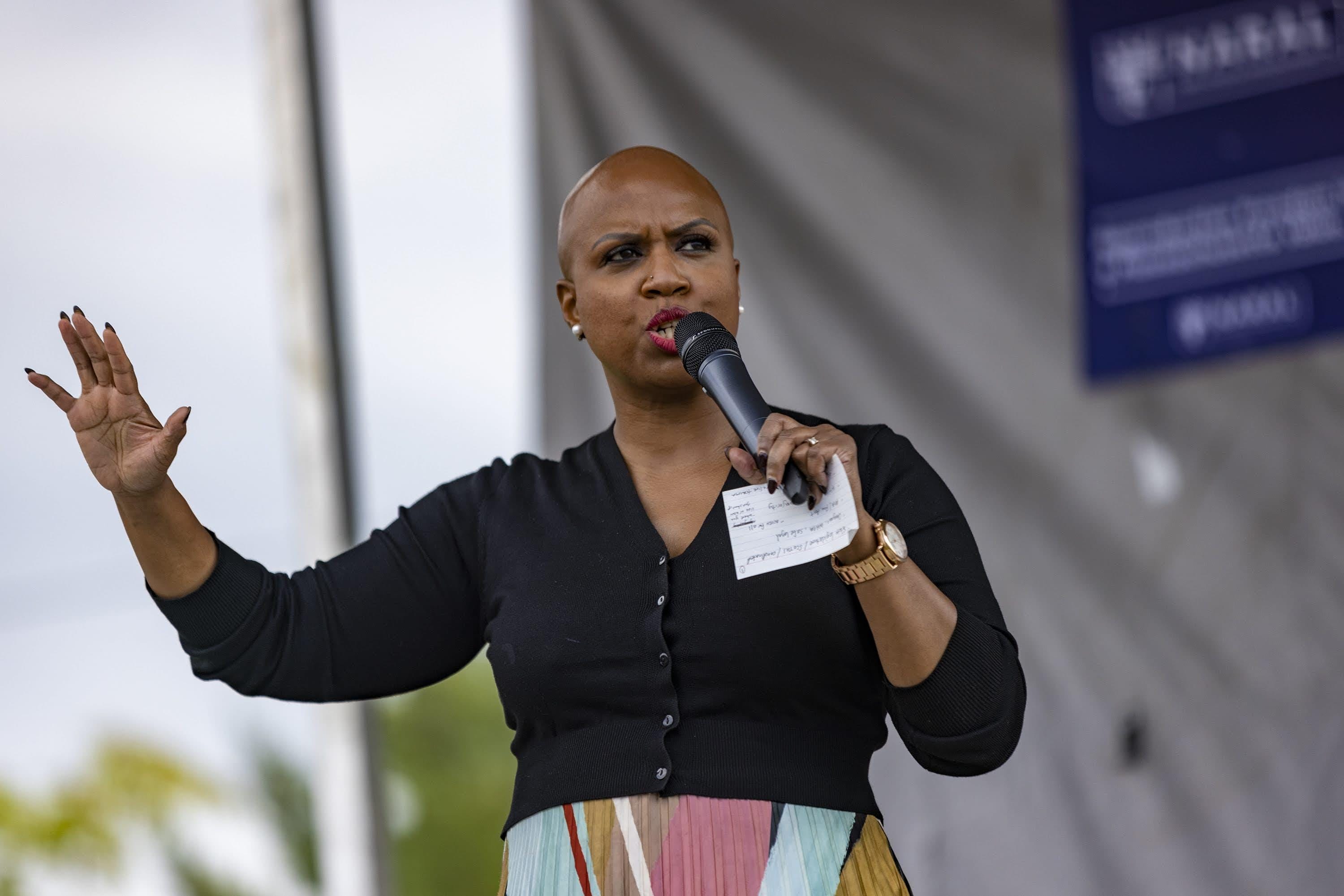
Democratic Rep. Ayanna Pressley of Massachusetts has unveiled a sweeping 13-point legislative agenda for the incoming Democratic congressional majority, placing reparations for Black Americans and expanded abortion access among her leading priorities.
Pressley is calling on Democrats to use their new control of Congress to advance an ambitious package of progressive policies, including Medicare for All, abolishing Immigration and Customs Enforcement (ICE), universal childcare, paid family leave and restrictions on data center development.
Her proposal also calls for extending Temporary Protected Status (TPS) for certain immigrant populations, lowering housing costs, ending U.S. involvement in the Iran conflict and blocking American weapons transfers to Israel.
In a November 15 social media post, Pressley challenged President Donald Trump to veto the proposals if he opposes them, arguing that such action would make his position clear to voters.
“We need to show people what Democrats can do with our majority,” Pressley wrote. “Reparations. Abortion justice. Medicare for All. Abolishing ICE. Childcare. Paid leave. And more.”
She added that if Trump wants to veto the proposals, Americans will know where he stands.
Reparations and H.R. 40 lead Pressley’s agenda
One of Pressley’s most prominent priorities is advancing federal reparations legislation through H.R. 40, the Commission to Study and Develop Reparation Proposals for African Americans Act.
The legislation would establish a federal commission to examine slavery, its lasting consequences and the effects of racial discrimination, while developing proposals for possible reparative measures.
Pressley has supported the legislation for years and said she wants the incoming Democratic majority to bring it to a floor vote.
At an East Boston town hall on November 17, she described reparations as part of a broader effort to address the historical and economic consequences of slavery.
“Black folks, especially Black women, delivered this historic Democratic majority, and it’s time Democrats deliver for Black America,” Pressley said.
H.R. 40 is a proposal to establish a commission and develop recommendations; it does not itself authorize direct federal payments to individuals.
The issue remains politically contentious, with critics questioning the fairness, eligibility criteria and constitutional implications of race-based compensation programs. The Justice Department has separately challenged a reparations initiative in Evanston, Illinois, arguing that its race-based eligibility rules violate federal law.
Pressley pushes expanded abortion access
Pressley also wants Democrats to prioritize what she calls “abortion justice,” including restoring federal abortion protections and expanding access to reproductive healthcare.
Her agenda calls for overturning the Supreme Court’s 2022 Dobbs v. Jackson Women’s Health Organization decision, which eliminated the federal constitutional protection for abortion established under Roe v. Wade.
She also supports repealing the Hyde Amendment, which generally restricts the use of federal funds for abortion services, and protecting access to contraception and in vitro fertilization (IVF).
Pressley plans to continue advancing her Abortion Justice Act, legislation intended to address financial, geographic and other barriers to reproductive healthcare.
She is also set to co-chair the Reproductive Freedom Caucus in the incoming Congress.
Medicare for All and housing affordability
Healthcare reform is another central component of Pressley’s platform.
She is calling for Medicare for All, a proposal that would establish a federally administered healthcare system intended to provide coverage to all Americans.
Pressley argues that healthcare costs and gaps in insurance coverage place an unfair financial burden on families, particularly those with lower incomes.
Her housing agenda calls for expanding affordable housing, increasing opportunities for homeownership and addressing rising rents.
She argues that housing costs have become an urgent problem for working families, with many households spending an excessive share of their income on rent and facing the risk of eviction or homelessness.
Pressley calls for abolishing ICE
One of the most controversial proposals is Pressley’s demand to abolish Immigration and Customs Enforcement.
The congresswoman argues that ICE cannot be reformed and has called for ending the agency, terminating qualified immunity protections for its agents and changing federal immigration enforcement policies.
She also wants Congress to extend Temporary Protected Status for immigrants from Haiti, Venezuela, El Salvador and other countries.
TPS allows eligible nationals of designated countries to remain temporarily in the United States and receive work authorization when conditions in their home countries make a safe return difficult.
The proposal places Pressley at odds with the Trump administration’s immigration enforcement agenda, which emphasizes arrests, detention and deportation of people in the country unlawfully.
The administration has defended ICE and its officers, arguing that the agency plays an essential role in enforcing federal immigration law and removing individuals who pose public safety risks.
Iran, Israel and foreign policy priorities
Pressley’s platform also includes significant changes to U.S. foreign policy.
She wants Congress to end what she calls Trump’s war with Iran and supports the Block the Bombs Act, which seeks to restrict U.S. weapons transfers to Israel.
Pressley has accused the Israeli government of continuing to commit serious abuses against Palestinians in Gaza despite the ceasefire. Her position reflects a growing divide within the Democratic Party over U.S. military assistance to Israel and the direction of American policy in the Middle East.
The proposals would place additional pressure on the administration’s foreign policy agenda, particularly regarding military support for Israel and U.S. involvement in the region.
Childcare, paid leave and restrictions on data centers
The remaining priorities include universal childcare, paid family leave, higher wages and workforce development.
Pressley also wants Congress to address Black unemployment and pursue policies aimed at reducing economic inequality.
Another notable proposal calls for a federal moratorium on new data centers until Congress establishes comprehensive artificial intelligence regulations and stronger environmental protections.
She argues that the rapid expansion of AI infrastructure requires safeguards addressing energy consumption, environmental impacts and civil rights.
Her final priority is increased congressional oversight and investigations into alleged corruption and misconduct by the Trump administration.
Can Democrats overcome a presidential veto?
Pressley’s strategy would put many of the most divisive progressive proposals directly before President Trump.
However, there is a major legislative obstacle: Democrats would need a two-thirds majority in both the House and Senate to override a presidential veto.
That means even if Democrats pass the proposals through Congress, they may not become law without substantial bipartisan support.
The agenda could therefore serve two purposes: advancing progressive policy priorities and creating a political contrast with Trump and congressional Republicans.
Pressley has framed the effort as a test of what Democrats can accomplish with their new majority.
Her challenge to Trump is straightforward: Democrats should pass the legislation and make the president decide whether to sign or reject it.
Whether the incoming Congress can translate the platform into law remains uncertain, but Pressley’s announcement signals that the party’s progressive wing intends to push aggressively on racial justice, reproductive rights, immigration and economic policy.