

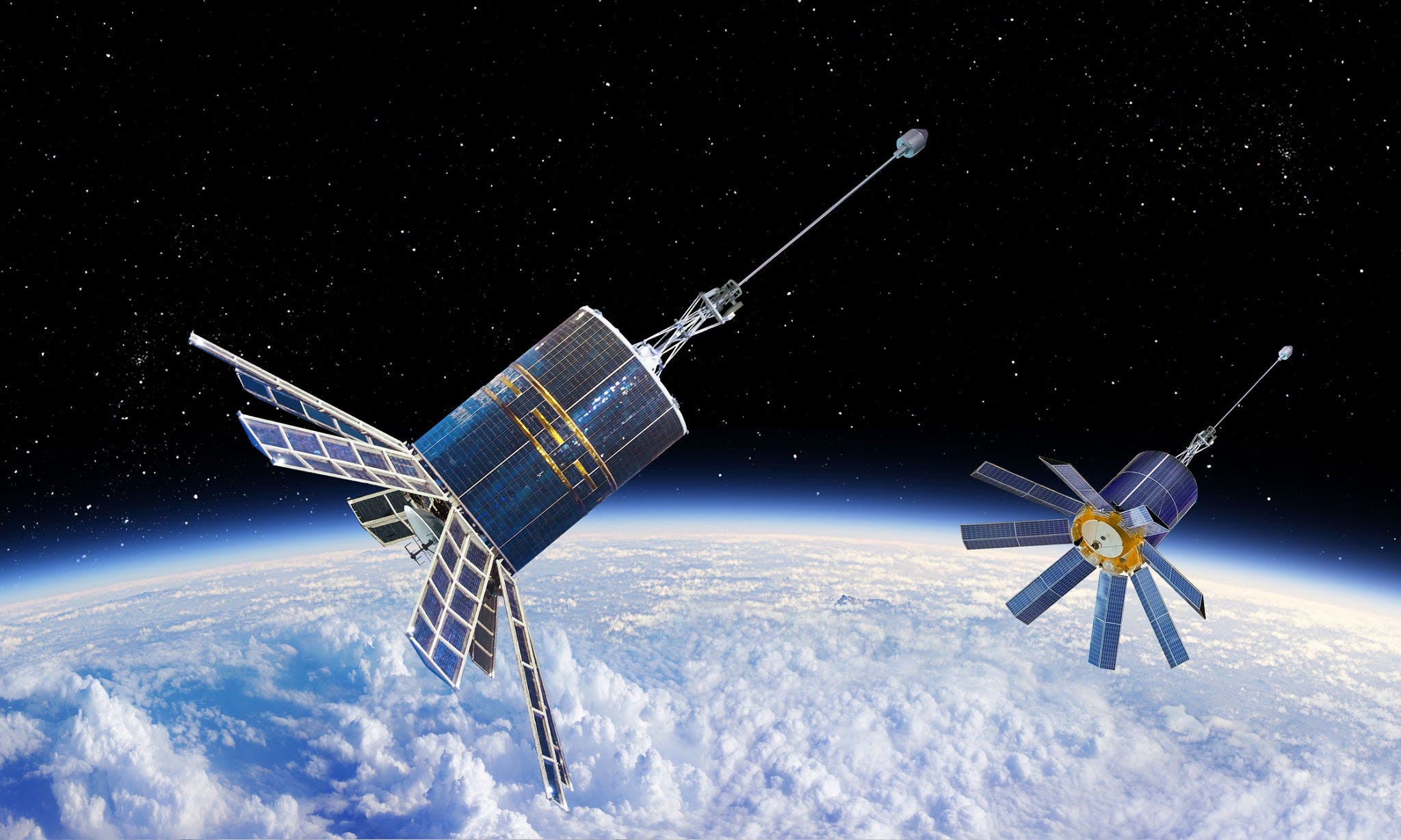
The United States has publicly confirmed for the first time that it has deployed weapons in space, prompting swift and severe warnings from both China and Russia about the weaponization of the cosmos.
The historic disclosure was made by U.S. Secretary of the Air Force Troy Meink during the Air, Space, and Cyber Conference in Maryland. Meink announced that the U.S. military has fielded “on-orbit space control weapons” designed to defend American and allied forces against hostile actions by adversaries.
While Meink deliberately declined to provide specific details regarding the exact capabilities, testing, or deployment timeline of these systems to preserve their deterrent value, he emphasized that the weapons are essential for protecting the Joint Force in an increasingly contested domain. The U.S. Space Force later clarified that “space control” involves using both kinetic and non-kinetic means to disrupt, degrade, or destroy adversarial space capabilities if necessary.
Backlash from Beijing and Moscow
The announcement immediately drew fire from Washington’s primary geopolitical rivals, who cautioned against turning orbit into an active battlefield.
In Beijing, China’s Foreign Ministry strongly condemned the deployment. Spokesperson Guo Jiakun urged the U.S. to “stop preparing for war in outer space” and warned that expanding its military footprint could trigger a dangerous arms cycle.
“China stands for the peaceful use of outer space and keeping it safe, and opposes any arms race in outer space or any attempt to weaponize it and turn it into a warzone,” the Chinese foreign ministry stated.
Russian officials echoed these sentiments shortly after, calling for the broad international demilitarization of space and urging the United States to reverse its course.
A Shifting Battlefield
The friction highlights a fundamental shift in modern military strategy. Satellites are now the indispensable backbone of global communications, GPS navigation, missile warning systems, and intelligence gathering. Both Washington and its rivals recognize that disabling these assets could quickly cripple an adversary’s military operations on Earth.
U.S. defense officials have increasingly pointed to the counter-space programs of China and Russia as the primary catalyst for America’s orbital military expansion. Earlier this year, the U.S. accused Russia of developing a space-based anti-satellite weapon, while also noting China’s aggressive military modernization efforts in orbit.
While the 1967 Outer Space Treaty bans placing weapons of mass destruction (WMDs) in orbit, it does not explicitly prohibit conventional weapons or systems designed to jam, intercept, or target other satellites.
As the lines between deterrence and provocation continue to blur, international defense experts warn that the first shots of any future major conflict could well be fired hundreds of miles above the Earth’s surface.