

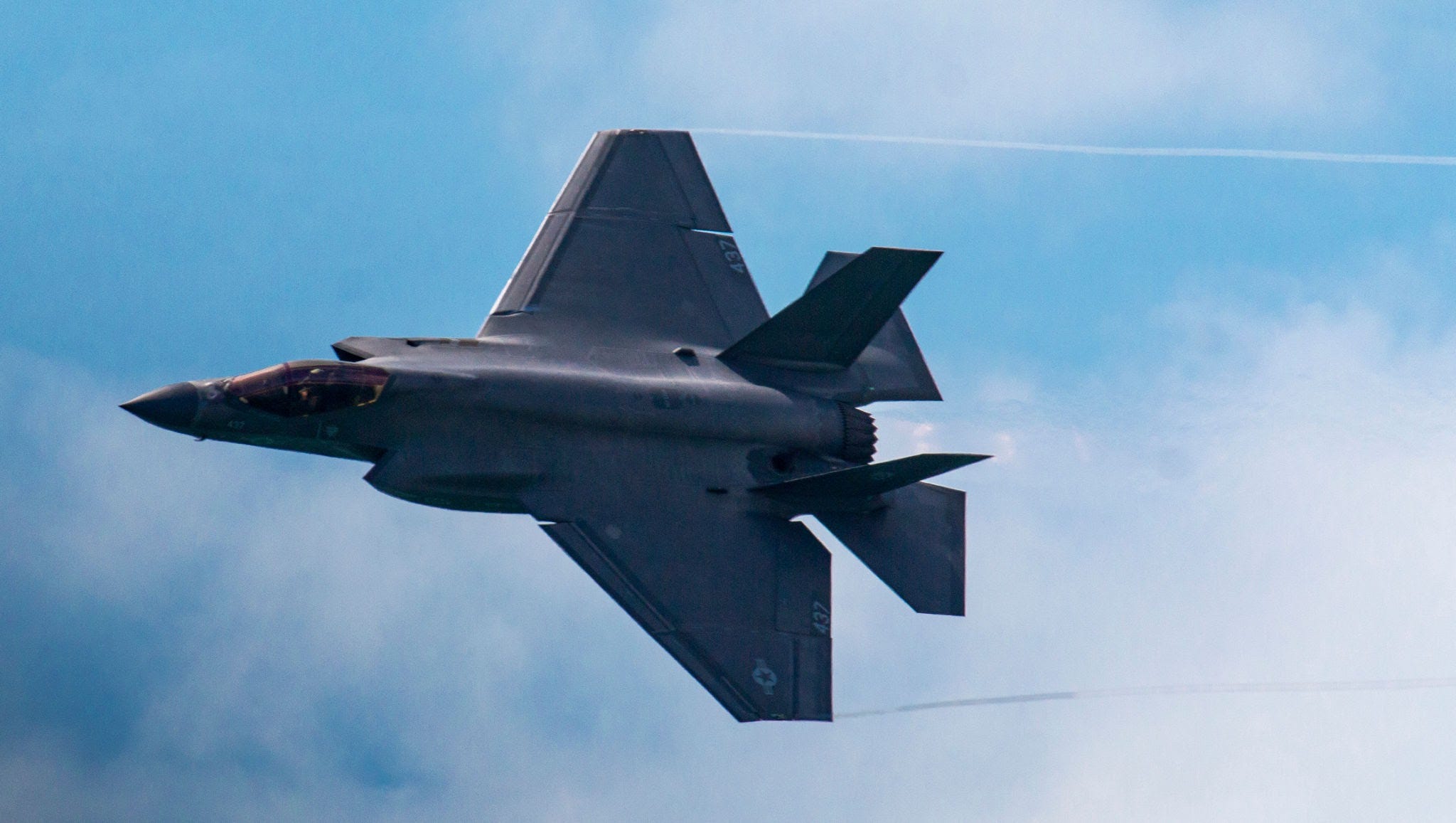
The Pentagon is scrambling to retrieve sensitive components from an F-35 stealth fighter jet after the parts were inexplicably diverted to Hong Kong and seized by the Chinese government.
The shipping blunder, which occurred in late May, involved an F-35 cockpit canopy and a weapons-bay door that were being transported by commercial carrier UPS from Australia to the United States for repair or disposal. Both components, manufactured by Lockheed Martin, are coated with highly classified radar-absorbing material designed to enhance the aircraft’s stealth capabilities.
En route to the U.S., the shipment landed in South Korea before being unexpectedly rerouted to Hong Kong. It remains unclear whether the diversion was accidental or a deliberate act of espionage. However, Chinese authorities swiftly took possession of the parts and have not returned them.
Lawmakers Demand Answers
The Pentagon’s F-35 Joint Program Office acknowledged the incident, stating it is actively working with U.S. authorities and industry partners to retrieve the hardware and establish safeguards to prevent future occurrences.
The disclosure has triggered intense scrutiny on Capitol Hill, with multiple congressional panels—including the House Armed Services and Foreign Affairs committees—launching investigations. The incident has raised major concerns that Beijing could reverse-engineer the radar-absorbing materials or study the physical components to refine their understanding of America’s most advanced fighter jet.
The timing of the disclosure also proved politically awkward, coming just as Chinese President Xi Jinping was hosted by President Donald Trump for a state visit in Washington.
“The juxtaposition is hard to miss,” Senator Elissa Slotkin (D-Mich.) told Bloomberg. “The Chinese are holding some of our most sensitive technology, and we are rolling out the red carpet for their president”.
Supply Chain Vulnerabilities
While Australian Defense Minister Richard Marles downplayed the risk, describing the unserviceable parts as “low risk for exploitation,” experts warn that physical access to actual components provides a significant advantage over merely stealing digital blueprints.
The incident highlights glaring vulnerabilities in the F-35’s global supply chain, which relies heavily on commercial shipping providers to move equipment between allied nations. A 2023 Government Accountability Office report notably found that more than one million F-35 parts had gone missing across the program over a five-year period.
UPS has reported the diversion to the State Department’s Directorate of Defense Trade Controls, which oversees the enforcement of U.S. export control laws. Meanwhile, the Chinese Foreign Ministry stated it was “not aware of the situation”.