

A Dining Hall Menu Sparks Outrage
Columbia University faced intense criticism after a campus dining hall menu displayed the words “October 7th Blush Sauce” on Wednesday, October 7, the third anniversary of the Hamas-led terrorist attacks against Israel.
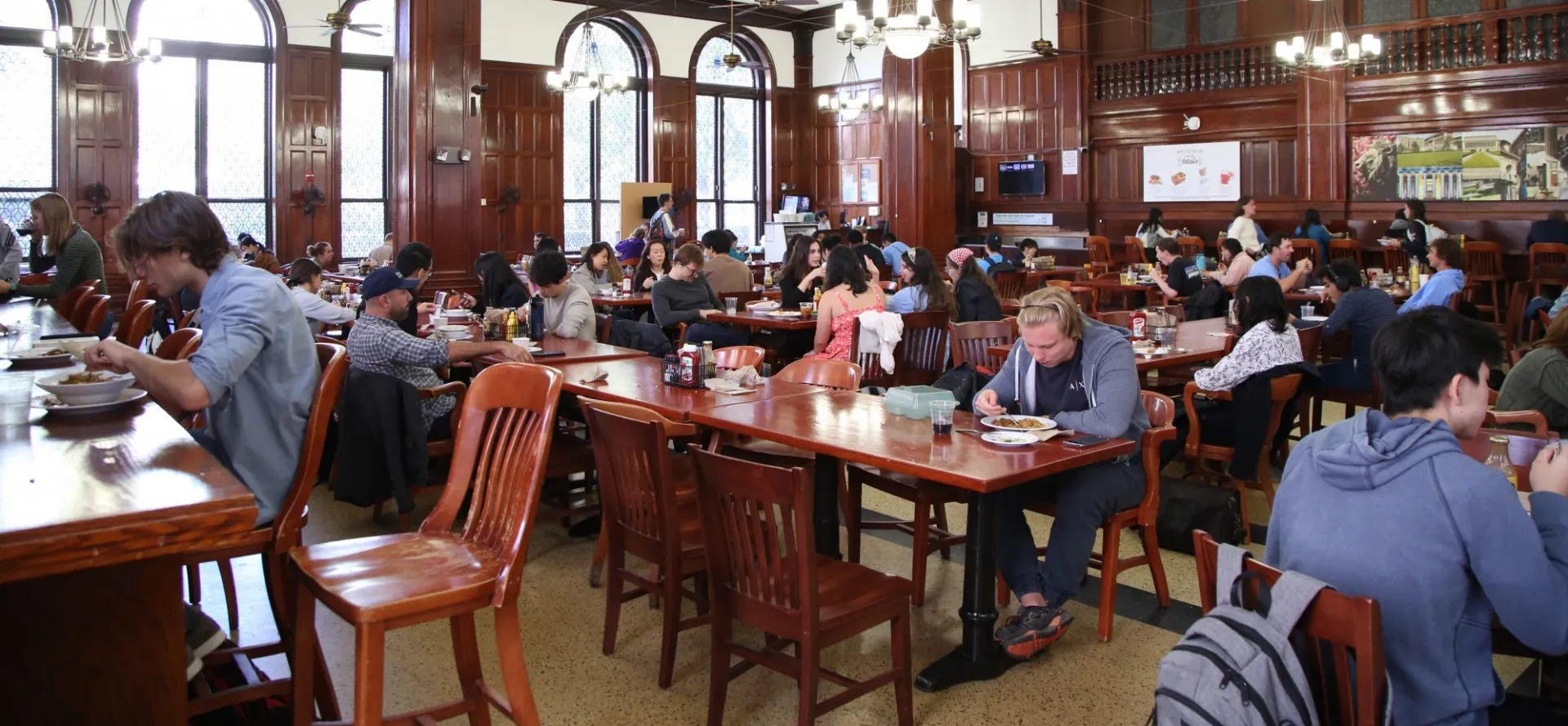
The label appeared at the pasta station in John Jay Dining Hall, where blush sauce—a tomato-based pink sauce—was offered alongside marinara, turkey bolognese and garlic oil.
The date was attached to the sauce’s name on the printed menu, prompting questions about how the wording had appeared on such a sensitive day. A photograph shared on social media by Haaretz correspondent Simone Saidmehr quickly spread online, drawing widespread attention and criticism. <Cite refs={[“turn915643search0”,“turn915643search1”]}/>
Columbia Says the Label Was a Mistake
Columbia Dining officials rejected the suggestion that the wording was intended to reference the October 7 attacks.
Vicki Dunn, the university’s assistant vice president of Columbia Dining, described the incident as an “unfortunate mistake.” She explained that the sauce had been scheduled for that day and that the date was inadvertently carried over when the meal information was copied into a menu template.
Dining staff removed the signs after discovering the error, according to the university. Columbia also apologized for the confusion and concern the label caused.
The university said it would introduce an additional review step, with a team member checking menus before they are posted. <Cite refs={[“turn915643search0”,“turn915643search1”]}/>
Social Media Backlash Intensifies
The explanation did little to stop the online reaction. Critics questioned how the date had remained attached to a single sauce and called for accountability from the university.
Some commenters interpreted the label as an offensive reference to the bloodshed of October 7, 2023. Others demanded disciplinary action against whoever prepared or approved the menu.
However, the university has maintained that the wording was accidental. The public evidence cited in reporting does not establish that the label was deliberately created to mock the victims or commemorate the attacks.
The episode illustrates how seemingly routine administrative mistakes can become major controversies when they intersect with an ongoing conflict and a date of profound significance to affected communities.
The Significance of October 7
On October 7, 2023, Hamas-led militants attacked Israel, killing approximately 1,200 people and taking 251 hostages, according to figures cited by Columbia’s student newspaper. The attack triggered the war in Gaza and became a defining event in the conflict.
For Jewish students and many others, the anniversary is a day of mourning and remembrance. The meaning of the date also remains deeply contested amid continuing disagreements over Israel’s military campaign, Palestinian suffering and the future of the region.
That context helps explain why the dining hall label generated such a strong reaction, regardless of the university’s stated explanation.
Pro-Palestinian Demonstration Adds to Campus Tensions
The menu controversy unfolded amid other campus activity related to the anniversary.
More than 70 demonstrators gathered near Columbia’s campus gates for a protest organized by the university’s Students for Justice in Palestine chapter. The demonstration was advertised under the title “3 Years of Genocide 78 Years of Resistance,” according to the Columbia Daily Spectator.
The student organization had been suspended by Columbia in 2023. The protest focused on opposition to Israel’s actions and the war in Gaza, reflecting the continuing divisions on campus over the conflict. <Cite refs={[“turn915643search1”,“turn915643search0”]}/>
The protest and menu incident were separate events. The available reporting does not establish a connection between the demonstration and the mislabeled sauce.
Columbia’s Longer History of Antisemitism Controversies
Columbia has faced national scrutiny over its handling of antisemitism complaints and campus demonstrations since the October 7 attacks and the subsequent war in Gaza.
The Trump administration reached a $221 million settlement with the university in 2025 involving federal claims related to alleged discrimination, including allegations concerning the treatment of Jewish students and faculty. The agreement became part of a broader dispute over campus policies, civil rights enforcement and federal funding.
The dining hall incident has renewed attention to the university’s campus climate. Still, the menu error itself does not establish that the label reflected an institutional policy or an intentional act of antisemitism.
A Mistake That Became a National Controversy
Columbia says it removed the signs, apologized and plans to add a review step for future menus. Those measures address the university’s stated explanation: an error in copying information into a template.
The backlash, however, reflects the sensitivity surrounding October 7 and the broader debate over how universities respond to antisemitism, political activism and the Israel-Gaza conflict.
The central distinction remains important: the menu label was real, the university acknowledged the mistake, and the resulting outrage was substantial. But Columbia has denied that the wording was an intentional reference to the attacks, and the available reporting has not established otherwise.