

Defense Challenges James’ Appointment
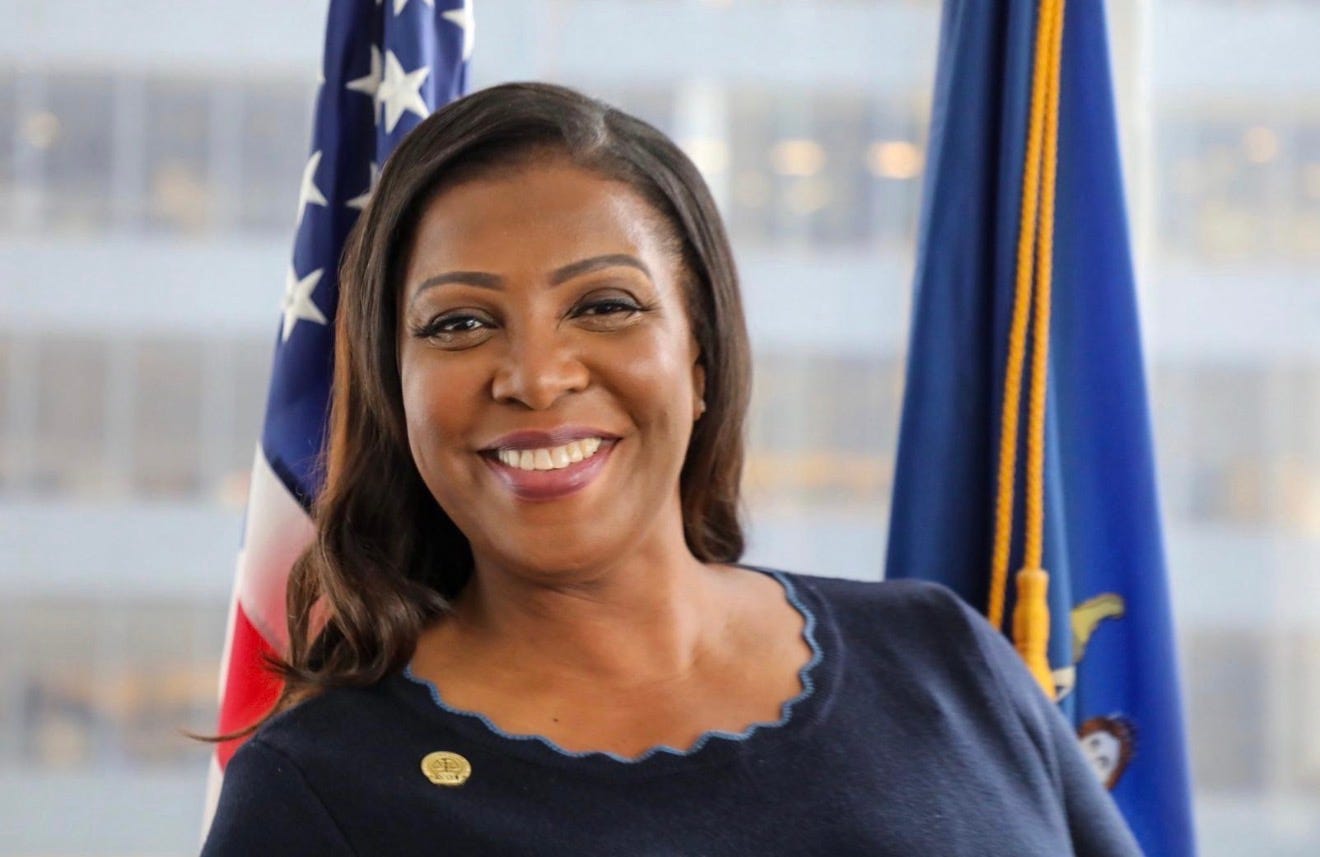
An attorney for Gillio Lopes, one of the men accused in a high-profile sexual assault case involving Cornell University fraternity members, is seeking to remove New York Attorney General Letitia James from her role as special prosecutor.
In a court filing submitted in Albany, attorney Andrew Miltenberg asked a judge to overturn Gov. Kathy Hochul’s appointment of James and require the selection of another prosecutor without actual or perceived conflicts of interest.
The challenge centers on a social media statement James published on September 28, before her appointment. In the post, she expressed support for the woman identified in court documents as Jane Doe, who alleges that she was drugged and sexually assaulted by members of Cornell’s Chi Phi fraternity in October 2024.
Miltenberg argues that James’ statement suggests she had already formed an opinion about the allegations before taking charge of the criminal investigation.
The filing seeks to ensure that Lopes and the other men named in the case receive a fair investigation. The court challenge is an allegation by the defense, not a judicial finding that James is biased. <Cite refs={[“turn181312search0”,“turn181312search1”]}/>
The Social Media Post at the Center of the Dispute
James wrote on September 28 that what Jane Doe had experienced was “horrific and unacceptable,” adding that survivors were not alone and that people stood with them.
The statement became the central point of the defense’s effort to disqualify her.
Miltenberg contends that the language went beyond general support for survivors and could reasonably be interpreted as accepting Jane Doe’s account before investigators had reviewed all the evidence.
James has not publicly addressed the specific allegations in the court filing. When previously asked about her social media post, she declined to discuss it.
Following her appointment, James said her office would conduct a process guided by facts and law. Her office has also said it remains committed to a thorough and independent investigation.
The dispute raises a question that extends beyond this case: how prosecutors can express concern for alleged victims while maintaining the appearance and reality of impartiality in a pending criminal investigation. <Cite refs={[“turn181312search0”,“turn181312search2”]}/>
Hochul Defends the Decision to Appoint James
Hochul has stood by her decision to assign the investigation to the attorney general’s office.
The governor said she had confidence that James would examine the evidence and reach conclusions based on the facts and the law.
Hochul appointed James after expressing a loss of confidence in the handling of the case by Cornell University Police and Tompkins County District Attorney Matthew Van Houten, who had initially declined to bring criminal charges.
The appointment followed renewed public scrutiny after Jane Doe filed a civil lawsuit against seven fraternity members, the fraternity, Cornell University, a local bar and her sorority.
The criminal investigation was subsequently reopened. No criminal charges had been filed as of the latest reporting.
The legal challenge to James’ appointment adds another layer to a case already involving questions about law enforcement decisions, university discipline and the rights of the accused. <Cite refs={[“turn181312search1”,“turn181312search0”,“turn181312search2”]}/>
What Happened at the Cornell Fraternity House?
Jane Doe alleges that on the night of October 19, 2024, she was given drugs and alcohol to the point of incapacitation and then sexually assaulted over several hours at the Chi Phi fraternity house.
She was 20 at the time, according to reporting on the lawsuit. Her complaint alleges that fraternity members took advantage of her inability to consent.
Lopes has denied wrongdoing. His attorney disputes the allegations and argues that the sexual activity was consensual. Miltenberg has also challenged Jane Doe’s account, saying it changed significantly over time.
Jane Doe’s attorney, Thomas Giuffra, has rejected the defense’s characterization of the events, arguing that she was intoxicated and incapable of consenting.
These remain disputed allegations. The civil lawsuit and reopened investigation have not, by themselves, established criminal guilt.
University Discipline and the Fight Over Consent
The case has also drawn attention to Cornell’s internal disciplinary process.
According to Lopes’ attorney, the university found Lopes responsible for participating in sexual activity when Jane Doe was “incapable of conveying consent.” He received a one-year suspension and was required to complete an educational restorative class and submit an essay. He later continued his education at Cornell.
That university finding is separate from a criminal conviction. The criminal investigation had initially been closed without charges, and prosecutors have since reopened it.
The distinction matters because university disciplinary proceedings and criminal prosecutions operate under different procedures and standards of proof. The outcome of one does not automatically determine the outcome of the other.
The university’s response, including its handling of fraternity members and its disciplinary decisions, has become a major focus of criticism since the civil suit brought the allegations back into public view. <Cite refs={[“turn181312search0”,“turn181312search1”,“turn181312news6”]}/>
Defense Says Public Opinion Has Already Condemned the Accused
Miltenberg has argued that the case’s intense public attention threatens his client’s ability to receive fair treatment.
He pointed to online criticism and a widely circulated campus confrontation in which a woman challenged Lopes about his presence at Cornell.
The attorney said public commentary had already damaged the reputations of Lopes and the other men named in the lawsuit, even though the criminal investigation remains unresolved.
The allegations have sparked demonstrations and broader discussions about sexual violence on college campuses. Supporters of Jane Doe have called for accountability, while the defense has emphasized the presumption of innocence and the need for an impartial process.
The competing concerns are central to the legal dispute: alleged victims deserve to have reports investigated seriously, while people accused of crimes retain the right to a fair process based on evidence rather than public pressure.
What Happens Next?
The court will need to consider the defense’s request to overturn James’ appointment. The latest reporting does not establish that the judge has ruled on the request.
If James remains in charge, her office will continue the reopened investigation. If the appointment is overturned, the state could face the task of selecting another prosecutor and determining how the change affects the investigation.
Meanwhile, the underlying allegations remain unresolved in criminal court. Lopes and the other men named in the case have denied wrongdoing, and no criminal charges had been announced in the reporting available for this article.
The dispute over James’ role now places prosecutorial impartiality alongside the broader questions raised by the Cornell case: how allegations of sexual assault are investigated, how institutions respond to reports of misconduct, and how the rights of accusers and accused are protected throughout the process.