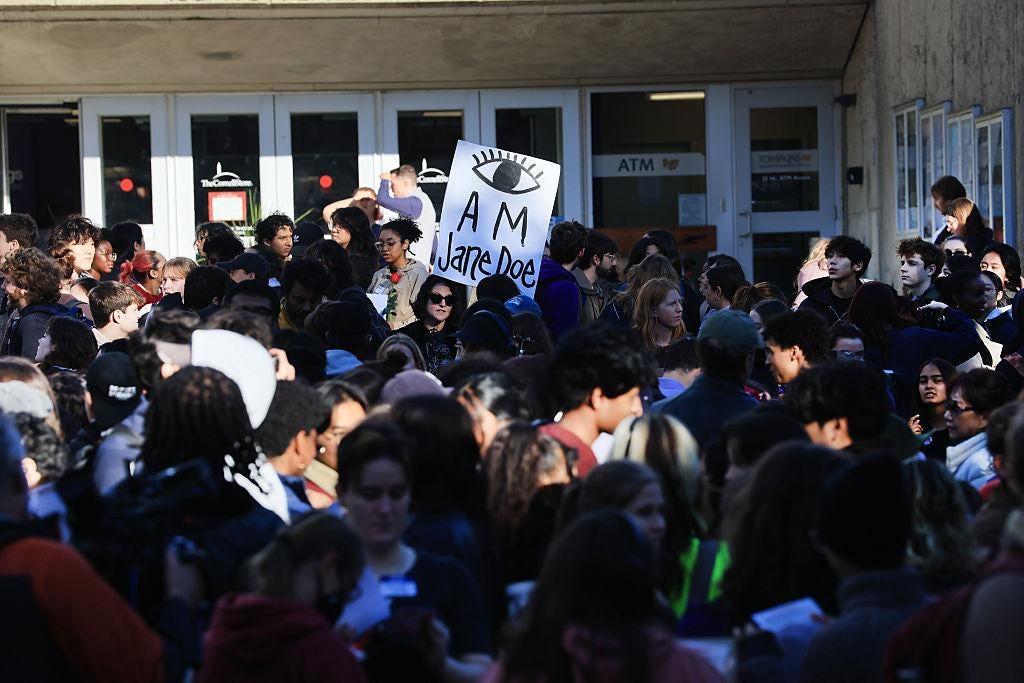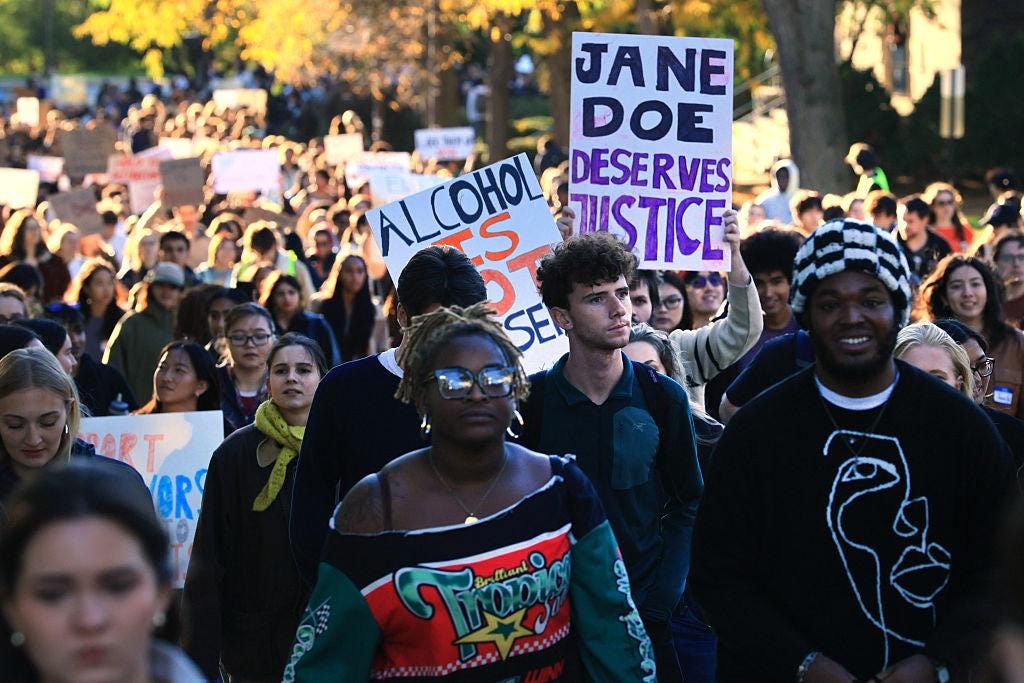
Demonstrations connected to the high-profile Cornell University sexual assault case spread to multiple U.S. cities on Thursday, October 8, as protesters called for accountability and stronger action against sexual violence.
Rallies were reported in New York City, Washington, D.C., Los Angeles and Tucson. Demonstrators voiced support for a former Cornell student identified in court documents as Jane Doe, who alleges that seven members of the university’s Chi Phi fraternity sexually assaulted her in October 2024.
The protests have turned a case that began on a college campus into a broader debate over campus safety, institutional responsibility and the handling of sexual assault allegations. TMZ and Reuters reported on the demonstrations.
Demonstrators Rally From New York to Los Angeles
In New York City, demonstrators gathered in Lower Manhattan as part of a rally against sexual violence. In Washington, D.C., protesters marched toward the White House, while demonstrators in Los Angeles and Tucson held signs and delivered speeches demanding accountability.
The events were part of a broader campaign under the banner “#StopSexualViolence: From the Frat House to the White House.” Organizers and participants sought to draw attention not only to the Cornell allegations but also to what they view as wider failures to protect survivors and respond effectively to reports of sexual assault.
In Tucson, demonstrators chanted, “No more silence, no more crimes,” according to TMZ’s report.
The gatherings reflected growing public attention to the case following protests at Cornell earlier in the week.
What the Cornell Lawsuit Alleges
The former student filed a civil lawsuit last month naming seven former students, the Chi Phi fraternity, Cornell University and other parties. She alleges that she was given ketamine and alcohol and then sexually assaulted by multiple fraternity members at a gathering in October 2024.
The allegations have prompted scrutiny of the fraternity’s conduct, the university’s response and the original criminal investigation.
The accused men have denied the allegations. The Tompkins County District Attorney’s Office previously declined to bring criminal charges, stating that its investigation indicated the sexual encounter was consensual.
The civil lawsuit and the criminal investigation are separate processes. Allegations in the lawsuit have not, by themselves, established criminal guilt.
New York Attorney General Asked to Revisit the Case
New York Gov. Kathy Hochul has assigned state Attorney General Letitia James to take over the investigation and examine whether anything was missed during the original inquiry.
The renewed investigation has become a central issue for demonstrators, many of whom argue that the case warrants further scrutiny and a more transparent response from authorities.
The attorney general’s review does not itself establish that a crime occurred. Its findings and any decisions about possible charges will depend on the evidence and applicable law.
Cornell Faces Questions About Its Response
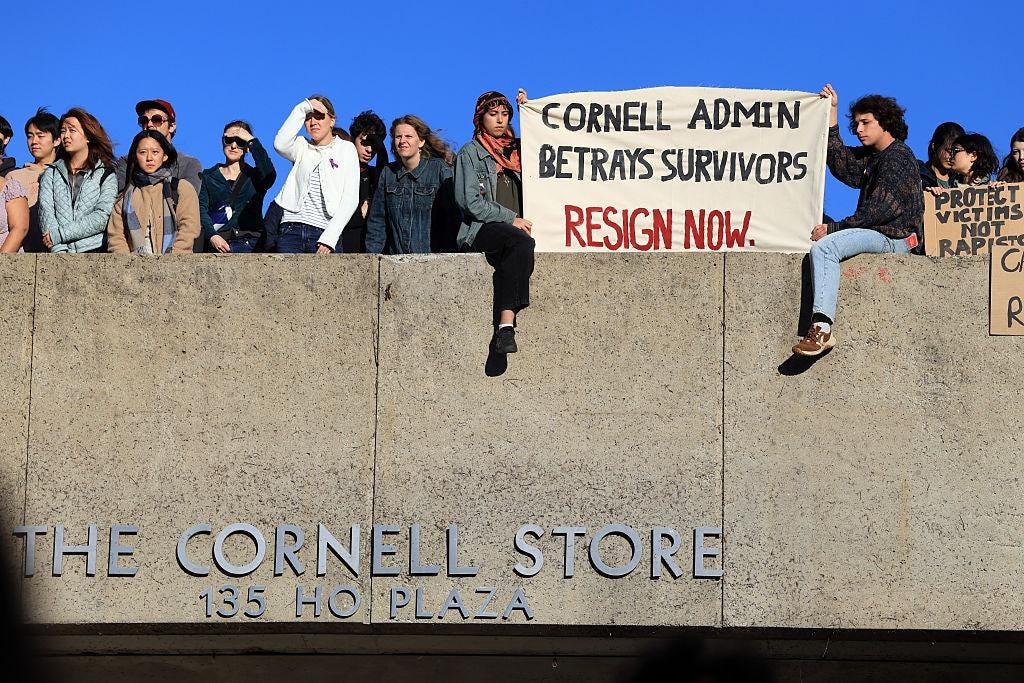
The university has also faced criticism over how it handled the allegations and related disciplinary proceedings.
Cornell has taken action against members of the fraternity, including shutting down the Chi Phi chapter and imposing disciplinary sanctions on students. The university has also commissioned an independent review of its handling of the case.
Protesters have demanded stronger protections for students, changes to university disciplinary procedures and greater accountability for institutions that receive reports of sexual misconduct.
The demonstrations have also included criticism of how universities balance the rights of accused students with their responsibility to provide a safe environment for students who report sexual assault.
A Case With National Implications
The protests show how allegations involving a single university can prompt demonstrations far beyond its campus, particularly when questions arise about institutional accountability and the criminal justice system’s response.
For supporters of Jane Doe, the rallies are a way to maintain public attention while the civil case and renewed investigation proceed. The defendants, meanwhile, retain their right to contest the allegations.
The next significant developments are likely to come from the attorney general’s investigation, the civil proceedings and any additional statements from Cornell or the parties involved.
For now, the nationwide demonstrations have made the Cornell case a prominent focus of public debate over sexual violence, campus responsibility and the pursuit of justice.