

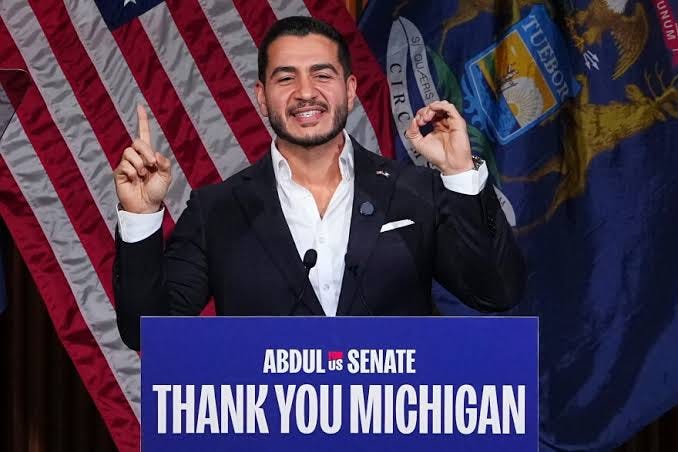
Democrat Abdul El-Sayed made history on Tuesday night by becoming the first Muslim elected to the U.S. Senate, but his victory speech is already drawing intense scrutiny. Rather than utilizing his election night address to bridge the partisan divide following a grueling campaign against Republican Mike Rogers, political experts and critics argue the Senator-elect opted instead to taunt his political enemies and settle scores.
Speaking to a jubilant crowd of supporters in Detroit, El-Sayed struck a decidedly combative tone, declaring that “the bad guys lost.” He took direct aim at the incoming Republican presidential ticket, specifically taunting Vice President JD Vance. “JD, habibi, there is this delicious irony in the fact that you’re constitutionally obligated to swear me in,” El-Sayed remarked, using an Arabic term of endearment sarcastically.
He then directed a message to President Donald Trump, who had repeatedly targeted El-Sayed’s faith on the campaign trail: “Donald, I know you struggled with my name, so when JD swears me in, you can call me ‘Senator.’”
Political observers and critics highlighted the speech as a missed opportunity for national healing. In a sharply divided political climate following the 2026 midterms, experts noted that El-Sayed focused heavily on retribution after a race that saw over $350 million in total spending. He told his Republican opponent to “enjoy your retirement” and openly mocked the American Israel Public Affairs Committee (AIPAC), stating, “Thank you for giving me the opportunity to beat you twice.”
Supporters of the Senator-elect, however, have strongly defended the address. El-Sayed and his allies argue that the rhetoric was a justified response to months of intense, personal attacks. Framing his victory as a triumph over a “spiteful” opposition that targeted his religion and ethnicity, El-Sayed told his supporters that his opponents had run one of the “ugliest campaigns we’ve seen in our lifetimes,” ultimately concluding, “You chose hate, and Michigan chose hope.”