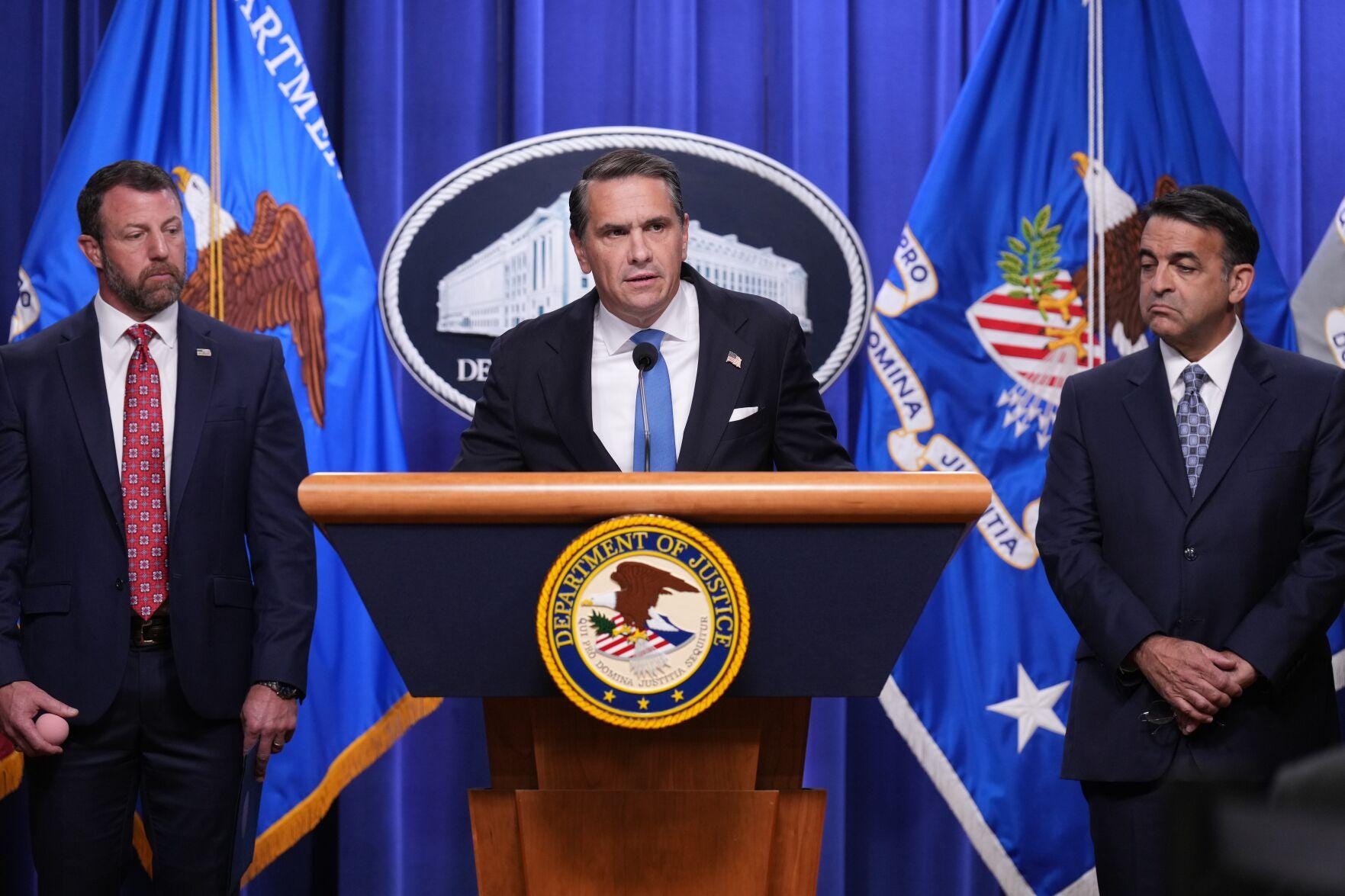
The U.S. Department of Justice has expanded its prosecution of alleged election crimes, charging 64 foreign nationals across 17 states with unlawful voting, fraudulent voter registration and related offenses in approximately five weeks, according to figures provided to Fox News Digital.
The reported totals come as federal officials intensify scrutiny of election procedures ahead of the November midterm elections. Minnesota accounts for the largest number of defendants, with 11, followed by Pennsylvania with 10 and Texas with nine. Louisiana has five, while New Jersey, California and Florida each have four.
The Justice Department says it has charged 104 people with voting-fraud-related offenses since President Donald Trump returned to office in 2025. The cases involve a range of allegations, including noncitizens voting in federal elections, falsely claiming U.S. citizenship during registration and submitting fraudulent voter-registration applications.
The prosecutions are part of a broader federal effort to enforce restrictions on noncitizen voting in federal elections. But the number of defendants does not establish how many cases will result in convictions, and authorities have not shown that the cases in the latest tally changed an election outcome.
Minnesota, Pennsylvania and Texas Lead the Reported Totals
Minnesota leads the 17-state tally with 11 defendants, according to Fox News. Pennsylvania follows with 10, and Texas has nine.
The cases cover different types of alleged election offenses and span multiple election cycles. Some defendants are accused of casting ballots despite not being U.S. citizens; others allegedly made false citizenship claims or submitted fraudulent registration applications.
In Minnesota, federal prosecutors announced indictments against 10 defendants in September. The allegations included voting in the 2022 and 2024 general elections and the August 2026 primary while allegedly ineligible to do so.
In Pennsylvania, prosecutors have pursued cases involving alleged unlawful voting and fraudulent registration applications. One Philadelphia case involves allegations that a Haitian national submitted multiple voter-registration applications and voted in the November 2022 election.
These cases remain subject to the criminal justice process. An indictment or criminal complaint is an accusation, and defendants are presumed innocent unless proven guilty.
DOJ Says Enforcement Protects Eligible Voters
Justice Department officials argue that prosecuting unlawful voting is necessary to protect the integrity of federal elections.
A DOJ spokesperson told Fox News Digital that every illegal vote cancels out the vote of a lawful American citizen, citing the six-vote margin in Iowa’s 2020 2nd Congressional District race as an example of how close elections can be.
The department has also emphasized that federal law generally prohibits noncitizens from voting in federal elections. The current prosecutions include alleged violations involving unlawful voting, false claims of citizenship and fraudulent voter registration.
The narrow margins cited in the debate illustrate why election security can become politically consequential. However, a close election does not itself establish that illegal voting occurred or affected the result. To demonstrate that an election was changed, investigators would need evidence linking unlawful ballots to a particular contest and showing that the number of affected votes was sufficient to alter the outcome.
Razor-Thin Local Elections Draw Renewed Attention
The federal crackdown has coincided with renewed scrutiny of close local elections, particularly in New Jersey.
Republican critics have highlighted municipal contests in Caldwell, Atlantic Highlands and Bogota that were reportedly decided by margins of four to six votes in 2023.
New Jersey has also faced a separate voter-registration controversy involving approximately 6,600 people who indicated they were not citizens but were erroneously registered through the state’s Motor Vehicle Commission. According to the Fox News report, fewer than 400 of those individuals subsequently voted.
The state has not established that these registrations changed an election outcome. Gov. Mikie Sherrill’s administration has said it addressed the registration error with transparency and accountability.
The distinction matters: a registration error, a person’s ineligibility to vote, an unlawful ballot and an election-changing fraud scheme are different issues that require different evidence.
Federal Cases Include Alleged Fraudulent Registration and Ballot Misconduct
The DOJ’s recent cases extend beyond allegations of noncitizen voting.
In September, the department announced charges and guilty pleas involving 12 individuals in election-related matters across the country. The cases included alleged unlawful voting by noncitizens, false claims of U.S. citizenship and a former postal carrier accused of improperly disposing of approximately 300 mail-in ballots.
Other prosecutions involve alleged illegal voting in federal elections over multiple years. Some defendants are lawful permanent residents, while others are accused of being in the country unlawfully. Immigration status and the precise criminal allegation vary by case.
The cases should not be treated as interchangeable. A charge of voting by a noncitizen differs from a charge of submitting a fraudulent registration form, and both differ from allegations involving the handling or destruction of ballots. The evidence and legal elements must be evaluated separately in each prosecution.
DOJ’s Broader Election Oversight Campaign Faces Legal Challenges
The criminal prosecutions are unfolding alongside a wider dispute over the federal government’s role in election administration.
The Trump administration has sought state voter-registration records and attempted to compare them against federal immigration databases to identify potentially ineligible voters. Several states and voting-rights organizations have challenged those efforts in court.
On October 9, U.S. District Judge Sparkle Sooknanan ruled that the Justice Department’s effort to obtain voter rolls and use the federal SAVE immigration database to identify voters for removal was unlawful. The court cited concerns that the system could wrongly flag naturalized U.S. citizens because of inaccurate or outdated data.
That ruling concerns the administration’s voter-roll review and removal efforts; it does not invalidate the separate criminal prosecutions. It does, however, underscore the legal distinction between investigating specific alleged crimes and asserting broad federal authority over state voter-registration systems.
What the Numbers Do—and Do Not—Show
The reported 64 defendants provide a measure of the Justice Department’s recent enforcement activity, but they do not establish the overall prevalence of illegal voting nationwide.
The figures also do not demonstrate that the alleged offenses affected the results of the elections in which they occurred. That would require contest-specific evidence, including the number of unlawful ballots cast and the margin of victory.
The prosecutions will proceed through the courts, where the government must prove each criminal charge. Separately, election officials and courts will continue to determine how voter-registration records can be reviewed while protecting eligible citizens from erroneous removal.
Election Security Remains a Major Issue Ahead of November
With the midterms approaching, the DOJ’s campaign is likely to remain part of the national debate over election integrity, voter eligibility and federal oversight.
Supporters of the crackdown argue that enforcing voting laws is essential to public confidence and to protecting eligible voters. Critics warn that broad data-matching initiatives can wrongly identify eligible citizens and that election administration is primarily a state responsibility.
The central questions are whether the pending cases produce convictions, whether investigators establish any election-changing misconduct and how courts define the limits of federal involvement in state election systems.
For now, the DOJ’s reported tally reflects a significant increase in announced enforcement activity—but not proof that the alleged conduct altered election outcomes or that widespread illegal voting has been established.