

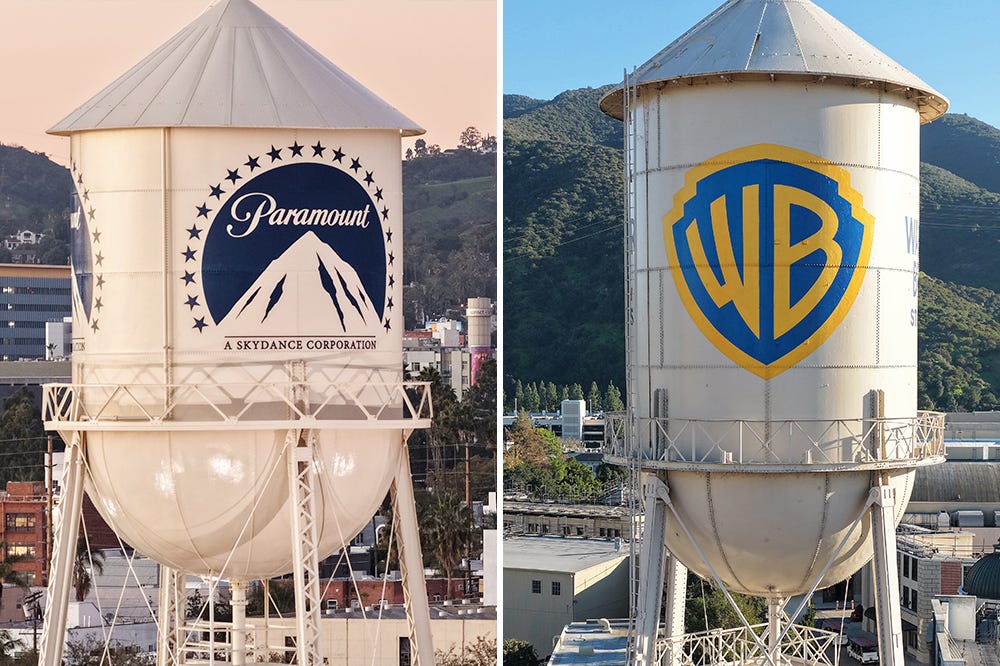
The Federal Communications Commission (FCC) has officially approved a petition allowing up to 49.5% foreign ownership in the newly formed Paramount-Warner Bros. studio. The landmark regulatory decision clears one of the final remaining hurdles in the historic merger between two of Hollywood’s oldest and largest media conglomerates.
Under standard federal regulations, foreign ownership of U.S. broadcast stations is typically capped at 25%. However, companies can petition the commission to exceed this benchmark on a case-by-case basis if it is deemed to serve the public interest. Because the merged Paramount-Warner Bros. entity controls a massive portfolio of local television stations alongside the CBS broadcast network, the corporate union required a special federal exemption to secure its international financial backing.
Competing With Big Tech
The FCC’s declarative ruling grants the combined company the flexibility to inject significant foreign investment into its global operations. Executive leadership from both legacy studios have aggressively lobbied for the exemption, arguing that an influx of outside capital is absolutely essential for traditional media companies to remain competitive against deep-pocketed tech giants like Apple, Amazon, and Netflix.
The merger represents a massive consolidation of intellectual property, combining Warner Bros.’ DC Universe and HBO prestige television with Paramount’s massive film library, live sports broadcasting rights, and the CBS network.
Media Watchdogs Raise Alarms
While Wall Street largely cheered the regulatory clearance, the approval did not come without fierce pushback from consumer advocates.
Media watchdogs had aggressively petitioned the FCC to deny the foreign ownership exemption, raising concerns about international investors exerting undue influence over American news broadcasts, local journalism, and cultural output. Critics argued that allowing near-majority foreign ownership of a major U.S. broadcast network sets a dangerous precedent for future media consolidations.
Despite these objections, the FCC ultimately determined that the foreign stake would not pose a risk to national security or the public interest, provided the overall foreign ownership remains strictly under the 49.5% threshold. The newly merged mega-studio is expected to finalize its remaining corporate restructuring in the coming weeks.