

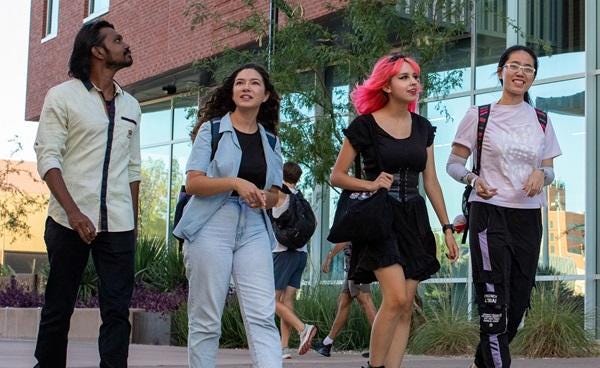
A federal judge in Massachusetts has struck down a Trump administration regulation that would have imposed strict time limits on how long international students, exchange visitors and foreign journalists could remain in the United States.
In a ruling issued Monday, November 16, U.S. District Judge F. Dennis Saylor IV vacated the Department of Homeland Security’s (DHS) final rule, finding that the administration’s proposed restrictions were arbitrary, legally unjustified and inconsistent with federal law.
The regulation, finalized in July 2026, sought to replace the longstanding immigration policy known as “Duration of Status” with fixed admission periods. Under the administration’s plan, most international students would have been limited to four years in the United States before needing government approval to extend their stay.
The decision represents a significant setback for the administration’s efforts to tighten immigration rules governing foreign students and academic institutions.
“The Final Rule ... is hereby VACATED pursuant to the Administrative Procedure Act,” Saylor wrote in his order, concluding that the regulation was arbitrary, capricious, an abuse of discretion and otherwise not in accordance with law.
Judge says DHS exceeded its authority
At the center of the legal dispute was the administration’s decision to eliminate the Duration of Status framework, which has governed international student admissions for decades.
Under the existing system, foreign students holding F-1 visas can generally remain in the United States as long as they maintain their immigration status and continue making progress toward completing their academic programs.
The Trump administration argued that the system created opportunities for immigration abuse and made it difficult for federal authorities to monitor foreign students who remained in the country for extended periods.
The proposed replacement would have required students to obtain extensions from DHS if their academic programs lasted longer than four years.
However, Judge Saylor concluded that the government had not adequately demonstrated why such a sweeping change was necessary or how the additional restrictions would effectively address the problems identified by the administration.
He also questioned the department’s failure to properly evaluate the financial and administrative consequences of the new requirements.
Saylor wrote that DHS was attempting to discourage the very educational opportunities Congress had intended to permit and encourage through the nation’s immigration laws.
What the ruling means for international students
The decision preserves the existing Duration of Status policy for international students and exchange visitors.
Under the restored framework:
F-1 student visa holders can generally remain in the United States while maintaining their student status and making normal academic progress.
J-1 exchange visitors can remain for the duration of their authorized exchange programs.
Students who need additional time to complete their degrees will not face the new four-year extension requirement established by the overturned rule.
The new restrictions on changing academic programs, transferring schools and beginning additional programs will not take effect under the vacated regulation.
The ruling also covers foreign representatives of the international media holding I visas, who would have faced separate fixed admission periods under the administration’s regulation.
Importantly, the decision concerns the period of authorized admission in the United States, not the expiration date printed on an individual’s visa. Those are separate immigration concepts.
Yale University’s Office of International Students and Scholars confirmed that the longstanding framework remains in place and that students do not need to take action because of the ruling.
Universities and immigration advocates welcome the decision
The lawsuit was brought by a coalition of higher education organizations and labor groups concerned about the consequences of the proposed restrictions.
Among the plaintiffs were the Presidents’ Alliance on Higher Education and Immigration, NAFSA: Association of International Educators, the Association of Independent Colleges and Universities in Massachusetts, the American Federation of Teachers and the United Auto Workers.
The organizations argued that imposing fixed admission periods would create unnecessary administrative burdens for universities, disrupt academic programs and discourage talented international students from choosing American institutions.
Many graduate and doctoral programs routinely extend beyond four years, making the proposed restrictions particularly challenging for students pursuing advanced degrees.
Universities also warned that the additional extension process could create uncertainty for researchers, professors and international scholars whose academic work requires longer commitments.
The court’s decision grants the plaintiffs’ motion for summary judgment and denies the federal government’s request to uphold the regulation.
International student enrollment already declining
The court ruling comes as American universities are experiencing a notable decline in international student enrollment.
A report released November 16 by the Institute of International Education found that international student enrollment at U.S. colleges and universities declined by 9% during the fall 2026 semester compared with the previous year.
The number of newly arriving international students fell even further, dropping 15%.
The decline comes amid a broader immigration crackdown under the Trump administration, including increased scrutiny of student visas, visa revocations, deportation proceedings and uncertainty surrounding post-graduation employment opportunities.
Universities have expressed concerns that these policies could make the United States a less attractive destination for international students, potentially benefiting competing education markets in Canada, the United Kingdom and Australia.
International students also represent an important source of revenue for American universities, particularly private institutions and graduate programs that depend on international tuition payments.
Trump administration could appeal the ruling
Although the decision represents a major legal victory for higher education organizations, the administration could still challenge the ruling through the appeals process.
The Department of Homeland Security has maintained that stricter admission periods would improve oversight of foreign students and help prevent immigration violations.
However, the court’s decision means the July regulation has been vacated in its entirety, rather than merely postponed or temporarily blocked.
For now, international students and exchange visitors will continue operating under the longstanding Duration of Status framework.
The ruling adds another legal obstacle to the Trump administration’s broader immigration agenda and highlights the continuing debate over how to balance national security, immigration enforcement and America’s position as a global destination for higher education.
With international enrollment already declining, the decision could provide some reassurance to prospective students and universities navigating an increasingly uncertain immigration environment.