

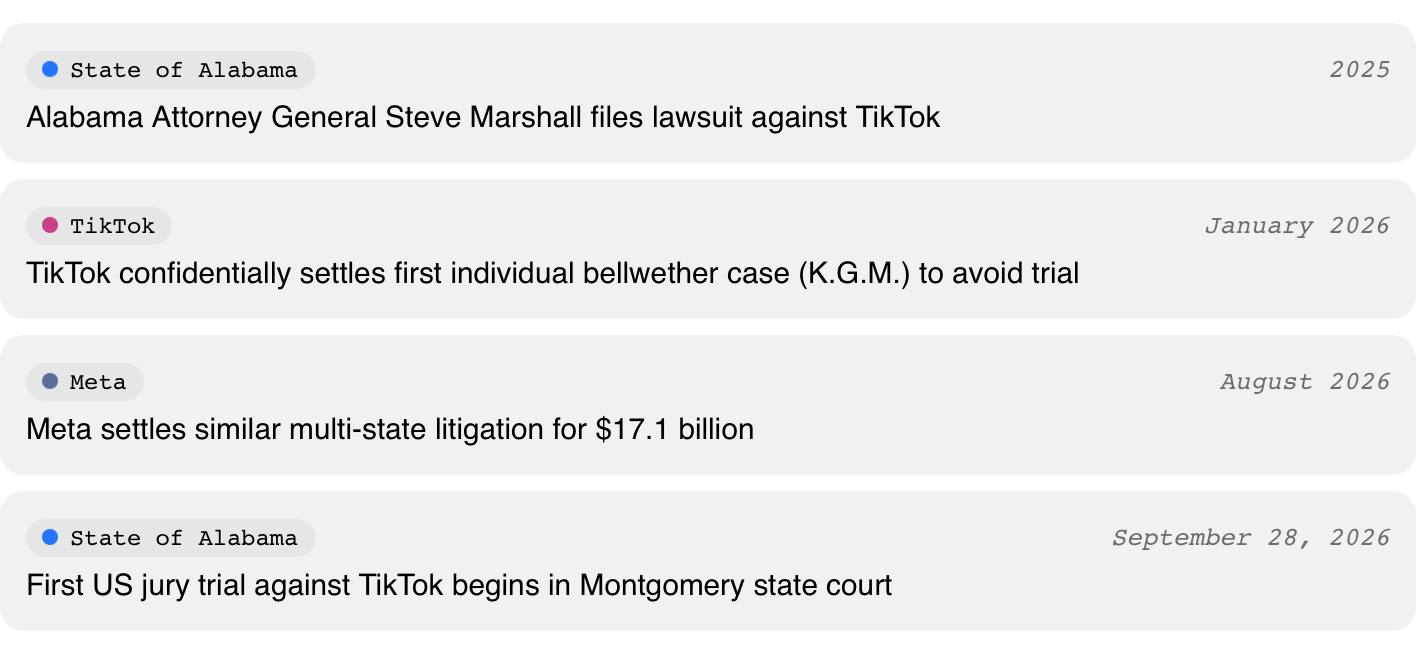
TikTok is set to face unprecedented legal scrutiny on Monday as a landmark trial begins in Montgomery, Alabama, marking the first time the company will face a U.S. jury over claims that its platform has actively harmed the mental health of teenagers.
The sweeping lawsuit, filed last year by Alabama Attorney General Steve Marshall, alleges that TikTok and its Chinese parent company, ByteDance, deliberately engineered the app to be highly addictive. The trial is expected to last two to three weeks and could publicly expose tightly guarded internal documents and operational details that the privately held company has historically fought to keep under seal.
At least 27 other states, along with Washington, D.C., have filed similar lawsuits against the social media giant.
Allegations of Addiction and Harm
Central to Alabama’s case is the claim that TikTok’s signature feature—an endless, algorithmically driven feed of short-form videos—functions to trap young users in an addictive loop. The state argues that this algorithm deliberately pushes minors toward increasingly intense content involving violence and self-harm. According to the lawsuit, this aggressive engagement strategy has directly contributed to a severe mental health crisis, causing emergency room visits for self-harm in Alabama to “skyrocket”.
The state also accuses TikTok of actively misleading parents and app stores. Alabama claims the company falsely represented that it limits young users’ access to mature content in order to secure “teen-safe” ratings from Apple, Google, and Microsoft.
Furthermore, the lawsuit challenges the efficacy of TikTok’s “Kids Mode.” The state argues the feature is functionally useless because the app allows users to bypass age-verification questions simply by watching videos without officially creating an account—which still enables the company to track their viewing habits.
A Pattern of Settlements Put to the Test
What makes the Montgomery trial particularly notable is that it is happening at all.
Historically, TikTok has settled every major case selected for trial against it, including claims brought by five young people and a Kentucky school district. By settling before reaching a jury, the company has successfully kept internal documents and executive testimony out of the public domain.
TikTok maintains that it designed its platform with teen safety as a priority. The company’s legal defense heavily relies on Section 230 of the federal Communications Decency Act, arguing that online platforms cannot be held liable for user-generated content. The state of Alabama is seeking financial penalties and other significant relief.
The trial comes just a month after Meta (parent company of Facebook and Instagram) reached a reported $17.1 billion settlement with 47 states over similar teen mental health claims. Under that agreement, $5 billion of the payment is conditionally tied to whether TikTok, Snap, and YouTube adopt identical safety terms.