

Patrick Dewayne Smith had spent two years rebuilding his life outside prison. He returned to family in the South, found work and began attending church regularly after serving 13 years for a federal drug conviction.
Now, Smith faces the possibility of being sent back to prison for decades following a U.S. Supreme Court ruling that narrowed the circumstances under which federal judges can grant compassionate release.
Smith was released in 2024 after a federal judge reduced his sentence under rules adopted by the U.S. Sentencing Commission. But prosecutors are now challenging that decision, arguing that the Supreme Court’s May ruling undermines the legal basis for his freedom.
The case highlights a growing conflict between federal sentencing law, judicial discretion and the promise of second chances under the First Step Act, the bipartisan criminal justice reform legislation signed by Trump during his first term.
A Second Chance Now in Jeopardy
Smith, 47, has been working two jobs and reconnecting with relatives he barely knew before his lengthy incarceration. He spends Sundays with family at a church in rural Tennessee and attends sporting events to support nieces and nephews he had never met before his release.
After spending more than a decade behind bars, he appeared to be establishing a new life. The threat of reincarceration has now left him waiting for a decision that could determine his future.
“Every time I get a call, I’m hoping it’s some good news,” Smith told The Associated Press.
Smith is among approximately a dozen people nationwide who could be returned to prison following the Supreme Court ruling, according to FAMM, a sentencing reform organization formerly known as Families Against Mandatory Minimums.
The Justice Department contends that Smith’s release is no longer legally valid. Unless a court or the administration provides a way for him to remain free, he could face a substantial additional prison term.
How a Nonviolent Drug Conviction Led to a Life Sentence
Smith grew up in northern Alabama and struggled with drug addiction as a teenager, according to court records described by the Associated Press.
At 17, he was arrested for selling crack cocaine to an informant on two occasions. He later accumulated marijuana convictions and served approximately three years in prison before returning to civilian life.
In 2010, Smith became involved in a drug operation selling crack cocaine and marijuana along the Tennessee-Alabama border, prosecutors said. Federal investigators recorded phone calls connected to the operation, and Smith was convicted of drug conspiracy and money laundering after withdrawing from a plea agreement.
His prior convictions combined with the federal case to trigger a life sentence under the sentencing laws then in effect. The judge questioned whether the punishment fit his role in the operation but said the law constrained her options.
Smith received a longer sentence than the alleged ringleader of the 20-person case, according to the AP report.
His supporters argue that the sentence illustrates how prior convictions and mandatory-minimum laws can produce penalties that are difficult to reconcile with a defendant’s individual role in an offense.
The First Step Act Opened a Path to Release
Congress passed the First Step Act in 2018, making significant changes to federal sentencing and prison policies. The legislation reduced certain mandatory minimum penalties, expanded opportunities for some incarcerated people to earn time credits and broadened the process through which eligible prisoners could seek compassionate release.
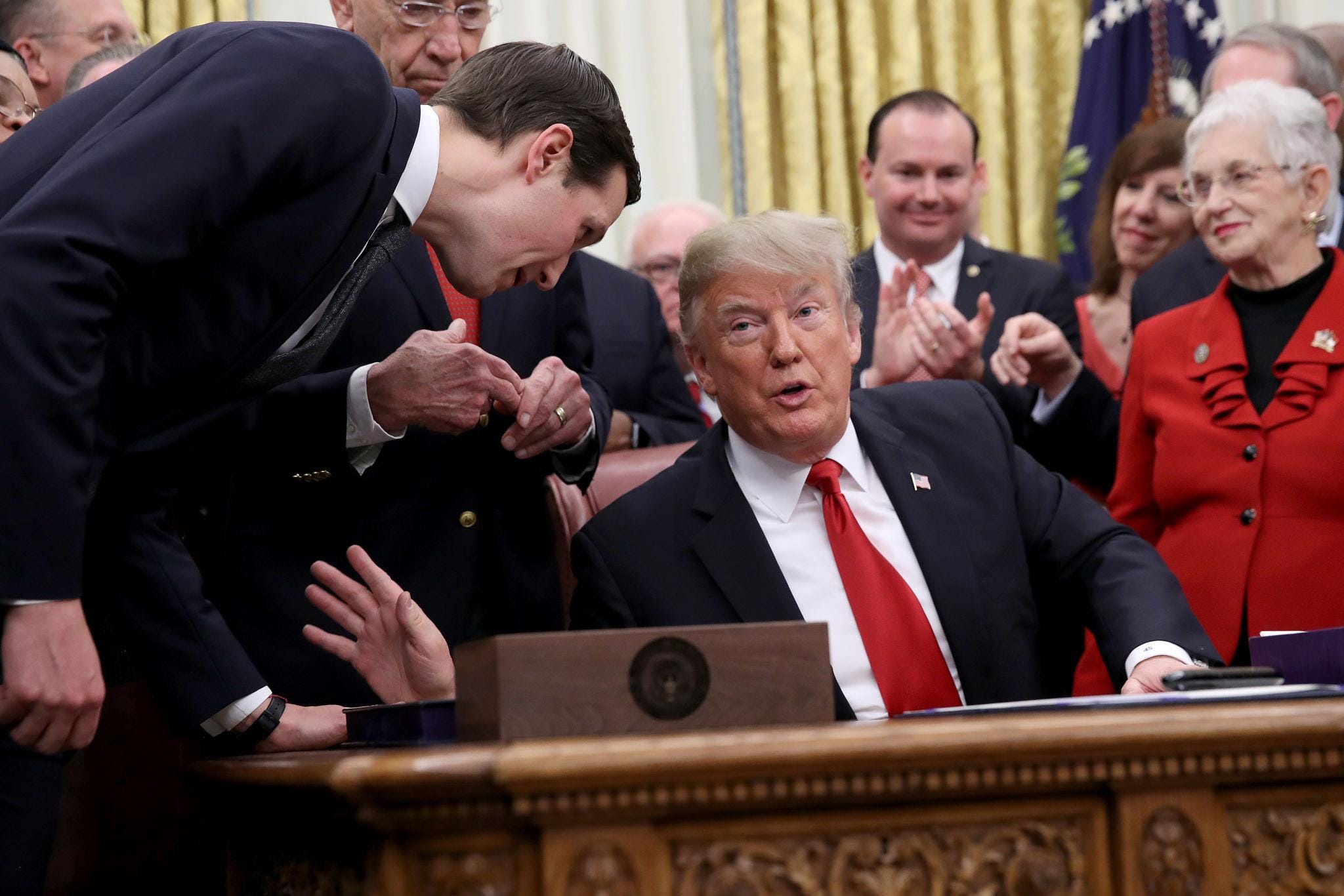
Trump signed the measure into law during his first administration, describing it as a way to improve public safety while allowing people who had served their time to rebuild their lives.
The legislation received support from lawmakers in both parties and was championed by Jared Kushner, Trump’s son-in-law and then-senior adviser.
Smith’s release came through a separate but related development: new Sentencing Commission rules adopted in 2023 that allowed judges, in certain circumstances, to consider changes in sentencing law when evaluating compassionate-release requests from people who had served at least 10 years.
A federal judge eventually granted Smith’s request and ordered his release in 2024. Prosecutors later challenged that decision after the Supreme Court issued its ruling.
Supreme Court Narrows Compassionate-Release Options
In May 2026, the Supreme Court ruled 6-3 that a disparity between an inmate’s original sentence and a lower penalty available under current law does not, by itself, qualify as an “extraordinary and compelling” reason for compassionate release.
Justice Amy Coney Barrett wrote the majority opinion, reasoning that Congress’s decision not to make certain sentencing reductions retroactive weighs against using those reductions as the basis for early release.
The ruling limits the ability of judges to grant compassionate release based primarily on the fact that a person would receive a shorter sentence if convicted under current law.
The Justice Department had argued that the Sentencing Commission’s rules went beyond what Congress authorized. The Supreme Court’s decision strengthened the department’s position in cases involving similar sentencing disparities.
The ruling does not mean every person previously granted compassionate release must automatically return to prison. The legal effect depends on the circumstances of each case and any applicable court orders. But for Smith and others whose releases relied on the disputed rationale, the decision has created serious uncertainty.
Prosecutors Argue Smith Could Face at Least 25 Years
Last month, federal prosecutors filed court papers challenging Smith’s release, citing the Supreme Court decision.
The government argued that Smith would face a mandatory minimum sentence of 25 years even under current law, based on his record and the applicable drug sentencing provisions. Prosecutors described the earlier decision to release him as difficult to justify.
A Justice Department official familiar with the case told the AP that the department believes Smith’s release is no longer valid and that prosecutors cannot agree to a sentence below the legally required minimum.
That position places Smith’s future in the hands of the legal process. Although his original sentence was life imprisonment, the government’s current argument refers to a 25-year mandatory minimum under the applicable law. His ultimate sentence and whether he will be returned to custody remain unresolved.
The distinction matters: the prospect of reincarceration is real, but the final outcome has not yet been determined.
Advocates Warn Against Reincarcerating Rehabilitated Prisoners
FAMM has criticized the consequences of the Supreme Court ruling for people who were released after judges considered sentencing disparities alongside their circumstances and rehabilitation.
The organization’s general counsel, Shanna Rifkin, said people affected by the decision have been rebuilding family relationships, working and contributing to their communities.
Advocates argue that returning people to prison after they have demonstrated rehabilitation can undermine the goals of sentencing reform and impose additional costs on families and the criminal justice system.
Legal experts have also expressed concern about the broader implications for federal criminal justice reform. Daniel Harawa, a law professor at New York University, told the AP that the ruling could make it more difficult for people serving unusually long sentences to obtain relief.
Supporters of the Court’s approach, by contrast, emphasize that sentencing changes adopted by Congress are not necessarily retroactive and that courts must operate within the limits established by law.
The debate reflects a fundamental question: how much discretion should judges have to revisit lengthy sentences when laws or sentencing practices change?
Trump Administration Faces a Decision
The White House is aware of the developments, according to an administration official cited by the AP. Trump has previously expressed support for the First Step Act, which was one of the signature criminal justice initiatives of his first term.
For Smith and others in comparable circumstances, presidential clemency could provide another route to relief if judicial options are exhausted. FAMM says a grant of clemency could be critical for people whose release decisions are affected by the Supreme Court ruling.
No final White House decision concerning Smith had been announced in the AP report published October 11.
Smith’s case now illustrates the limits of sentencing reform when later judicial decisions change how release provisions are interpreted. A law intended to create more opportunities for rehabilitation and second chances has not eliminated the possibility that people released under one interpretation of the law could be sent back to prison under another.
For Smith, the immediate question is whether his release will stand. For federal criminal justice policy, the case raises a larger question about how the country should handle people serving lengthy sentences that reflect earlier sentencing laws.