

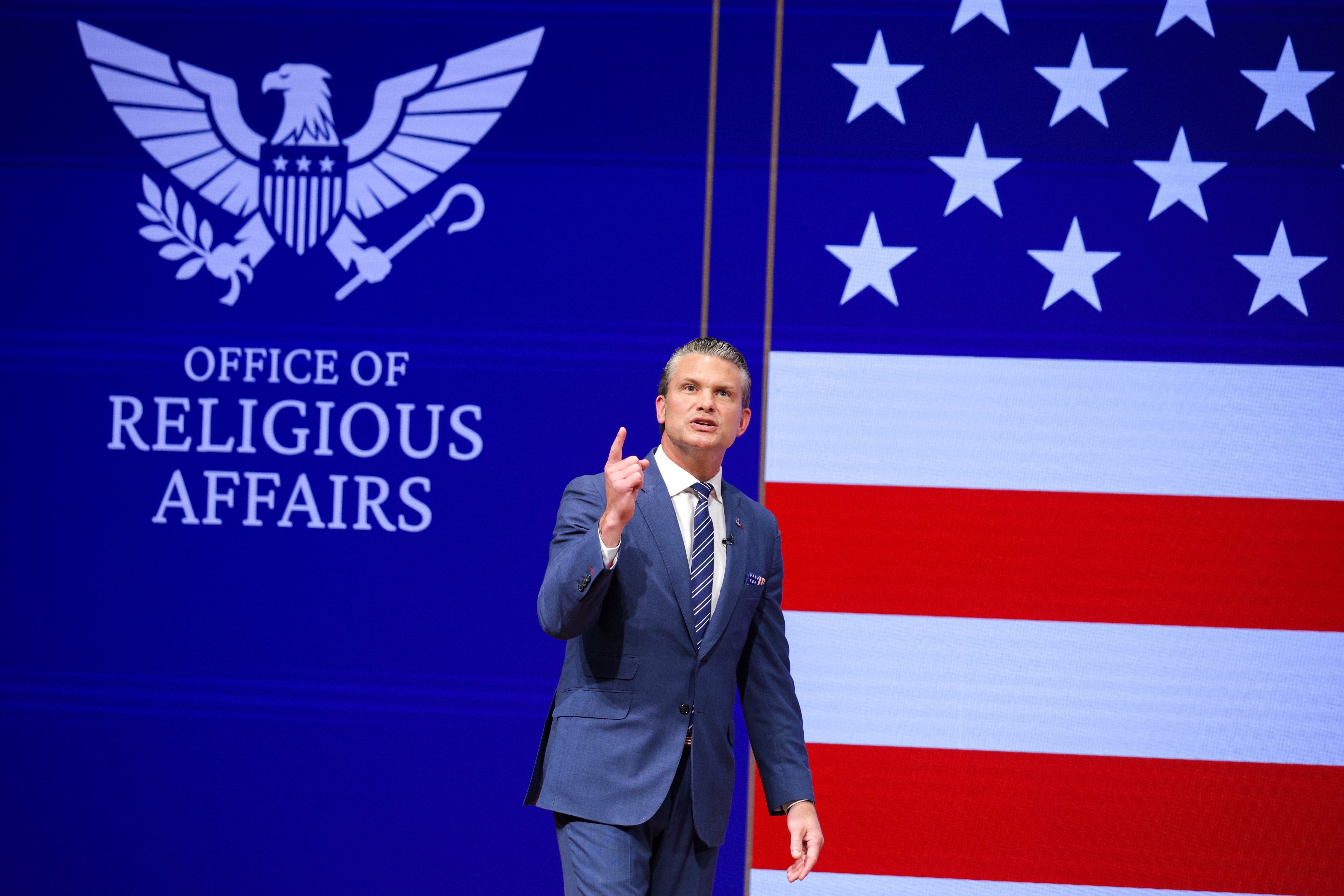
Secretary of Defense Pete Hegseth has directed the creation of a new, centralized “Office of Religious Affairs” within the Pentagon, marking a significant and controversial shift in how the military addresses religious freedom and expression among service members.
According to an internal memorandum obtained by reporters, the newly established office will be tasked with reviewing Department of Defense policies to “ensure they align with traditional religious values” and aggressively protecting the rights of service members to express their faith. While the mandate applies broadly to religious freedom, the directive heavily emphasizes the protection of conservative Christian beliefs.
Hegseth’s memo outlines that the office will oversee the military’s chaplaincy programs, handle requests for religious accommodations, and ensure that military personnel are not penalized for expressing their religious convictions, even if those convictions conflict with other established military policies or diversity initiatives.
The creation of the Office of Religious Affairs aligns with Hegseth’s previous public statements criticizing what he views as a “woke” culture infiltrating the armed forces. Since taking office, he has frequently argued that the military has marginalized traditional Christian values in favor of progressive social policies.
However, the move has drawn immediate and fierce criticism from civil liberties groups, secular organizations, and some former military leaders. Critics argue that establishing a dedicated office to promote specific religious values blatantly violates the constitutional principle of the separation of church and state. Organizations such as the Military Religious Freedom Foundation have already warned that the new office could lead to discrimination against service members of minority faiths, non-believers, and LGBTQ+ individuals.
Supporters of the initiative, including several prominent conservative lawmakers, have praised Hegseth’s actions, viewing the new office as a necessary safeguard for service members whose deeply held religious beliefs have allegedly been sidelined by recent Pentagon diversity and inclusion efforts.
The debate highlights an ongoing cultural battle within the Department of Defense as the Trump administration continues to push for significant ideological shifts within the nation’s military apparatus.