

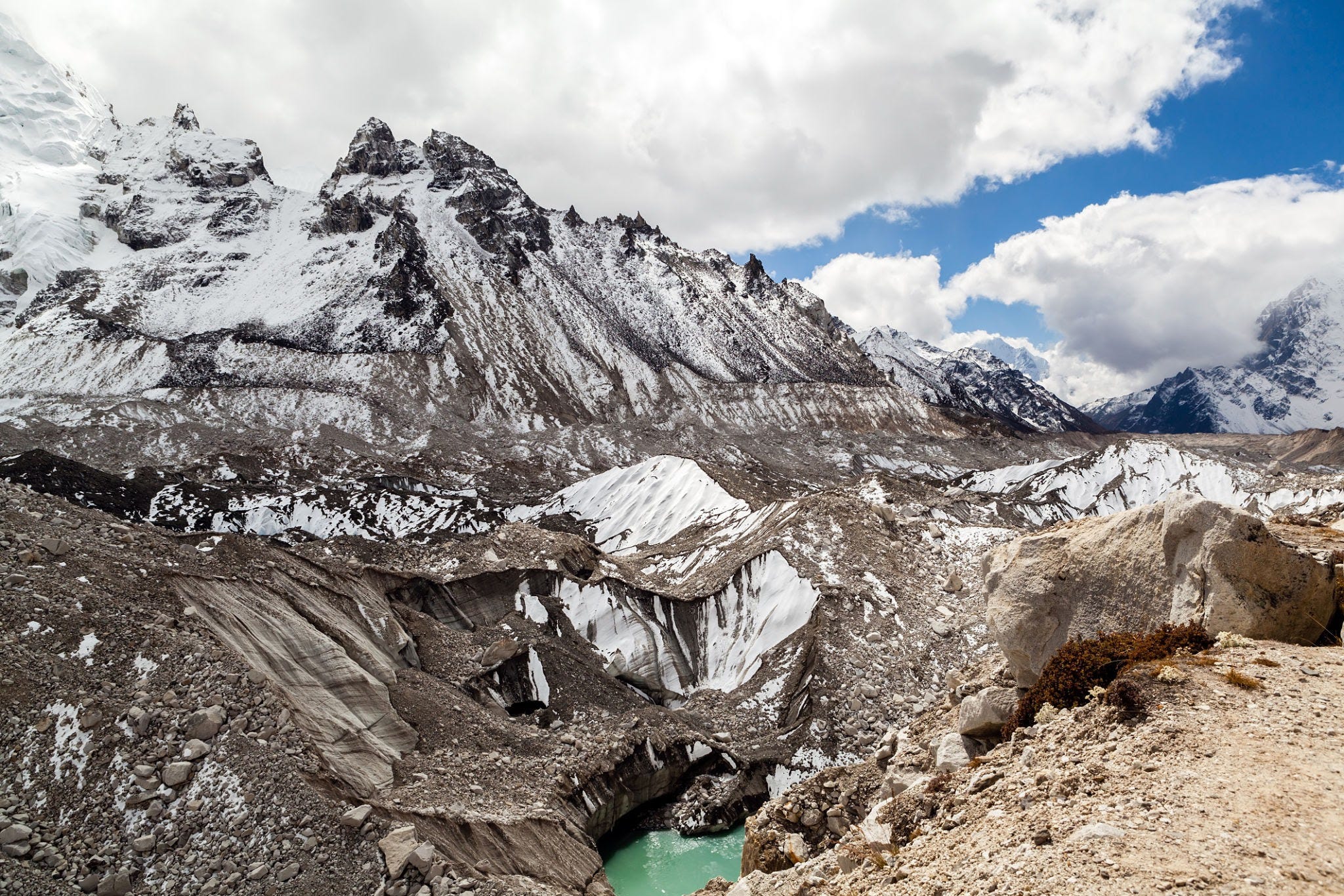
The Himalayas are rapidly approaching a critical climate tipping point, with glaciers melting significantly faster than previously recorded and leaving millions of people vulnerable to catastrophic flooding and long-term water shortages.
According to a stark new study led by the sustainability advisory firm Systemiq—in partnership with the International Centre for Integrated Mountain Development (ICIMOD) and India’s G.B. Pant National Institute—Himalayan glaciers are currently losing mass 65 percent faster than they did a decade ago.
The report’s release follows a tragic glacier collapse on August 26 along the Nepal-Tibet border, which triggered massive flash floods and cascading landslides in the valleys below. The disaster killed more than 1,300 people and left thousands more missing, highlighting the immediate and deadly consequences of the region’s changing cryosphere.
The Threat of ‘Peak Water’ and Glacial Lakes
While melting glaciers initially increase downstream river flows, scientists warn that the region is hurtling toward “peak water”—the point at which glacier reserves shrink so much that river flows begin to permanently decline. If this threshold is crossed by mid-century as projected, the resulting water stress could devastate agriculture, hydropower generation, and drinking supplies across South Asia.
Furthermore, as the ice rapidly retreats, it leaves behind highly unstable glacial lakes held back by little more than loose rock and debris. These natural dams are prone to bursting. The study identified close to 200 glacial lakes in India alone as high risk, with 56 classified as “very high risk” to the communities situated below them.
Despite these escalating dangers, the vast mountain system remains severely under-monitored. Of an estimated 40,000 glaciers across the Hindu Kush-Himalaya region, only 21 are currently monitored on the ground, significantly hampering early-warning capabilities.
A Call for Cross-Border Cooperation
The economic stakes are massive. The study estimates that the Himalayan water system underpins more than 20 percent of India’s GDP, meaning disruptions could trigger severe economic consequences far beyond the mountain states.
Experts are pleading for urgent international action and transboundary cooperation. Pema Gyamtsho, director general of ICIMOD, emphasized that mountain hazards “do not respect national borders,” and that shared risk information is essential to protect the hundreds of millions of people who depend on the Himalayan ecosystem.