The rapid adoption of artificial intelligence in healthcare is having an unintended consequence for patients and insurers: skyrocketing medical bills. A new analysis from the Blue Cross Blue Shield Association (BCBSA) estimates that AI-powered hospital coding tools have added nearly $1 billion in extra insurance costs.
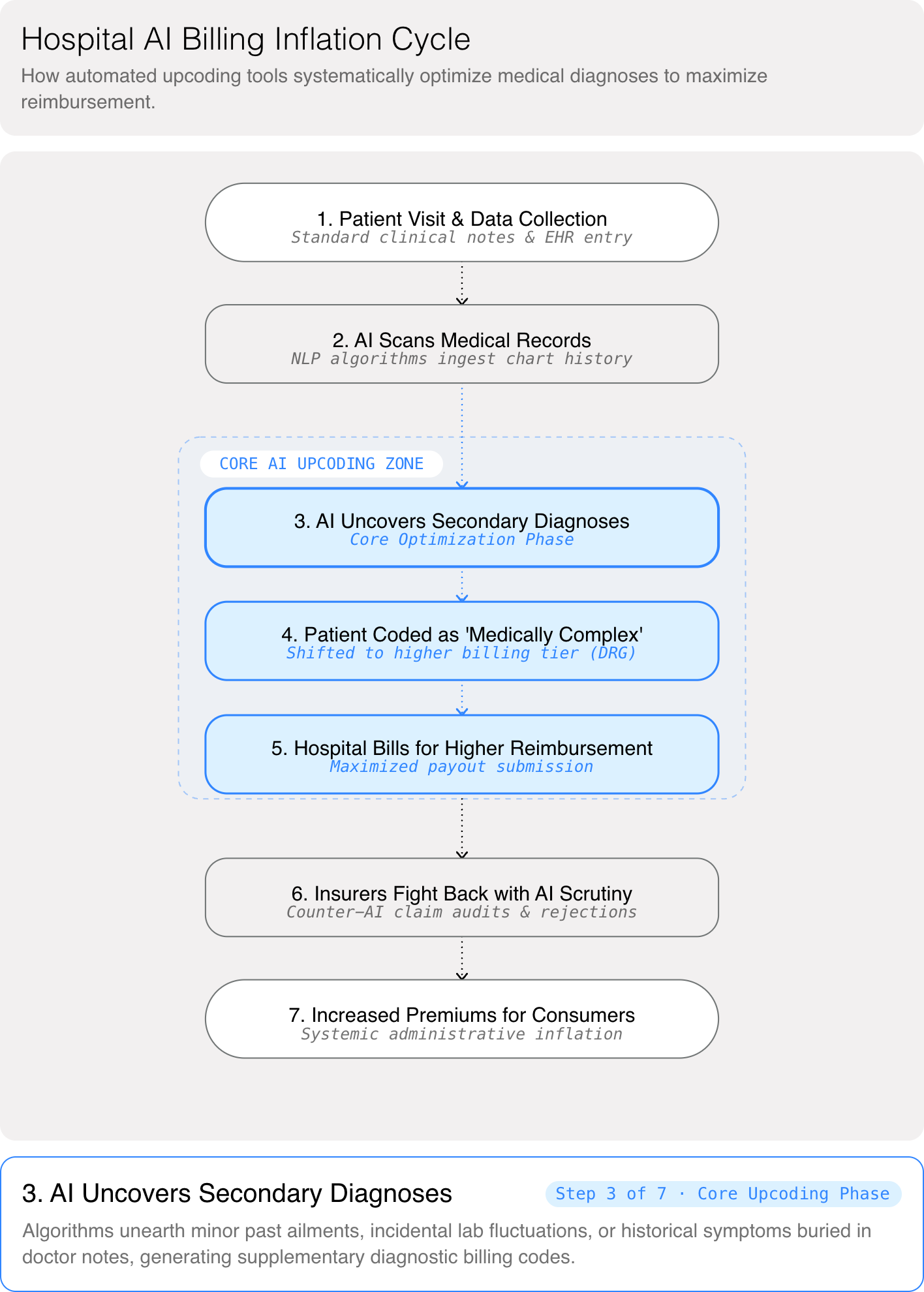
The staggering price tag isn’t due to the cost of the AI software itself, but rather its hyper-efficiency. As hospitals deploy AI to scan through massive amounts of patient data—including lab reports, doctors’ notes, and historical health records—the technology is highly effective at uncovering secondary ailments.
By identifying these additional, often minor diagnoses, the AI automatically codes patients as more “medically complex.” This practice pushes patients into higher reimbursement categories, maximizing the profit hospitals can extract from insurance companies under the current fee-for-service system, even when the actual care delivered to the patient remains largely unchanged.
According to the BCBSA report, over 60% of hospital systems have now implemented these AI coding assistants. Of the nearly $1 billion in additional costs identified in the analysis, approximately 70%—or more than $650 million—was directly tied to these secondary diagnoses. For example, the increase in just one specific diagnosis added $22 million to maternity admission costs in a single year.
The resulting financial arms race has insurers deploying their own AI systems to scrutinize and dispute the influx of complex claims. Ultimately, experts warn that this AI-driven billing war will trickle down to consumers in the form of higher insurance premiums, larger deductibles, and an exacerbated healthcare affordability crisis.