

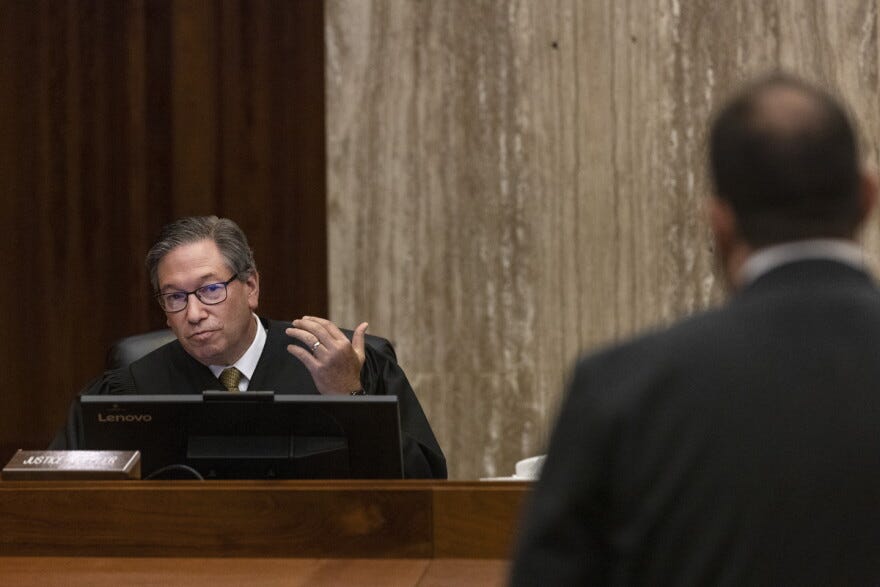
The Idaho Supreme Court has given state officials a strict 24-hour deadline to rewrite the ballot language for a reproductive healthcare initiative, declaring the current phrasing “unclear” and out of compliance with state law. The unanimous decision, issued just before critical election deadlines, marks a significant victory for abortion rights advocates ahead of the November election.
The Lawsuit
The ruling stems from a lawsuit filed by Idahoans United for Women and Families, the nonprofit backing Proposition 1 (the Reproductive Freedom and Privacy Act). The group accused Secretary of State Phil McGrane and Attorney General Raúl Labrador of using “confusing, biased” language to describe the effects of voting “yes” or “no” on the proposition.
Proposition 1 seeks to establish a private right to reproductive healthcare, including contraception, fertility treatments, and childbirth care. It would also legalize abortion up to fetal viability (typically around 24 weeks) or in cases of medical emergencies.
What Was Wrong With the Language?
According to Idahoans United, the contested ballot descriptions minimized the severity of Idaho’s strict current abortion bans and omitted key components of the proposed initiative.
The “No” Option: The state’s drafted language read: “A NO vote would make no change to Idaho’s current law, which protects the life of the unborn while allowing abortion in reported cases of rape or incest, or when necessary to protect the life of the mother.”
Advocates argued this painted an incomplete picture by failing to mention the severe felony or civil penalties healthcare providers face under current law, or the lack of explicit legal protections for the health (rather than just the life) of a pregnant woman. They noted that over the past 20 years, most “no” options on ballots were simply phrased along the lines of: “A NO vote would make no change to Idaho’s current law.”
The “Yes” Option: The state’s language for the “yes” vote was similarly criticized for making the decision murky for voters rather than clearly stating it would codify the proposition into law.
The Court’s Ruling
Justice Gregory Moeller, writing for the unanimous court, agreed with the plaintiffs. He ruled that the state’s language failed to clearly convey the effects of a voter’s choice, violating Idaho law which mandates clear and concise descriptions on ballots.
While the court did not mandate specific wording, Moeller advised that “a simple formulation would suffice.” He warned that if officials choose to describe the effects of the legislation rather than using simple language, they must accurately address all facets of the proposition.
Due to looming election deadlines, the court ordered the new language to be submitted by 5 p.m. on Saturday, September 5—giving the state’s offices just roughly 24 hours to comply.
What’s Next
“The Idaho Supreme Court unanimously agreed that both the Yes and No statements for Prop One were unlawful,” said Melanie Folwell, executive director of Idahoans United. “Idaho voters deserve ballot language that tells them the truth, and I’m proud that we fought this battle.”
This is the second time the nonprofit has successfully sued state officials over Proposition 1. Last year, the Idaho Supreme Court ruled that the Attorney General’s office failed to fully describe the initiative in a short ballot description and that the state failed to properly establish a factual basis for the financial impact it claimed the proposal would have.
Representatives for Labrador and McGrane did not immediately respond to requests for comment.