

MINNEAPOLIS — The federal government has suddenly ceased sharing evidence with Minnesota state investigators looking into recent fatal shootings by U.S. Immigration and Customs Enforcement (ICE) agents.
The abrupt reversal, which occurred last month without clear explanation, threatens to severely hamper ongoing local investigations into the deaths of Renee Good and Alex Pretti.
According to court records filed on Tuesday, the Justice Department (DOJ) has yet to provide local authorities with vital materials. This includes a statement from one of the officers involved in the fatal shooting of Pretti—a piece of evidence deemed crucial by the Hennepin County Attorney’s office.
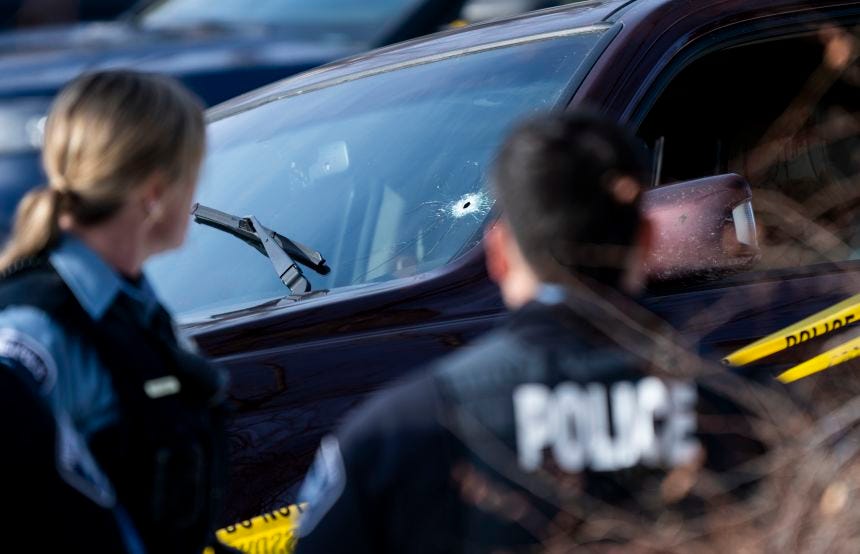
State investigators have also been blocked from accessing physical evidence from the scenes. According to a sworn statement from Drew Evans, superintendent of the Minnesota Bureau of Criminal Apprehension (BCA), the DOJ is withholding the cellphone belonging to the agent who shot Good, her clothing, the firearms involved, projectiles, and shell casings.
Additionally, the state is seeking evidence in a third, non-fatal shooting involving Venezuelan immigrant Julio Sosa-Celis. The ICE officer involved in that incident, Christian Castro, currently faces both state and federal charges.
This breakdown in cooperation follows a three-week period starting in late June when the U.S. attorney’s office in Minnesota and the BCA negotiated an agreement to exchange information. Initially, the DOJ turned over evidence, including Good’s vehicle and body camera footage, prompting Hennepin County Attorney Mary Moriarty to publicly thank federal prosecutors for their collaboration.
However, within days of her remarks, federal officials unexpectedly reversed course. Moriarty stated in a sworn affidavit that despite repeated inquiries to Daniel Rosen, the U.S. attorney for Minnesota, she was eventually informed on September 10 that evidence sharing was paused “indefinitely” due to “challenges with D.C.”
Moriarty noted that she was led to understand no further evidence would be provided “unless and until there was a change in policy on that sharing coming out of Washington D.C.”
Minnesota authorities are currently battling the Justice Department in federal court in Washington, D.C., seeking access to the withheld evidence to continue their probes. Moriarty highlighted that this stonewalling is highly unusual, as collaboration and information sharing between federal and local officials typically proceed smoothly in other complex cases.