

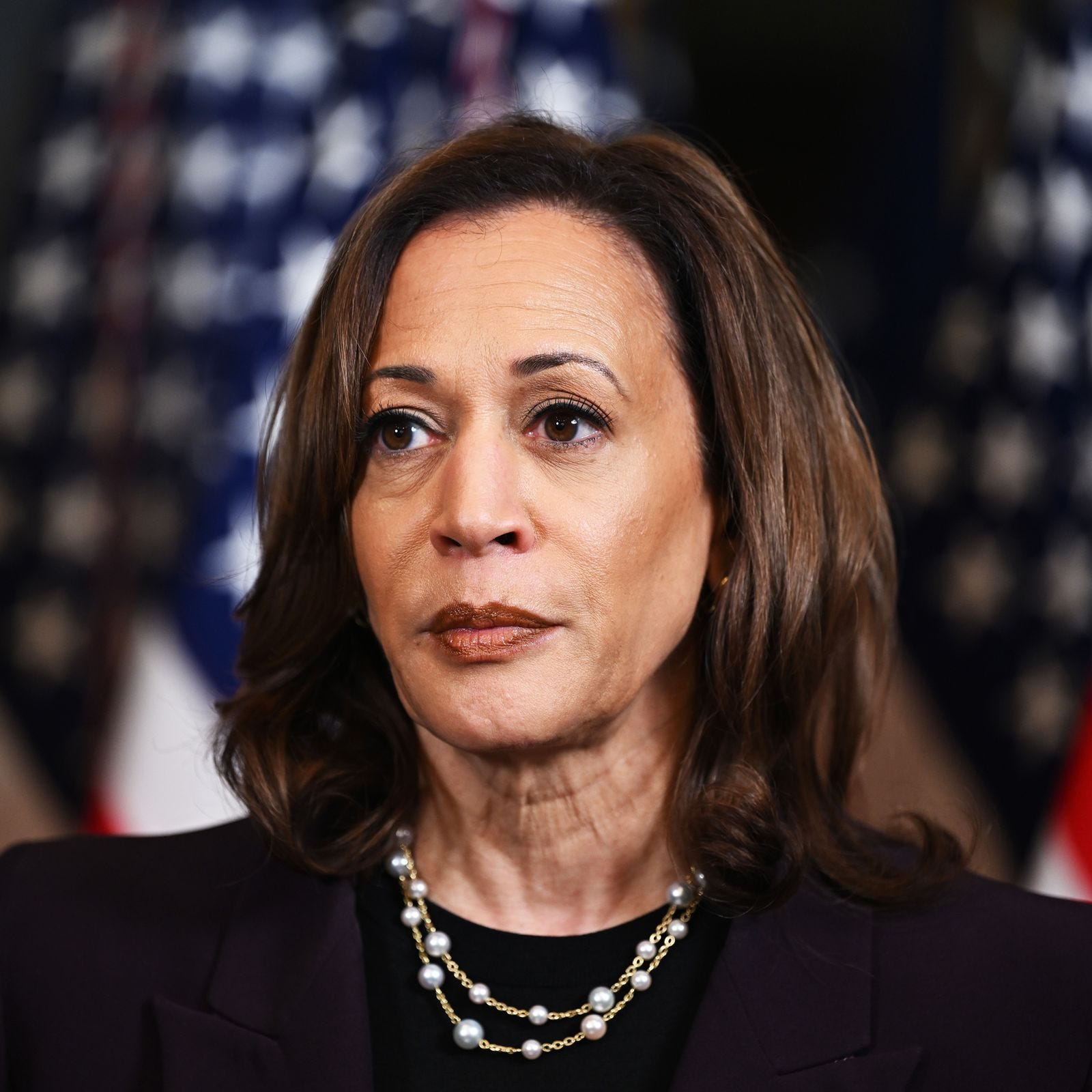
With the news that former Vice President Kamala Harris will travel to Michigan this week to campaign alongside Democratic Senate nominee Abdul El-Sayed, the pairing offers a stark lesson in political irony.
Perhaps a candidate whose presidential ambitions floundered largely due to her convoluted support for single-payer health care can explain to El-Sayed why championing socialized medicine may quickly become an albatross around his neck in a competitive swing state.
A History of Flip-Flopping
During her failed 2020 presidential campaign, then-Senator Harris took nearly as many positions on single-payer health care as there are days in a week.
Her shifting stances began during a January 2019 town hall when she casually admitted her support for canceling people’s current private health insurance, stating flippantly, “Let’s eliminate all of that. Let’s move on”. When faced with the immediate political backlash of proposing to throw millions of Americans off their existing plans, Harris attempted to walk the statement back.
She later claimed to support Senator Bernie Sanders’ sweeping single-payer bill—which explicitly banned private coverage for treatments covered by the government—while simultaneously trying to claim she supported private supplemental insurance for things like plastic surgery.
By July 2019, Harris tried a third approach, rolling out a convoluted plan that claimed to allow private insurers to offer Medicare plans over a 10-year transition period. This proposal managed to offer the worst of both worlds: it threatened the employer-based coverage most Americans rely on, while simultaneously angering the progressive base who viewed it as a retreat from pure socialized medicine.
To the extent that any single issue sank Harris’ 2020 candidacy, it was this constant flip-flopping. She looked uninformed and inauthentic, engaging in calculated political pandering rather than articulating a coherent policy vision.
A Warning for El-Sayed
Harris could also use her visit to educate El-Sayed on the political toxicity of providing free, taxpayer-funded health coverage to individuals in the country illegally. During her 2020 run, Harris publicly stated her support for allowing undocumented immigrants to qualify for free health benefits.
While El-Sayed’s campaign has heavily emphasized making health care more affordable, he faces many of the same political vulnerabilities that doomed Harris’s primary run.
Conservatives have already begun pointing out the hypocrisy of El-Sayed’s push to force all Americans into a government-run health plan. Critics have noted that his own wife, a psychiatrist, does not accept Medicare reimbursement in her practice. The obvious question remains: If Medicare is the gold standard for all Americans, why doesn’t his own family participate in it now?
As the Michigan Senate race tightens, El-Sayed may soon discover the same painful truth Harris learned over six years ago: socialized medicine is an ideological shibboleth that loses its appeal the moment voters understand its full implications.