

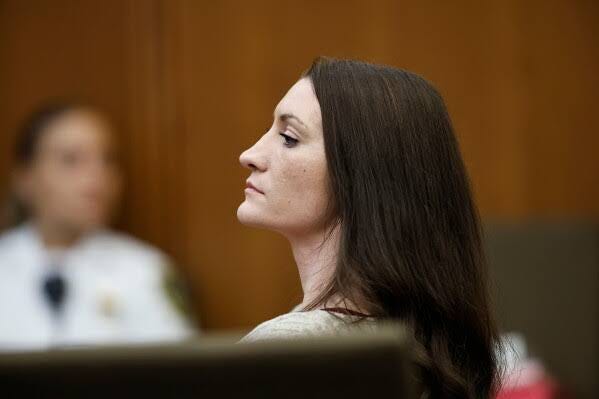
In a stunning reversal following a recent mistrial, the defense attorney for Lindsay Clancy—the Massachusetts mother accused of strangling her three young children—is now arguing there is “no evidence” she actually committed the murders.
During a court hearing on Tuesday, defense lawyer Kevin Reddington marked a massive departure from his original trial strategy. Throughout the initial proceedings, Reddington did not dispute that Clancy killed her 5-year-old daughter, Cora, 3-year-old son, Dawson, and 8-month-old baby, Callan, inside their Duxbury home in early 2023. Instead, he relied heavily on an insanity defense, arguing that she was suffering from severe postpartum psychosis and was overmedicated to the point that she lacked criminal responsibility for the tragedy.
However, after a deadlocked jury resulted in a mistrial earlier this month, Reddington has completely changed his tune. “There is no evidence that she admitted she did this,” Reddington argued in Plymouth County Superior Court, labeling the original police investigation as “ridiculous” and speculative.
Reddington noted that Clancy has no memory of killing her children and was simply told by police that she had strangled them. He questioned the accuracy of the statements she allegedly made at the hospital following her subsequent suicide attempt, challenging the court by asking, “Why would she kill those three children?”
The sudden pivot caught the prosecution completely off guard. Prosecutor Shanan Buckingham fired back during her rebuttal, noting that this was the very first time Reddington had ever questioned the physical evidence of the crime. Buckingham called the new defense angle “laughable,” insisting that the state possesses “voluminous” evidence proving Clancy planned and executed the murders while entirely capable of understanding the severity of her actions.
Judge William Sullivan has scheduled a follow-up hearing for November 2 to consider Reddington’s motions and determine whether prosecutors will proceed with a retrial. Until then, the dramatic shift in defense strategy adds a jarring new layer of complexity to a deeply tragic case that has already captivated the nation.