

For much of the 20th century, the question of how to stabilize an inherently unstable economy divided the financial world. Keynesians believed governments could manage demand to prevent another Great Depression, while monetarists, led by Milton Friedman, argued that such continuous intervention would only trigger the rampant inflation seen in the 1970s.
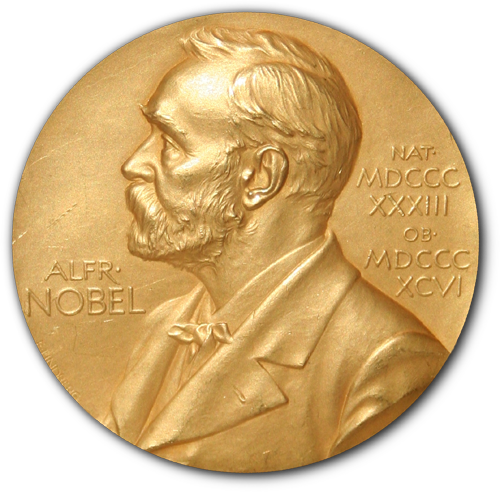
Today, most central bankers rely on a third path—a school of thought known as “New Keynesianism.” On October 12, the Royal Swedish Academy of Sciences awarded the Nobel Memorial Prize in Economic Sciences to two of the movement’s chief architects: Americans Robert Hall of Stanford University and Michael Woodford of Columbia University.
The Shift to Microfoundations
The Nobel committee honored Hall and Woodford for reconstructing macroeconomics on “microfoundations.” Unlike earlier Keynesians and monetarists who built top-down models based on broad economic aggregates (like total money supply or mass employment), Hall and Woodford built their models from the bottom up. They rooted their macroeconomic theories in the day-to-day behavior and decision-making of individual consumers and businesses.
Hall’s Consumer Smoothing
Robert Hall’s contribution focused on consumer spending habits. His model proposed that consumers are forward-looking and adjust their spending based on their projected lifetime income, rather than just their current paycheck. Because people care about their financial future, they tend to “smooth” their consumption over time. If they experience a sudden, temporary financial windfall, they are more likely to save it for a rainy day than spend it immediately, adjusting their spending only when there is a fundamental shift in their long-term earning power.
Woodford’s Interest Rate Blueprint
Michael Woodford’s work provided a new instruction manual for central banks. Drawing on the early 20th-century theories of Swedish economist Knut Wicksell, Woodford modeled how central banks could use interest rates as their primary stabilizing tool. He argued that the economy has a “natural” rate of return on investment, driven by factors like technological progress and saver patience.
If central banks keep interest rates below this natural rate, businesses borrow excessively, triggering an inflationary boom. If rates are set too high, a deflationary spiral begins. In his seminal 2003 book Interest and Prices, Woodford argued that central banks shouldn’t try to fine-tune the money supply, but instead focus on aligning their interest rates with this natural rate of return. His framework became the backbone of modern central banking during the “Great Moderation,” a period of steady growth and low inflation that preceded the 2008 financial crisis.
Modern Challenges to the Framework
Despite their Nobel-winning brilliance, New Keynesian models are facing unprecedented friction in the modern era. Woodford’s “natural rate” of interest is a theoretical concept that cannot be directly observed or measured in real-time, leaving central bankers to guess its position based on how the economy reacts. Furthermore, Hall’s assumption that consumers act entirely rationally has been challenged by real-world behavior, where people frequently overreact to temporary windfalls and ignore long-term economic shifts.
The framework is also encountering political and practical resistance. Woodford’s model suggests central banks should broadcast their future rate moves to the market, allowing investors to adjust smoothly. However, current Federal Reserve leadership under Kevin Warsh has pushed back against this extreme transparency, arguing that a degree of uncertainty prevents a “hall of mirrors” where the market and the Fed do nothing but watch each other.
With the global economy currently weathering massive supply-side shocks—from pandemic hangovers to geopolitical conflicts—rate-setters are increasingly forced to choose between managing inflation and preventing unemployment. New Keynesian theory provided the blueprint for the 21st-century economy, but the messy reality of modern political economics is putting that blueprint to the ultimate test.