

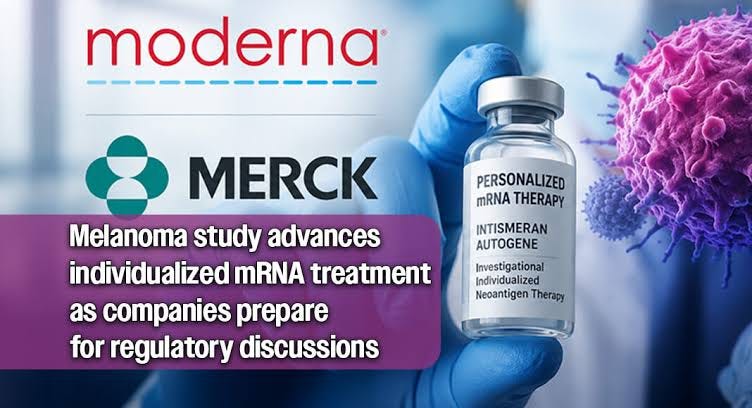
Merck and Moderna have presented highly anticipated results from their Phase 3 INTerpath-001 trial at the European Society for Medical Oncology (ESMO) Congress 2026. The landmark study evaluated the efficacy of intismeran autogene, a personalized mRNA cancer vaccine, administered in combination with Merck’s immunotherapy drug Keytruda (pembrolizumab) in patients with high-risk melanoma following complete surgical resection.
According to the late-breaking data revealed during the Presidential Symposium, the combination therapy successfully met its primary endpoint. The treatment reduced the risk of recurrence or death by 42% compared to using Keytruda alone. The two-year recurrence-free survival rate stood at 82.2% for the combination arm, versus 70.0% for patients receiving only Keytruda. The trial also achieved its key secondary endpoint, reducing the risk of distant metastasis or death by 38%, with a two-year distant metastasis-free survival rate of 88.5% compared to 80.2% for the monotherapy.
The innovative mRNA therapy is designed to customize treatment based on the unique mutational signature of an individual patient’s tumor, effectively training the immune system to recognize and attack the cancer cells. While the clinical results met the benchmarks anticipated by medical professionals and analysts, Wall Street’s reaction was surprisingly muted. Following the data disclosure, shares of Moderna plunged more than 17%, while Merck saw a nearly 2% decline, suggesting that investors may have priced in an even more dramatic survival benefit. The companies noted no new safety signals were observed and stated they are now actively engaging with regulatory authorities based on these findings.