

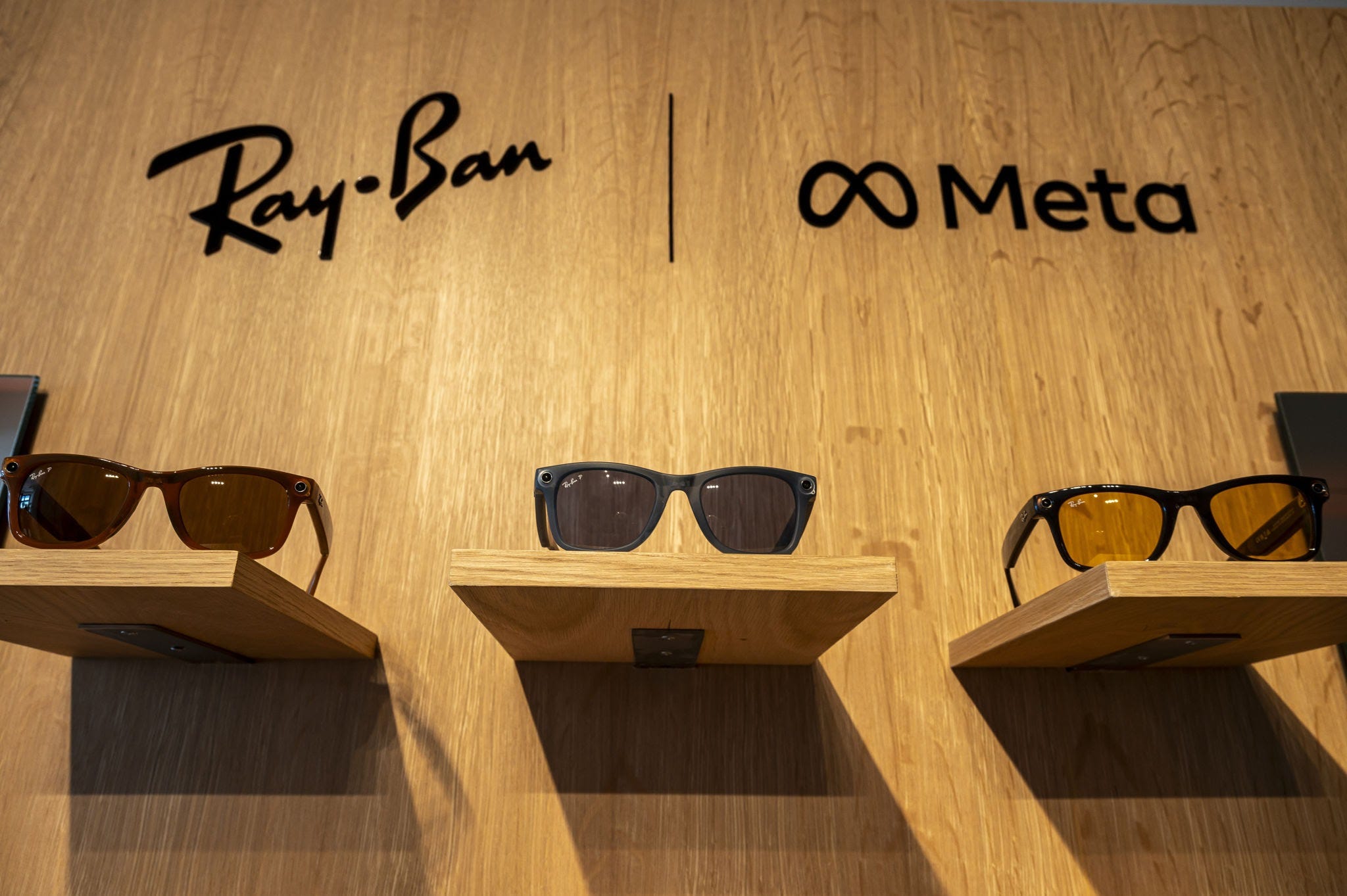
Meta Platforms is expected to debut a new range of smart glasses at its annual Connect conference on Wednesday, highlighted by a heavily anticipated camera-free model. The move comes as public and legal scrutiny mounts over the privacy implications of artificial intelligence-powered wearables capable of covertly recording people in public spaces.
The social media giant has quickly become an early leader in the AI wearables market, selling over seven million units of its current camera-equipped smart glasses developed in partnership with eyewear conglomerate EssilorLuxottica.
However, the devices’ growing popularity has triggered a fierce backlash regarding consent. Several restaurants, cinemas, and theaters in the UK and US have recently restricted their use on the premises, while critics have expressed alarm over the ease with which users can secretly photograph or film unsuspecting individuals.
Enter ‘Luna’
To combat these concerns, Meta is reportedly gearing up to introduce a camera-free model internally dubbed “Luna.”
According to industry reports, the new devices will be offered in popular styles like the Clubmaster and Burbank. By completely removing the camera hardware, Meta was able to slim down the temples, making the device look nearly identical to standard eyeglasses.
Without visual capture capabilities, Luna will pivot to a voice-first interface. The glasses will reportedly feature six built-in microphones and directional speakers, allowing wearers to interact seamlessly with Meta’s AI assistant and its newly launched consumer AI agent, Muse. A physical side button will also provide quick access to voice commands.
Lingering Privacy Questions
While stripping the camera addresses the most immediate fear of covert filming, analysts warn that the Luna model will not eliminate privacy concerns entirely.
“Microphones and audio collection could trigger similar concerns, although likely to a lesser degree,” noted Linda Sui, founder of market research firm Smart Analytics Global. Six active microphones mean the device is still constantly listening, raising questions for corporate IT departments and privacy advocates about how audio data is processed, retained, and utilized by Meta’s AI services.
The company is currently battling a proposed class-action lawsuit in California alleging that human annotators involved in training Meta’s AI reviewed and labeled footage containing private moments that were uploaded to the company’s servers from the current generation of glasses. Meta contests the allegations.
In addition to the camera-free Luna, Meta is still expected to introduce an updated third-generation version of its standard, camera-equipped Ray-Ban smart glasses during the Connect event, suggesting the company is attempting to offer a diverse lineup to cater to different consumer comfort levels.