

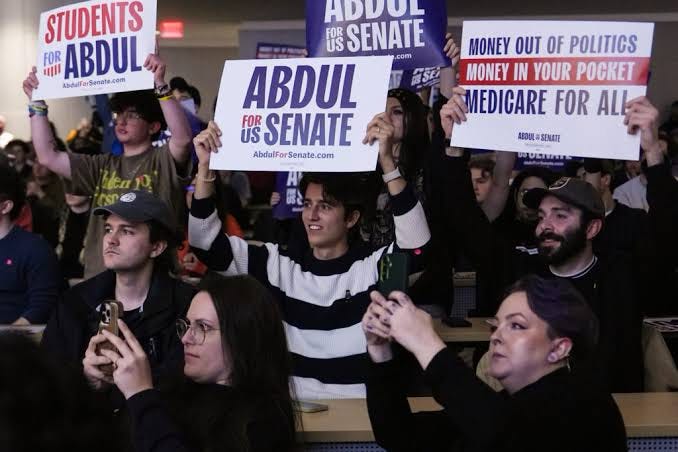
The heated U.S. Senate race in Michigan between Republican Mike Rogers and Democrat Abdul El-Sayed is placing significant strain on the state’s Jewish and Arab American communities. Amid the ongoing war in Gaza, deep-seated divisions are bubbling to the surface, forcing voters in critical battleground areas—particularly the Detroit suburbs—to grapple with intense personal questions regarding faith, identity, and political loyalty.
Tensions have been exceptionally high following the March attack on Temple Israel in West Bloomfield, an incident that deeply shook the local Jewish community. Capitalizing on these anxieties, Rogers has actively courted Jewish voters in Oakland County by portraying El-Sayed—who would be the nation’s first Muslim senator if elected—as an extremist. Allies of Rogers have repeatedly invoked controversial claims, suggesting El-Sayed cannot condemn terrorism due to alleged ties to the Muslim Brotherhood.
The escalating political rhetoric has prompted strong pushback. Several Arab American leaders who had previously aligned with President Donald Trump are now actively distancing themselves from the Republican party’s messaging. Dearborn Mayor Abdullah Hammoud strongly condemned the rhetoric, describing the targeted political attacks on Muslim politicians as “very problematic.”
Ultimately, the divisive campaign tactics are complicating broader efforts to unite Michigan’s diverse electorate ahead of November. Reflecting on the tense atmosphere, Jewish Democratic activist Lori Goldman described the current political climate as “a fear campaign,” warning that the divisive rhetoric is “spreading, and it’s not spreading slowly.”