

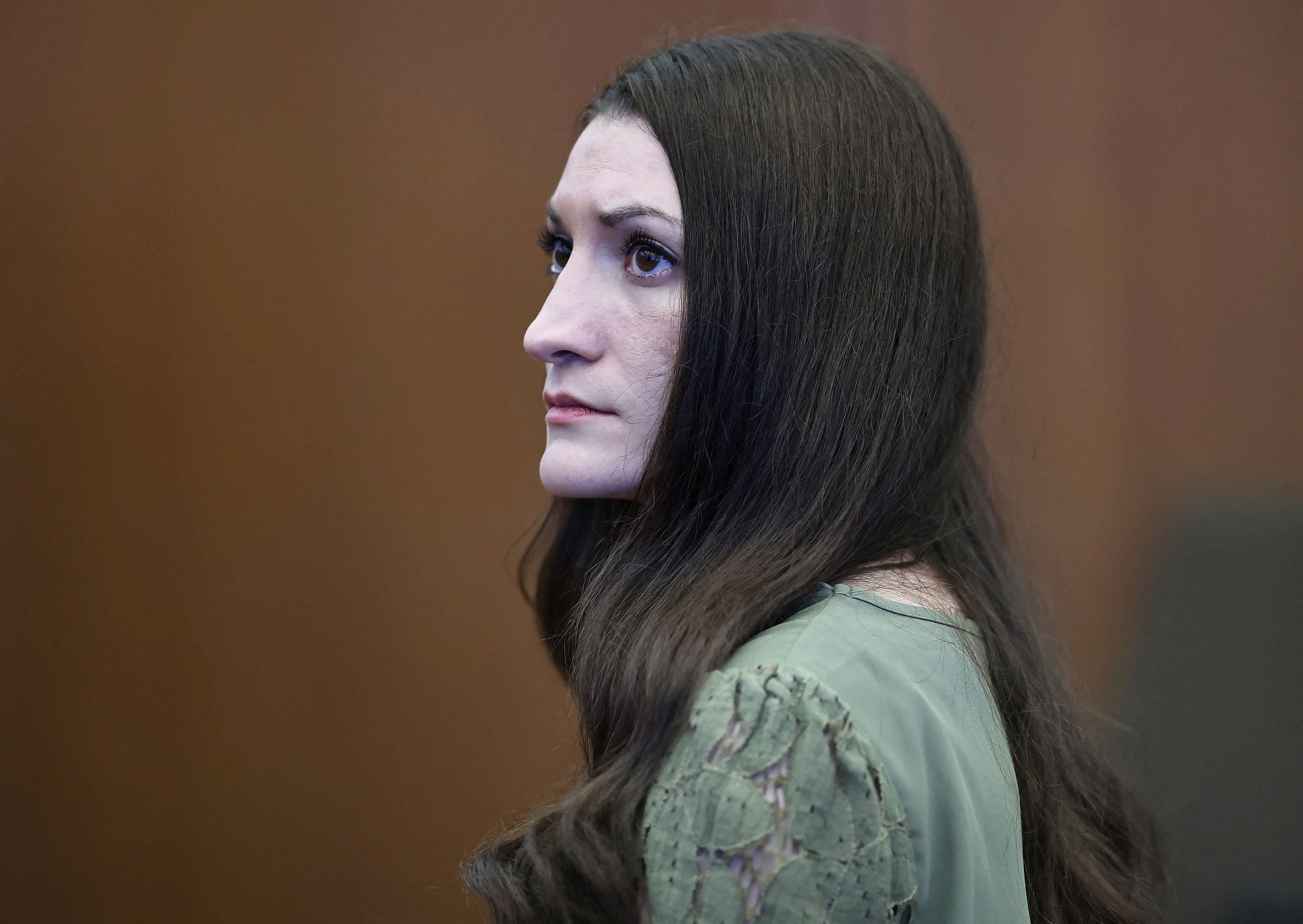
A Massachusetts judge declared a mistrial on Friday in the high-profile murder case of Lindsay Clancy, the mother accused of killing her three young children in early 2023. After nearly six weeks of testimony and seven days of deliberation, jurors informed Judge William Sullivan they were hopelessly deadlocked.
The tragic case has reignited national conversations about postpartum mental health and how the justice system treats mothers who commit infanticide.
The Crime and the Competing Narratives
There is no dispute about the physical events of the tragedy: In January 2023, the 36-year-old former labor and delivery nurse strangled her three children—Cora (5), Dawson (3), and Callan (8 months)—with exercise bands in the basement of their Duxbury home. She then cut her own wrists and neck and jumped from a second-story window, a suicide attempt that left her permanently paralyzed.
The trial hinged entirely on her state of mind at the time.
The Defense: Attorney Kevin Reddington argued that Clancy was a devoted mother suffering from severe postpartum psychosis, pushing for a verdict of not guilty by reason of insanity. Family members, including her ex-husband Patrick Clancy, testified about her intense struggles with mental health following the birth of her third child, including the myriad of psychiatric medications she had been prescribed. Following the killings, she reportedly claimed a man’s voice told her that if she didn’t act immediately, she would lose her chance.
The Prosecution: Prosecutors maintained that Clancy fully grasped the wrongfulness of her actions and meticulously planned the murders. They pointed to evidence that she mapped out the time it would take for her husband to pick up takeout and run to a pharmacy, intentionally sending him away to ensure he was out of the house long enough for her to carry out the killings. A prosecution psychologist testified that Clancy planned to end her own life and chose to kill her children because she believed they would suffer without her.
The Holdout Juror
Following the mistrial, Reddington claimed the jury was hung up by a single holdout. According to the defense, 11 jurors were ready to acquit based on insanity, but one juror refused to apply the concept of reasonable doubt. Earlier on Friday, Reddington made an emergency—and ultimately unsuccessful—appeal to Massachusetts’ highest court to have the juror removed.
“They know that they were robbed, by one man, for whatever his agenda was, who stole seven weeks of the lives of these other jurors,” Reddington told reporters outside the courthouse.
National Attention
The harrowing details of the case have drawn widespread comparisons to Andrea Yates, the Texas woman who drowned her five children in 2001 and was eventually found not guilty by reason of insanity.
The trial even captured the attention of the White House. President Donald Trump addressed the mistrial from the Oval Office, calling the incident a “horrible tragedy.” Anticipating a retrial, Trump remarked: “She did a horrible, horrible thing. Can’t be worse. But you’ll find out what the price to pay is. There’ll be a price.”
What Happens Next
Clancy remains in custody at a state psychiatric hospital. If retried and convicted of murder, she faces a mandatory life sentence. If ultimately found not guilty by reason of insanity, she would be committed to a psychiatric facility for ongoing evaluation.
Plymouth County District Attorney Tim Cruz stated that his office has not yet decided whether to pursue a retrial, though he emphasized that “children were murdered, and it’s our job to seek justice.” A follow-up hearing is scheduled for September 29.