

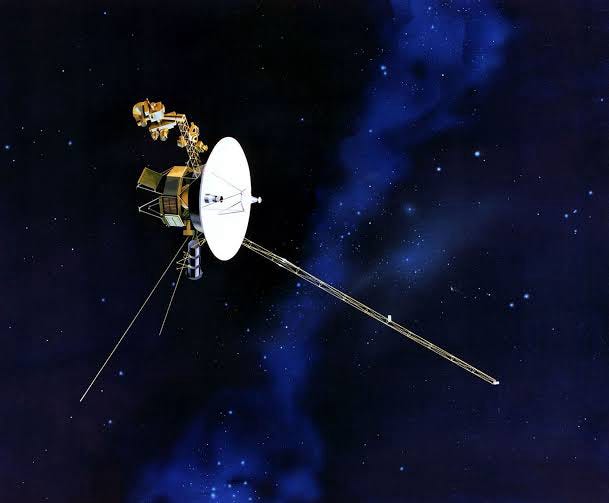
NASA’s Voyager 1 spacecraft has reached an unprecedented distance milestone: traveling one light-day away from Earth.
The pioneering space probe hit the historic mark on Wednesday after traveling more than 16 billion miles since its launch in 1977. At this immense distance, it now takes a full 24 hours for radio signals transmitted by the spacecraft to reach Earth.
Originally launched 49 years ago to explore the outer solar system, Voyager 1 successfully flew past Jupiter in 1979 and Saturn in 1980 before continuing its outward trajectory. In August 2012, it made history by becoming the first human-made object to cross the heliosphere and enter interstellar space—the vast, expansive region between star systems.
Despite its age, the plutonium-powered spacecraft remains operational. A dedicated skeleton team at NASA’s Jet Propulsion Laboratory in Pasadena, California, continues to send weekly commands to the probe. Project manager Suzanne Dodd praised the team’s expertise for keeping the aging spacecraft functioning, describing the historic probe as “the little engine that could” and a “national treasure.”
Voyager 1 serves as more than just a scientific instrument; it acts as Earth’s ambassador to the cosmos. The probe carries a 12-inch gold-plated phonograph record containing images, diagrams, and spoken greetings in 55 languages intended for any extraterrestrial intelligence that might find it. It is also responsible for one of humanity’s most profound achievements in photography: the iconic 1990 “Pale Blue Dot” image, which captured a distant portrait of Earth from beyond Neptune.
While Voyager 1 continues to blaze a trail into the unknown, NASA estimates it will take another 18,000 years for the spacecraft to complete a one-light-year journey. Meanwhile, its twin probe, Voyager 2, is not expected to reach the one light-day distance until 2035.