

Nearly 70 million Trump Accounts have now been created for American children, marking a major expansion of the administration’s effort to encourage families to invest and build wealth for the next generation.
The White House announced Wednesday that every eligible minor child in the country had been automatically enrolled in a Trump Account. The Treasury Department said more than 60 million accounts were created through automatic enrollment as of Oct. 1, bringing the total number of accounts to nearly 70 million.
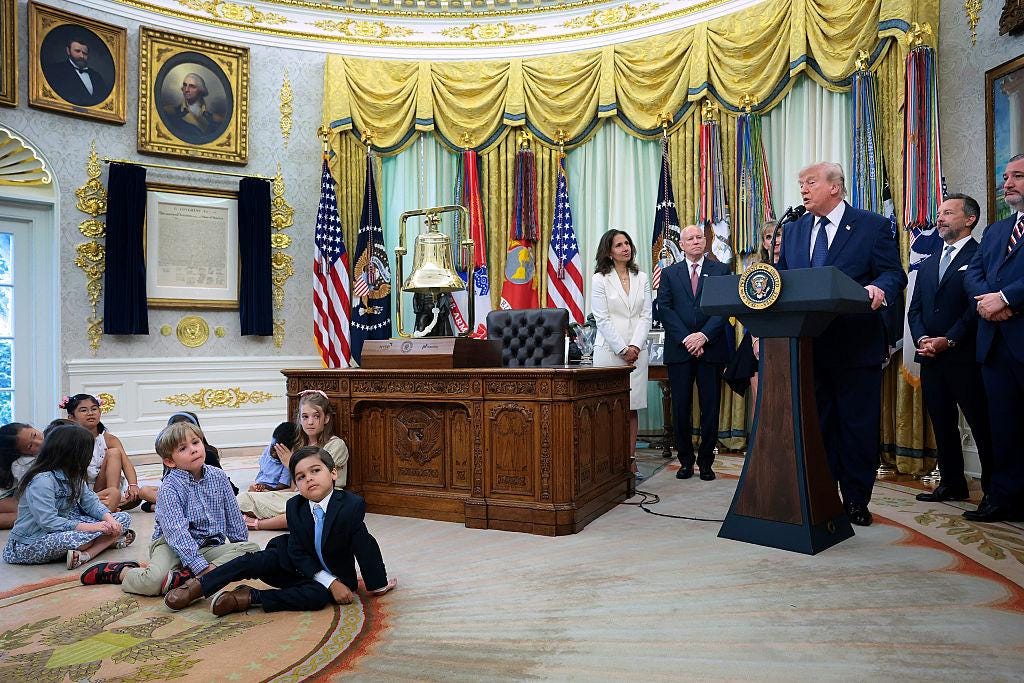
President Donald Trump celebrated the milestone at the White House, describing the program as a way to give children a financial stake in America’s economic future.
“Every single eligible minor child in America has now been automatically enrolled in a Trump account,” Trump said during the announcement.
What Are Trump Accounts?
Trump Accounts are tax-advantaged investment accounts created under the administration’s 2025 tax legislation.
The accounts are designed to allow money to be invested for a child’s future, with funds generally remaining invested until the child reaches adulthood. Parents and guardians can claim and manage the accounts through the official program application.
Automatic enrollment means families do not have to take the initial step of filing paperwork simply to have an account created.
However, parents still need to claim the accounts to manage them and access their benefits. The Treasury Department says parents must verify their identity and their relationship to the child through the official application.
$1,000 for Eligible Newborns
One of the most publicized features of the program is a $1,000 federal contribution for eligible children born between Jan. 1, 2025, and Dec. 31, 2028.
That contribution is invested rather than simply handed to families as cash.
The program also allows additional contributions, potentially giving families, relatives, employers and other organizations an opportunity to put more money into children’s investment accounts.
The accounts are intended to benefit from long-term investment growth and compound returns.
Billions in Private Contributions
Private donors are also contributing substantial sums to the program.
Michael and Susan Dell have pledged $6.25 billion to provide $250 contributions to approximately 25 million children. The contributions are being targeted based on eligibility criteria, including the income levels of ZIP codes where children live.
Other companies and philanthropists have also expressed interest in supporting the program.
Treasury Commissioner Frank Bisignano said during Wednesday’s White House event that more than 10 million accounts had already been funded with approximately $4.5 billion, with that amount expected to rise substantially in the days ahead.
Parents Must Still Take Action
Automatic enrollment does not mean parents can simply ignore the new accounts.
Families must claim the accounts if they want to manage them.
The Treasury Department says parents should use the official Trump Accounts application and be cautious about communications requesting sensitive information. Treasury officials have warned that legitimate government communications will not ask parents to provide passwords or other account credentials through unsolicited emails, texts or telephone calls.
That distinction is particularly important as millions of families begin receiving information about newly created accounts.
Supporters See a New Generation of Investors
Trump and his allies argue that the accounts could fundamentally change how young Americans think about saving, investing and ownership.
At the White House announcement, supporters repeatedly emphasized the potential for compound growth over decades.
Sen. Ted Cruz, R-Texas, who helped champion the legislation, described the program as a way to give every American child a personal investment account and a direct connection to the performance of the U.S. economy.
The White House has framed the initiative as part of a broader effort to expand financial opportunity and encourage more Americans to participate in the stock market.
Supporters also argue that exposing children to investing at a young age could increase financial literacy and encourage families to think about wealth-building earlier in life.
How Much Could the Accounts Be Worth?
The ultimate value of an individual Trump Account will depend on contributions, investment performance and how long the money remains invested.
A child whose account receives only an initial government contribution could see that money grow considerably over many years if it remains invested. Families that contribute additional funds could potentially accumulate substantially more.
But investment returns are not guaranteed. Stock-market investments can rise or fall, and the eventual value of an account will depend on market performance.
That makes financial education an important part of the program’s long-term impact.
A Major Experiment in Wealth Building
The scale of the program is unprecedented.
Rather than relying exclusively on families who already have the resources or financial knowledge to establish investment accounts for their children, the government has created accounts on behalf of virtually the entire eligible population of American minors.
The White House argues that this could help expand access to investment and narrow longstanding disparities in wealth accumulation.
Critics, meanwhile, have questioned whether the accounts will do enough for families struggling with immediate financial pressures and whether parents will actively claim and contribute to them.
For the administration, however, the rollout represents a major milestone.
Nearly 70 million American children now have an investment account waiting for them.
The next question is how many parents claim those accounts, how much additional money families and donors contribute and whether today’s automatic enrollment ultimately translates into greater financial participation and wealth for the next generation.