

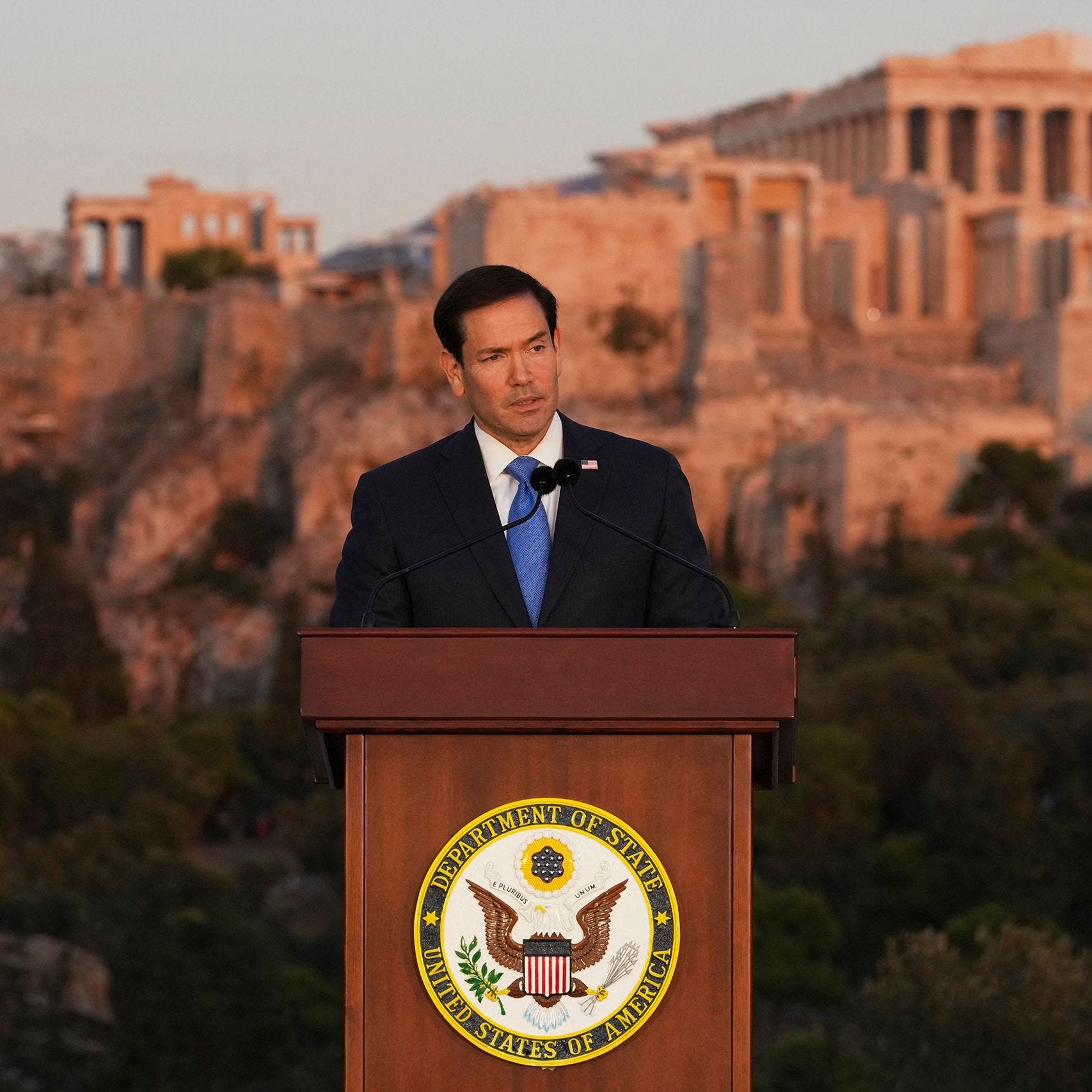
Recent discussions surrounding Secretary of State Marco Rubio’s international travel schedule have fixated on a perceived slight: that he deliberately bypassed Turkey during his recent diplomatic tours of Greece and Uzbekistan. While the narrative of a snub makes for compelling political theater, it rests on a geographical misconception. More importantly, it obscures the actual, ongoing debate in Washington regarding the administration’s broader foreign policy strategy.
First, the geographical reality: Secretary Rubio did not skip Turkey on a unified regional tour. His October 2026 travels comprised two distinct missions to entirely different spheres of influence. In early October, he visited Iceland, Greece, and Portugal, focusing on European defense and North Atlantic cooperation. Weeks later, he traveled to Samarkand, Uzbekistan, for the C5+1 Ministerial, followed by a trip to India to deepen economic and energy ties in Central and South Asia. Turkey was not omitted from a neighboring itinerary; it was simply not the focal point of these specific, distinct missions.
However, the questions surrounding Turkey’s absence from his schedule highlight a valid, bipartisan inquiry into the State Department’s current approach to global diplomacy. Turkey sits at the geographical and geopolitical crossroads of the world’s most pressing conflicts, holding significant leverage over both the Middle East and the war between Russia and Ukraine.
Foreign policy critics have recently pointed out that Rubio’s travel log—which recently included Colombia, Peru, and Ecuador alongside his European and Asian stops—seems to consciously avoid the world’s most volatile diplomatic hot spots. Observers argue that the nation’s top diplomat should be physically present in the epicenters of immediate crises, engaging face-to-face with pivotal players like Ankara. Public speculation about Rubio’s relationship with Turkey has also been elevated since the July 2026 NATO summit in Ankara; during that trip, a security threat prompted the President to switch planes, leaving Rubio and Treasury Secretary Scott Bessent to fly back on the original Air Force One, which acted as a decoy.
The State Department has firmly pushed back against the critique that Rubio is avoiding conflict zones. The administration’s stated strategy is one of proactive, rather than purely reactive, diplomacy. By focusing on peripheral regions and emerging markets—such as strengthening Central Asian trade ties with a 200-person commercial delegation and reinforcing Greek defense cooperation—the administration argues it is building economic and security partnerships that address long-term challenges before they escalate into crises. Aides also note that Rubio plays a central, behind-the-scenes role in interagency strategy for active conflicts, arguing that a Secretary of State does not need to physically travel to a flashpoint to manage it effectively.
Ultimately, evaluating Rubio’s travel requires looking past rumors of deliberate snubs. The absence of a stop in Ankara is not a geographical oversight, but a reflection of a deliberate strategy: prioritizing long-term alliance building and economic statecraft in stable regions over high-profile crisis management in volatile ones. Whether this peripheral approach to diplomacy yields better results for American interests than direct, on-the-ground engagement in the world’s hot spots remains the true debate to be had.