

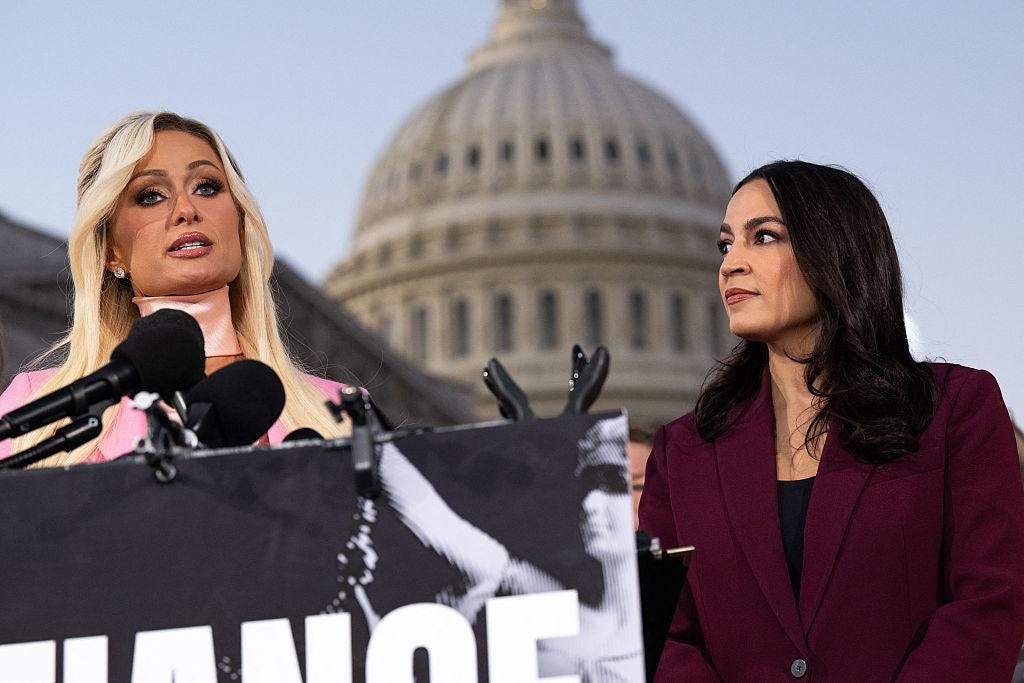
Paris Hilton has returned to Capitol Hill with a message for Congress: victims of sexually explicit artificial intelligence deepfakes deserve stronger legal protection, and lawmakers should stop delaying legislation designed to hold perpetrators accountable.
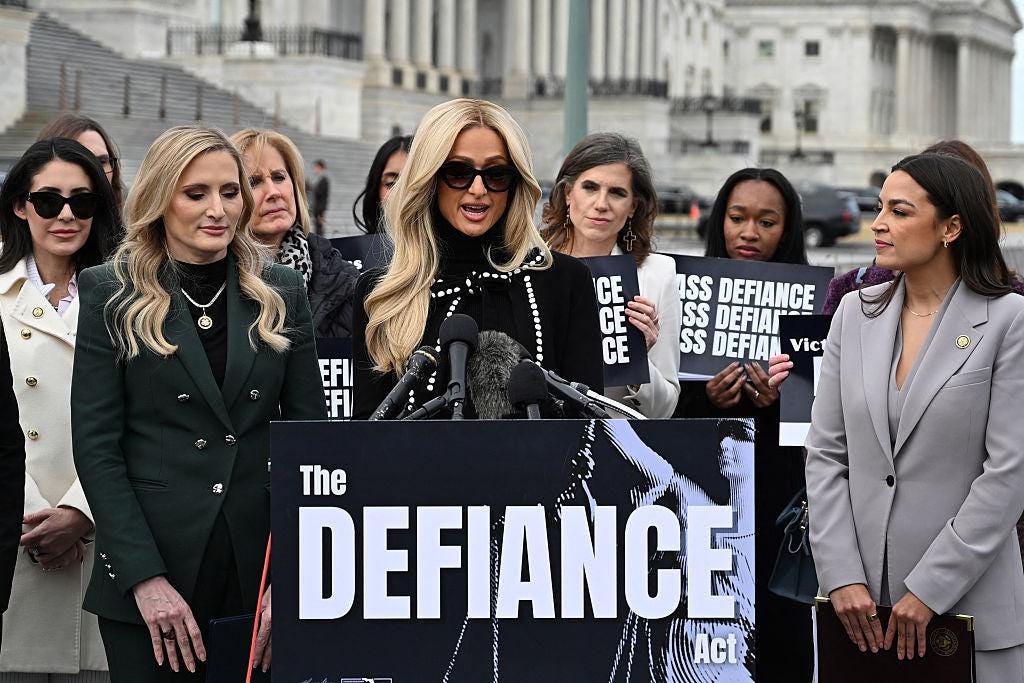
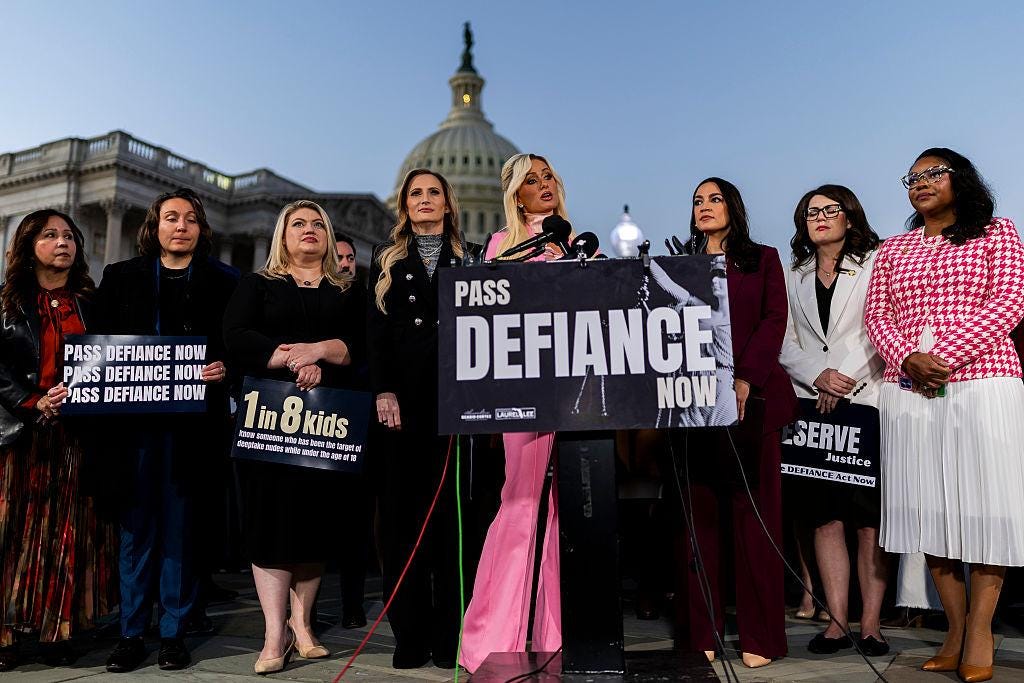
On November 17, Hilton joined Democratic Representative Alexandria Ocasio-Cortez of New York and Republican Representative Laurel Lee of Florida to urge the House of Representatives to pass the bipartisan DEFIANCE Act.
The proposed legislation would give individuals depicted in nonconsensual, sexually explicit AI-generated images the ability to pursue civil lawsuits against the people who create or distribute them.
The bill has already passed the Senate unanimously, but it remains stalled in the House despite growing pressure from lawmakers, technology advocates and victims of digital exploitation.
“For 10 months, this critical legislation has sat untouched in the House,” Ocasio-Cortez said, criticizing congressional leadership for failing to schedule a vote.
Paris Hilton Shares Her Personal Experience
Hilton’s involvement in the campaign is deeply personal.
In 2003, when she was 19, an intimate video involving Hilton was distributed publicly without her consent. She has repeatedly discussed the emotional consequences of that experience and the lasting impact of having private images circulated online.
Now, more than two decades later, she says artificial intelligence has created an even greater threat by making it possible to generate convincing sexually explicit images of virtually anyone.
Hilton has said that more than 100,000 sexually explicit AI-generated images depicting her exist online. She has also reported that her team identified deepfake images involving 83 of the 156 women serving in the 119th Congress.
The figures have not been independently verified, but they underscore the scale of the problem that advocates are asking lawmakers to address.
Hilton argued that even people with substantial financial resources and public platforms can struggle to stop the circulation of fabricated intimate images.
Her message to Congress is that ordinary women and young girls may face even greater difficulties protecting themselves.
What the DEFIANCE Act Would Actually Do
The Disrupt Explicit Forged Images and Non-Consensual Edits Act, known as the DEFIANCE Act, would establish a federal civil cause of action for victims of sexually explicit digital forgeries.
If enacted, the legislation would allow victims to sue individuals responsible for creating or distributing qualifying nonconsensual intimate deepfakes.
Among its proposed protections are:
Financial damages: Victims could seek statutory damages, actual damages and, where applicable, profits obtained by perpetrators.
Legal accountability: Individuals who create or distribute qualifying images could face civil lawsuits.
Removal orders: Courts could order the removal of offending images.
Extended filing period: Victims would generally have 10 years to bring a lawsuit, with the deadline tied to discovery of the violation or the victim turning 18, whichever occurs later.
Protection of privacy: The legislation provides mechanisms for victims to pursue cases while protecting their identities.
The proposal is intended to give victims control over pursuing justice rather than relying exclusively on criminal prosecutors or social media companies.
How the DEFIANCE Act Differs From the TAKE IT DOWN Act
The proposed legislation builds on the TAKE IT DOWN Act, which became federal law in May 2025 after receiving strong bipartisan support and being signed by President Donald Trump.
The TAKE IT DOWN Act makes the nonconsensual publication of certain intimate images, including AI-generated deepfakes, a federal crime. It also requires covered online platforms to establish procedures for removing reported material within 48 hours of receiving a valid request.
However, the two laws address different aspects of the problem.
The TAKE IT DOWN Act focuses on criminal penalties and removing harmful content from online platforms. The DEFIANCE Act would give victims an additional avenue: the ability to sue those responsible and seek financial compensation.
Supporters argue that removing an image is not enough if the person who created it faces no meaningful personal consequences.
Bipartisan Support, but House Inaction Continues
One of the most notable aspects of the DEFIANCE Act is its bipartisan backing.
Ocasio-Cortez and Lee have joined forces to advance the legislation, demonstrating that concerns about nonconsensual sexual deepfakes extend beyond traditional political divisions.
The Senate passed the legislation unanimously in January 2026. Nevertheless, the House has yet to schedule a vote.
Hilton and the lawmakers are now directing their appeals toward House Speaker Mike Johnson, Majority Leader Steve Scalise and House Judiciary leadership, urging them to bring the legislation to the floor.
Advocates say the delay leaves victims without an important federal legal remedy, even as AI technology makes the creation and distribution of realistic fabricated images increasingly accessible.
A Growing National Challenge as AI Technology Advances
The controversy highlights a broader challenge facing policymakers: artificial intelligence is advancing faster than existing legal protections can adapt.
AI-generated images can be created using publicly available photographs, manipulated to appear authentic and distributed across multiple websites and social media platforms.
The consequences can extend well beyond embarrassment. Victims may experience harassment, threats, reputational damage, professional consequences and serious violations of personal privacy.
The problem also raises questions about the responsibilities of technology companies, social media platforms and developers of generative AI systems.
For Hilton, the issue is not simply about celebrity privacy. It is about protecting individuals who may lack the resources, visibility or legal support to fight back.
The Decision Now Rests With the House
The DEFIANCE Act represents another major effort to establish accountability for the misuse of artificial intelligence.
With bipartisan support already demonstrated in the Senate, advocates are increasingly questioning why the House has not moved forward.
Hilton’s latest appearance on Capitol Hill has renewed attention on the legislation and placed additional pressure on congressional leadership.
Whether lawmakers will finally schedule a vote remains uncertain. But the debate is becoming increasingly urgent as AI-generated sexual exploitation continues to challenge existing legal protections.
The central question facing Congress is straightforward: Should people who use artificial intelligence to create and distribute sexually explicit images of others without consent face direct legal consequences?
For Hilton and the victims supporting the legislation, the answer is clear.