

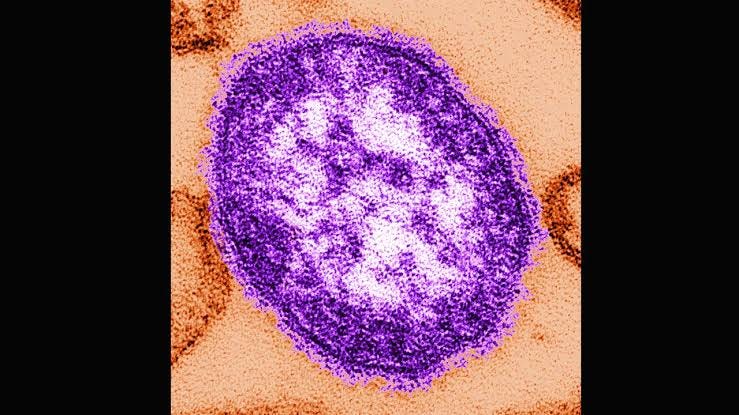
The Pennsylvania Department of Health has formally asked the Centers for Disease Control and Prevention (CDC) for emergency epidemiological assistance to help manage a spiraling measles outbreak—but with a significant caveat. State officials are demanding that the federal agency officially recognize four recent local deaths associated with the disease before they accept the aid.
The unprecedented conditional request highlights a growing fracture between state health administrators and federal authorities over the tracking of public health data. Pennsylvania has been the epicenter of the nation’s most severe measles resurgence in decades, driven heavily by increasing vaccine hesitancy.
On Wednesday, the state health department confirmed that 731 measles cases have been recorded across 38 counties so far this year, with a spike of 100 new cases reported in just the last week.
A Dispute Over the Data
The tension stems from a recent change in how the CDC tracks and reports measles mortality. Historically, the CDC incorporated state-level epidemiological investigations into its national tracking. However, recent reports revealed that the administration directed the agency to rely instead on data from the National Center for Health Statistics (NCHS).
According to Pennsylvania authorities, the state has recorded four measles-associated deaths in 2026, with the two most recent fatalities confirmed in Jefferson and Mifflin counties involving unvaccinated individuals. The state’s rigorous investigative process for these fatalities includes a positive laboratory test, clinical evidence of infection, and a coroner’s confirmation that the death was not due to an unrelated cause. Despite this, the federal government’s count has yet to reflect these fatalities, prompting the state’s ultimatum.
Reversing Course on Federal Help
The conditional plea for an “Epi-Aid” team marks a shift for Pennsylvania officials, who had previously maintained they could handle the outbreak without federal intervention. However, as the highly contagious virus continues to spread rapidly through rural and undervaccinated pockets of the state, local resources have become increasingly strained.
Public health advocates and lawmakers have voiced alarm over the administrative roadblock. Senator Bill Cassidy, a Republican who chairs the Senate health committee, recently pointed to vaccine-skeptical rhetoric from federal officials as a contributing factor to the deadly resurgence in Pennsylvania.
Neither the CDC nor the Pennsylvania Department of Health immediately responded to requests for comment regarding whether the federal agency intends to honor the state’s conditions for deployment. In the interim, state health officials continue to urge all residents to check their immunization records and ensure their families are up to date on the measles, mumps, and rubella (MMR) vaccine.