

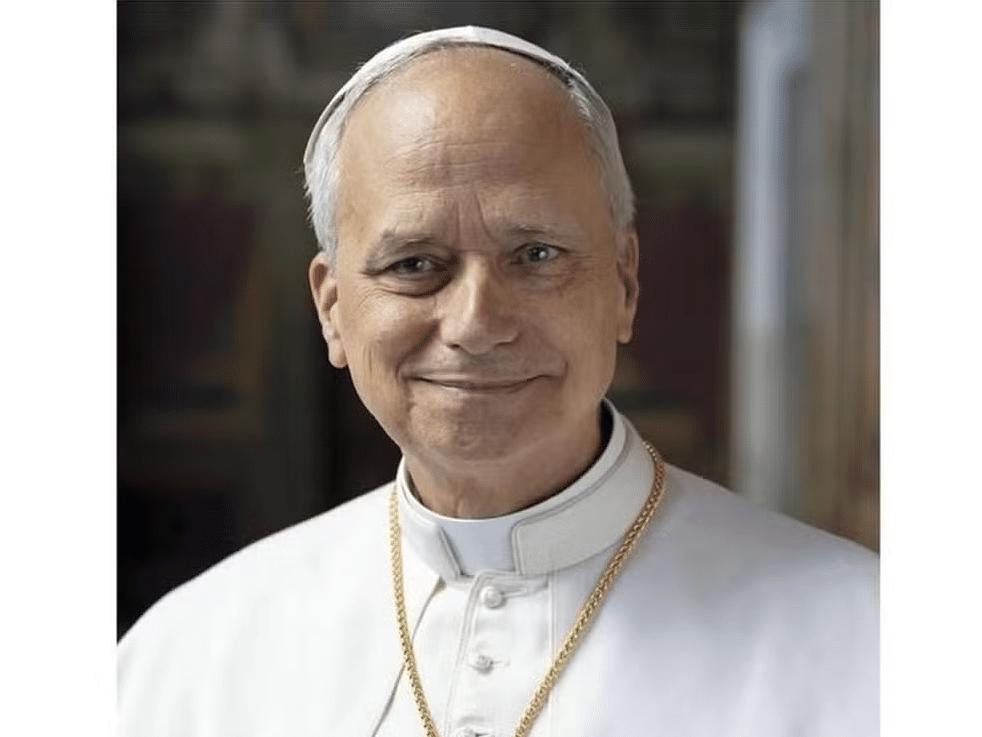
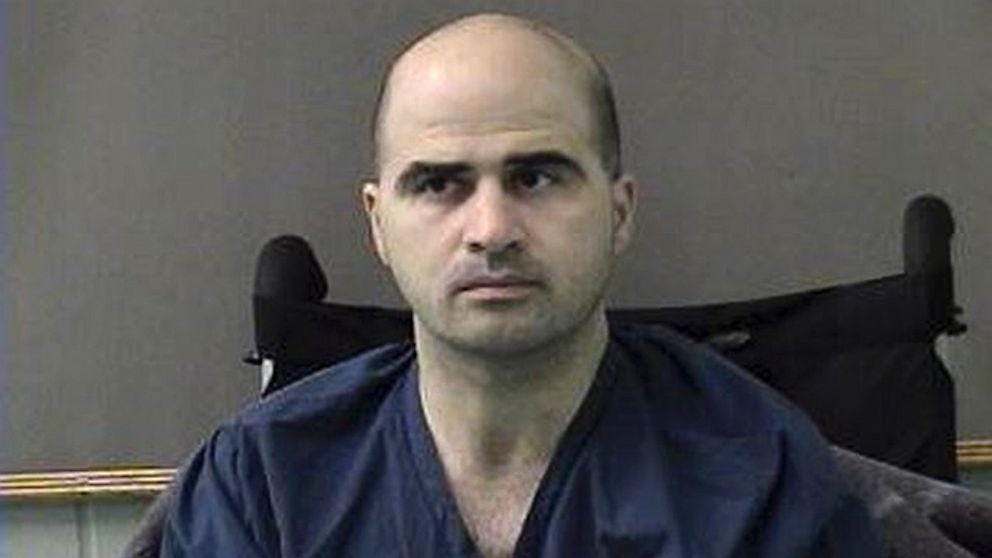
Pope Leo XIV has declared the death penalty “inadmissible,” renewing the Catholic Church’s opposition to capital punishment as the United States prepares to execute Nidal Malik Hasan, the former Army psychiatrist convicted of killing 13 people in the 2009 Fort Hood shooting.
In a message posted on October 10 to mark the World Day Against the Death Penalty, the pope said justice and public safety could be maintained without executions, emphasizing that even convicted criminals should retain the possibility of redemption.
The statement came amid controversy over the U.S. military’s plans to execute Hasan by firing squad on December 3, 2026, and the Pentagon’s announcement that the execution would be livestreamed. President Donald Trump has not yet made a final decision on whether to authorize the broadcast.
Pope Says Capital Punishment Violates Human Dignity
“The death penalty is inadmissible because it is an attack on the inviolability and dignity of the person,” Leo wrote in his message.
The pope added that effective detention systems can protect the public without completely depriving convicted individuals of the opportunity for redemption.
Leo’s statement echoed the Catholic Church’s revised teaching on capital punishment, introduced by Pope Francis in 2018. That revision declared the death penalty inadmissible in all circumstances, emphasizing the dignity of every human being and the Church’s commitment to working toward its abolition.
Although Leo did not directly mention Hasan or the Pentagon’s execution plans in his post, the timing placed his remarks in the middle of a growing American debate over capital punishment and the proposed public broadcast.
Nidal Hasan’s Execution Scheduled for December 3
The U.S. Army announced that Hasan’s execution by firing squad is scheduled for 1 p.m. Central time on December 3 at Fort Hood, Texas.
President Donald Trump approved the death sentence on October 2, following the completion of the military appeals process. Acting Army Secretary Adam Telle subsequently directed that the execution take place on the scheduled date.
Hasan was convicted by a military jury in 2013 of all 42 counts against him, including 13 counts of premeditated murder and 32 counts of attempted murder. The jury sentenced him to death five days after finding him guilty.
The military has not carried out an execution since 1961. If carried out as scheduled, Hasan’s execution would be the first U.S. military execution by firing squad since 1945. Further legal proceedings could still delay the date.
Livestream Proposal Sparks Religious and Political Backlash
The Pentagon’s announcement that Hasan’s execution would be livestreamed has generated additional controversy.
Defense Secretary Pete Hegseth has supported the proposed broadcast, according to Reuters. However, Trump has not made a final decision, and Vice President JD Vance has expressed skepticism about whether the livestream should proceed. Vance has said he would not watch it if it went ahead.
Cardinal Pietro Parolin, the Vatican secretary of state, criticized the proposal, saying it was unacceptable to turn an execution into a spectacle.
Archbishop Paul Coakley, president of the U.S. Conference of Catholic Bishops, also called for the decision to be reconsidered. He condemned Hasan’s actions while arguing that broadcasting the execution would be inconsistent with respect for human life.
The debate now extends beyond whether the death sentence should be carried out to whether the execution should be publicly broadcast.
Fort Hood Shooting Killed 13 People
Hasan carried out the November 5, 2009, shooting at Fort Hood, Texas, where he opened fire inside a medical facility serving military personnel.
The attack killed 13 people and wounded 32 others. Hasan, then an Army psychiatrist, was arrested after being shot by responding officers. He was paralyzed following the encounter.
During his court-martial, Hasan acknowledged that he was responsible for the shooting and offered little defense against the charges. He argued that he had acted to prevent American soldiers from deploying to Afghanistan and killing Muslims.
The military jury convicted him and imposed the death penalty in August 2013. His conviction and sentence later survived the military appeals process, and the Supreme Court declined to review his case in March 2025.
Debate Intensifies Following Tennessee’s Failed Execution
The controversy surrounding Hasan’s scheduled execution comes shortly after Tennessee’s failed attempt to execute death-row inmate Christa Pike by lethal injection on September 30.
Pike survived the procedure and was hospitalized before returning to prison. Her case prompted an investigation into the execution protocol and renewed scrutiny of lethal-injection procedures.
The Tennessee incident has added to wider questions about execution methods, the administration of capital punishment and the responsibilities of officials overseeing executions.
Hasan’s planned execution would use a firing squad rather than lethal injection, and the proposed livestream raises a separate set of concerns about public access, dignity and the treatment of executions as public events.
A Clash Between Catholic Teaching and U.S. Capital Punishment
The Catholic Church’s opposition to the death penalty is rooted in its teaching on human dignity, the protection of life and the possibility of redemption.
That position contrasts with U.S. law, which permits capital punishment in certain jurisdictions and under federal military law, subject to applicable legal procedures.
Supporters of capital punishment argue that the death penalty can serve as punishment for the most serious crimes and reflect the gravity of victims’ suffering. Opponents contend that executions are incompatible with human dignity and raise questions about the possibility of error, the methods used and the irreversible nature of the punishment.
The dispute over Hasan’s case brings those competing perspectives into focus. His conviction for the Fort Hood massacre is established, but the questions surrounding the method and potential broadcast of his execution remain the subject of public debate.
What Happens Next?
Hasan’s execution remains scheduled for December 3, although further legal action could affect the timetable. Trump’s decision on whether to authorize a livestream also remains unresolved.
The pope’s statement does not directly address the legal status of Hasan’s sentence, but it reinforces the Catholic Church’s position that capital punishment should not be used, even against individuals convicted of grave crimes.
The coming weeks will determine whether the Pentagon proceeds with the proposed broadcast and whether additional legal challenges affect the execution schedule. The case has already become a focal point for a broader debate over capital punishment, religious teaching and the limits of public access to state executions.