

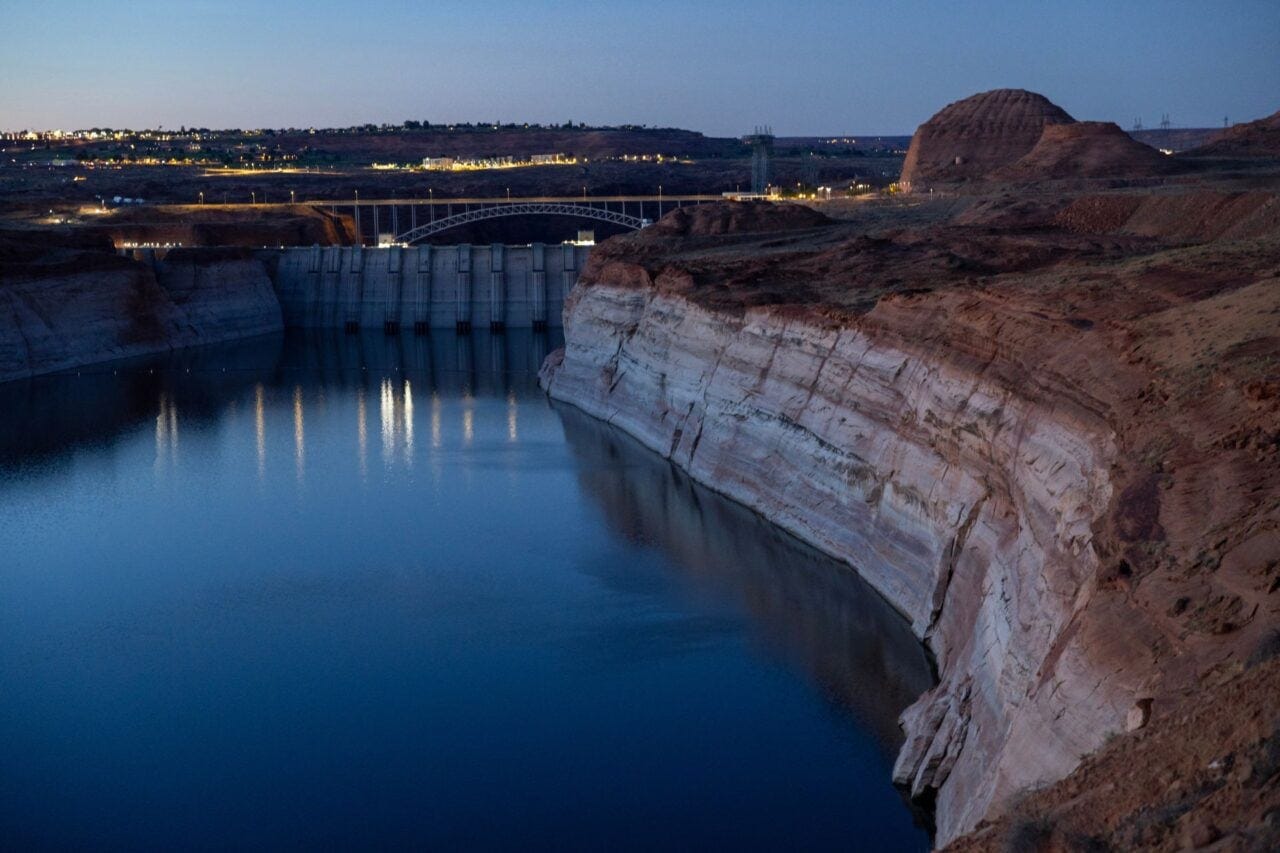
Recent catastrophic flooding across the U.S. Southwest has delivered a crucial silver lining: a vital influx of water to the region’s severely depleted reservoirs.
After years of a devastating megadrought that dropped water supplies to record lows, a series of late-fall storms swept through the Four Corners region in late October and early November 2026. The most dramatic recovery is visible at Lake Powell, the second-largest reservoir in the United States, which has surged more than 21 feet from its mid-September lows.
Experts estimate that the recent storm runoff added a net gain of over 1 million acre-feet of water to the reservoir along the Utah-Arizona border. This massive influx is enough to supply roughly 4 million average families for an entire year. The storms have increased Lake Powell’s total capacity to approximately 27%, dwarfing the gains typically seen during this time of year. Other regional water supplies, such as New Mexico’s Navajo Reservoir and Arizona’s Salt and Verde river systems, also saw substantial capacity boosts from the heavy rainfall.
However, officials strongly caution that the region is far from full drought recovery. “We need to figure out how to be resilient in a drier future. And we’re not quite there yet,” noted climate researcher Hoerling.
The severe weather also wrought significant destruction, causing an estimated $200 million in preliminary flood losses in New Mexico and severely damaging federal-aid highways in Colorado. Despite the devastation, local leaders emphasize the long-term benefits, noting that the heavy precipitation has provided a crucial early start to the winter snowpack in the higher elevations.