

In a boundary-pushing experiment, researchers at Stanford University have successfully transplanted lab-grown human brain cells into the brains of newborn mice, replacing significant portions of the animals’ cortex and hippocampus.
The study, recently published in the journal Nature, marks the most extensive integration of human brain tissue into a living animal to date. Led by neuroscientist Sergiu Pașca, the team developed a novel method for growing human brain organoids inside genetically engineered mice. Previous attempts in the field frequently struggled because fast-growing rodent cells would outcompete the implanted human grafts. To bypass this, the Stanford team engineered a knockout mouse model missing specific structures in its cerebral cortex and hippocampus, clearing out space for the human tissue to flourish.
In 25 out of 29 attempts, the human tissue successfully took root, filling more than 90% of the vacant cavity. Over the course of several months, the grafts expanded nearly five-fold, integrating into the mouse’s nervous system and forming specialized human neurons, including the rare von Economo cells that appear in large-brained, highly social animals.
A ‘Slight Improvement’ Over an Empty Space
While the chimeric mice performed similarly to standard wildtype mice on basic motor, learning, and social tests, scientists are cautious about overstating the functional restoration of the brain. The transplanted human neural tissue does not magically rebuild a fully functional cortex.
Instead, the human cells continue to develop at their own, much slower human pace rather than matching the rapid development cycle of a mouse. Pașca emphasized that the experiment “doesn’t build a new cortex,” but rather provides the human organoids with “a lot of room... to divide and grow and take up residence”. Because of this, some observers have noted that while the technical achievement is massive, the functional results for the mice themselves are only a slight improvement over missing the brain structure entirely.
Navigating New Ethical Frontiers
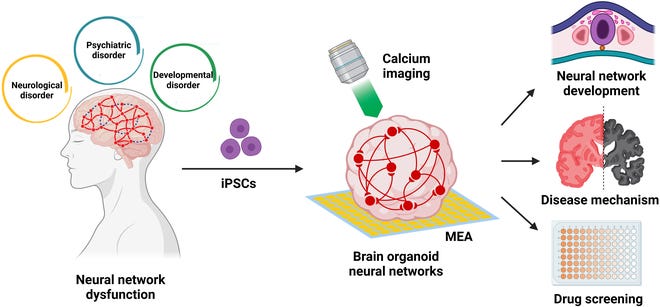
Despite these biological limitations, the breakthrough offers an unprecedented platform to study how complex neurological and psychiatric conditions develop in a living system. By using stem cells derived from patients with specific genetic mutations, scientists could use this mouse model to watch how diseases like schizophrenia, cerebral palsy, or frontotemporal dementia unfold in real-time, or even use the platform to test experimental therapeutics.
However, the creation of animal-human chimeras continues to raise complex ethical questions. Experts in neuroethics note that while the Stanford team deliberately halted their experiments well before the human cells could form markers of consciousness, such research inherently ventures into “new gray areas” regarding animal welfare and the exact nature of the hybrid brains being created.