

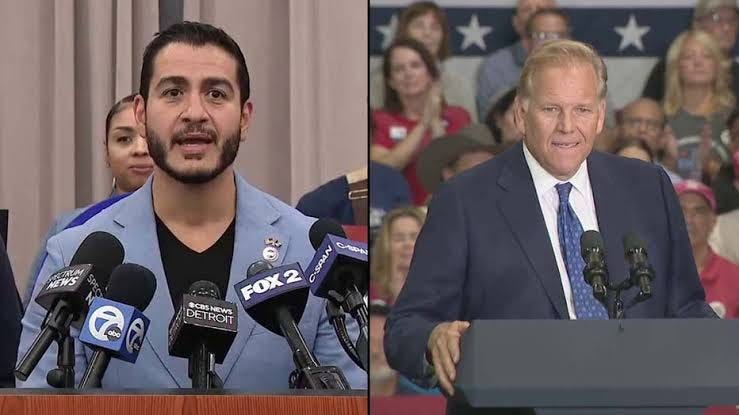
Republican Mike Rogers and Democrat Abdul El-Sayed presented sharply different plans for Michigan’s economic future during a recent Detroit Economic Club forum. The two candidates, vying for Michigan’s open U.S. Senate seat, answered identical questions about strengthening the state’s economy ahead of the November general election.
The candidates offered distinct viewpoints on several key issues:
Tariffs: Rogers expressed support for former President Donald Trump’s tariff policies regarding the reshoring of manufacturing, though he criticized the “Canadian tariff war.” Conversely, El-Sayed labeled Trump’s tariff approach “chaotic” and “ham-fisted.” He advocated for a targeted industrial policy, suggesting the U.S. subsidize low-cost electric vehicles to compete internationally against Chinese and Korean models while maintaining traditional gas-powered engine production.
Artificial Intelligence: On the topic of regulating emerging technology, El-Sayed called for an FDA-style regulatory agency to oversee AI development, ensuring it serves the public interest and doesn’t make critical decisions like firing employees or denying healthcare. Rogers, drawing on his experience with the House Intelligence Committee, emphasized the need for national security “guardrails” and suggested a narrowly crafted antitrust exemption allowing AI companies to collaborate on safety measures.
Economic Strategy and Taxes: Pointing to Michigan’s current educational and economic rankings, Rogers pitched a framework focused on lowering business taxes, expanding skilled trades training, and prioritizing U.S. energy sources to reduce overall costs and boost opportunities. El-Sayed framed himself as a capitalist looking to break up corporate oligopolies. He argued that progressive policies—such as Medicare for All, increased taxes on the wealthy, and stronger pro-labor laws—would make the market more competitive and ultimately benefit both workers and small businesses.
The forum provided voters with a clear look at the contrasting philosophies each candidate would bring to Washington regarding trade, technology, and economic growth.