

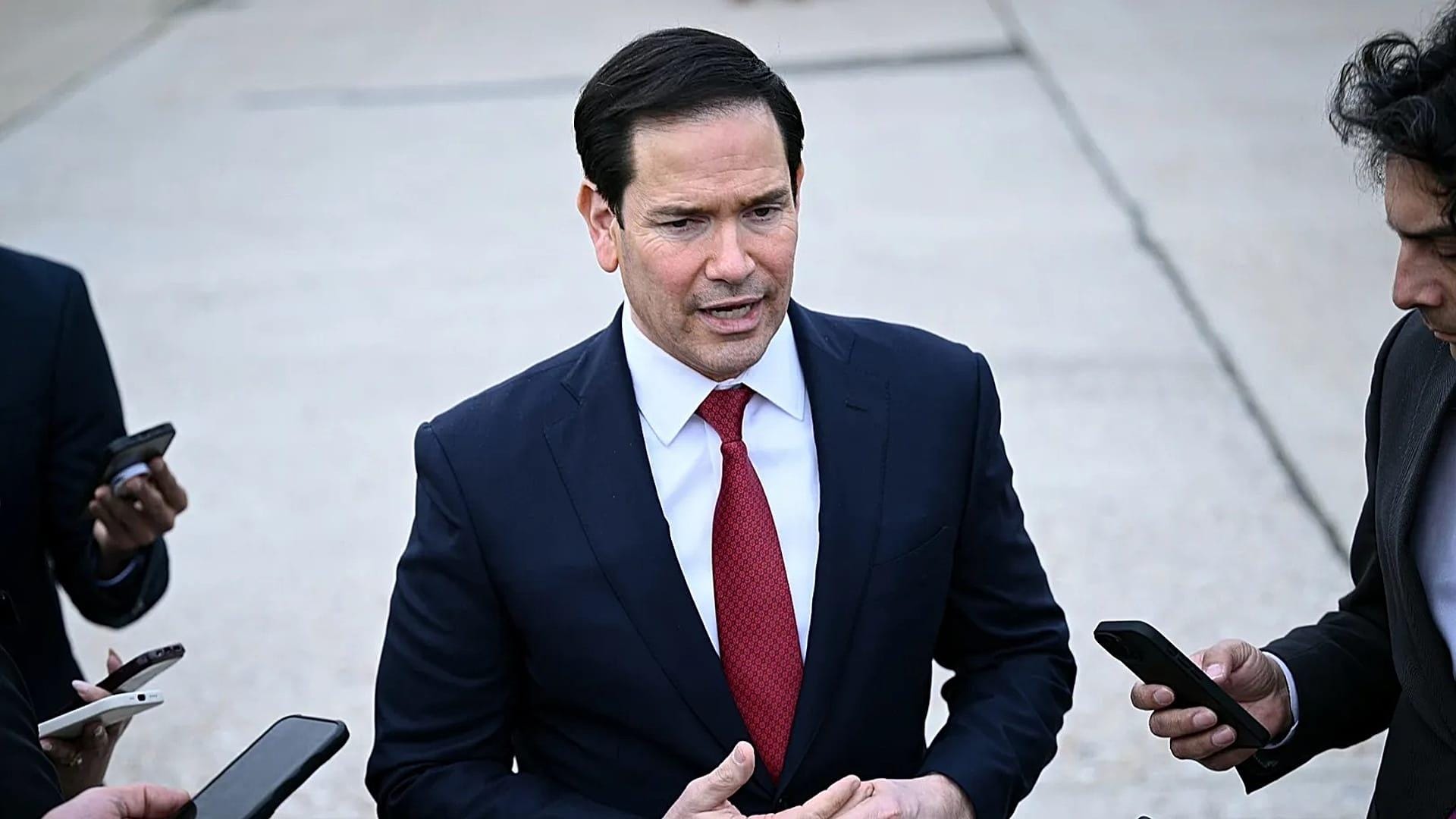
U.S. Secretary of State Marco Rubio arrived in Lisbon on Thursday as he wrapped up a three-country European tour aimed at strengthening relationships with key NATO allies and expanding cooperation on defense, technology and the economy.
Portugal was the final stop on Rubio’s trip, which also included Iceland and Greece. The visit comes as the Trump administration continues pressing European allies to take greater responsibility for their own defense while maintaining strong strategic ties with Washington.
Rubio described Portugal as a “great ally” and said the purpose of the visit was to reinforce an already strong relationship.
“Portugal is a great ally, very cooperative ally of the United States and a country with which we already have a solid and growing relationship,” Rubio said ahead of his arrival.
Defense Spending Takes Center Stage
One of the most important issues during Rubio’s Lisbon meetings was NATO defense spending.
President Donald Trump has repeatedly demanded that European members of the alliance contribute more to their own defense, arguing that the United States has carried too much of the financial burden for NATO security.
Rubio defended that position in Lisbon, rejecting the idea that American pressure for increased military spending is hostile.
“People sometimes view this call to invest more in defense as a hostile thing,” Rubio said. “It is not a hostile thing.”
Rubio argued that stronger individual militaries ultimately make the entire alliance stronger.
“The stronger the members of NATO are, the stronger NATO is, the stronger the alliances and the stronger the deterrence is,” he said.
Portugal currently spends slightly more than 2% of its gross domestic product on defense. Its government has indicated that it plans to increase spending to approximately 3%, although that remains below Trump’s 5% target for NATO members.
Rubio acknowledged that smaller countries face greater financial constraints when attempting to undertake major military modernization programs.
Portugal’s Strategic Role
Portugal occupies a strategically important position for the United States because of its location in the Atlantic and its membership in both NATO and the European Union.
The country’s Azores islands are home to Lajes Field, a strategically located U.S. military facility that has long served as an important refueling and transit point for American operations.
Portugal recently allowed the United States to use Lajes Field in connection with U.S. military operations related to the war with Iran. That decision has generated political controversy inside Portugal, with some opposition politicians questioning whether the arrangement was lawful. Portuguese authorities are examining those concerns.
For Washington, however, the cooperation demonstrates the strategic value of the Portuguese-American relationship.
Washington Wants Broader Economic and Technology Cooperation
Defense was not the only issue on Rubio’s agenda.
The State Department said Rubio’s Lisbon meetings were intended to advance cooperation in defense, economic development and technology.
That broader agenda reflects the Trump administration’s effort to strengthen relationships with European partners while encouraging greater trade, investment and technological cooperation.
Portugal has also positioned itself as a potential gateway between North America and the broader European market. During his Lisbon visit, Rubio described Portugal as an “ideal gateway” to Europe.
Portugal Eyes New Fighter Jets
Defense cooperation could become even more significant as Portugal considers replacing its aging fleet of F-16 fighter aircraft.
Portuguese Foreign Minister Paulo Rangel said Thursday that Portugal is seriously considering the American-made F-35as it evaluates options to replace its fleet of 28 F-16M fighters.
The F-35 faces competition from European aircraft including the Eurofighter Typhoon and Dassault Rafale, as well as Sweden’s Gripen E. Portugal has not yet formally launched a procurement tender, but the decision could have important implications for the country’s future defense relationships.
A Portuguese decision to purchase the F-35 would further deepen military interoperability between the two NATO allies and potentially strengthen the American defense industry’s position in Portugal.
Rubio Warns of Wider European Security Risks
Rubio’s Portugal visit also came against the backdrop of Russia’s ongoing war against Ukraine.
The secretary warned that a prolonged stalemate could create additional risks for NATO countries, including sabotage and other forms of disruption spreading beyond Ukraine.
He said such escalation could transform the conflict from a war between two countries into a much broader European crisis.
Rubio also indicated that the administration would continue attempting to facilitate a negotiated settlement but would not support what he characterized as diplomatic processes that produce no meaningful progress.
A Relationship Washington Wants to Build
Rubio’s Lisbon stop underscored a broader administration strategy: strengthen America’s relationships with reliable allies while pushing those allies to assume greater responsibility for their own security.
Portugal appears willing to move in that direction, with plans to increase defense spending and continued cooperation with the United States at Lajes Field.
For Washington, the goal extends beyond military cooperation.
Defense, energy, technology, investment and trade are increasingly intertwined in the U.S.-Portugal relationship, giving Lisbon a potentially important role in the Trump administration’s effort to reshape America’s partnerships across Europe.
Rubio’s message in Portugal was therefore both a reassurance and a challenge: the United States values Portugal as a close ally, but expects NATO partners to become stronger, more capable and more willing to contribute to the alliance’s collective security.