

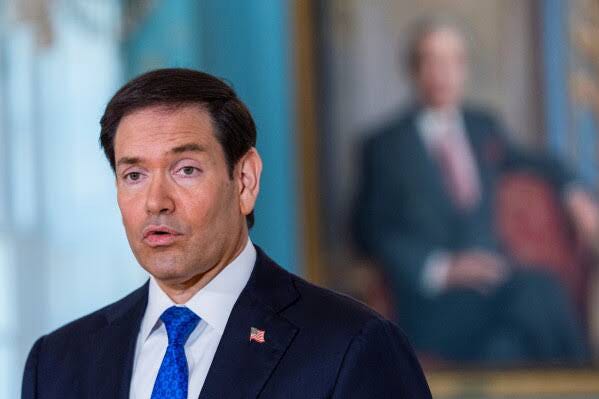
As the geopolitical landscape grows increasingly complex, U.S. foreign policy is making a concerted pivot toward economic diplomacy in the East. This Sunday, Secretary of State Marco Rubio will embark on a strategic tour of Central Asia and India, bypassing traditional diplomatic hotspots to secure key investment deals and deepen regional alliances.
Rubio’s itinerary begins in Uzbekistan, where he is scheduled to meet with leaders of the C5+1—a diplomatic framework connecting the United States with Kazakhstan, Kyrgyzstan, Tajikistan, Turkmenistan, and Uzbekistan. This visit builds on momentum established last November, when President Donald Trump hosted these Central Asian leaders at the White House, a summit that coincided with Kazakhstan’s historic agreement to join the Abraham Accords.
Economic Dealmaking at the Forefront
What sets this trip apart is the massive economic force accompanying the Secretary. The State Department has confirmed that more than 200 U.S. business executives are traveling with Rubio to Uzbekistan, signaling Washington’s intent to counter Chinese influence by heavily investing in the region’s emerging markets.
Following the Central Asia summit, the delegation will travel to India, making stops in Mumbai and Jamnagar. A key item on the agenda is a high-profile meeting with Mukesh Ambani, Chairman of Reliance Industries, underscoring the administration’s push to solidify robust corporate partnerships in the Indo-Pacific.
A Division of Diplomatic Labor
Rubio’s pivot to trade and regional alliances in Asia comes at a time of severe global turbulence. While he spearheads this massive dealmaking mission, other high-ranking U.S. officials and special envoys have been tasked with managing immediate global conflicts.
The administration has largely delegated the handling of the ongoing war with Iran, escalating tensions with the Houthis in Saudi Arabia, and the increasingly complex U.S.-Ukraine relationship to President Trump’s special envoys, including Steve Witkoff and Jared Kushner. Some critics note that Rubio has yet to visit Kyiv or Moscow since assuming his role, while figures like JD Vance recently represented the U.S. during peace talks with Iran in Pakistan.
By ceding the immediate crisis management to special envoys, Washington is signaling a clear division of labor—allowing the nation’s top diplomat to focus on the long-term, pragmatic expansion of America’s economic footprint in Central and South Asia.