

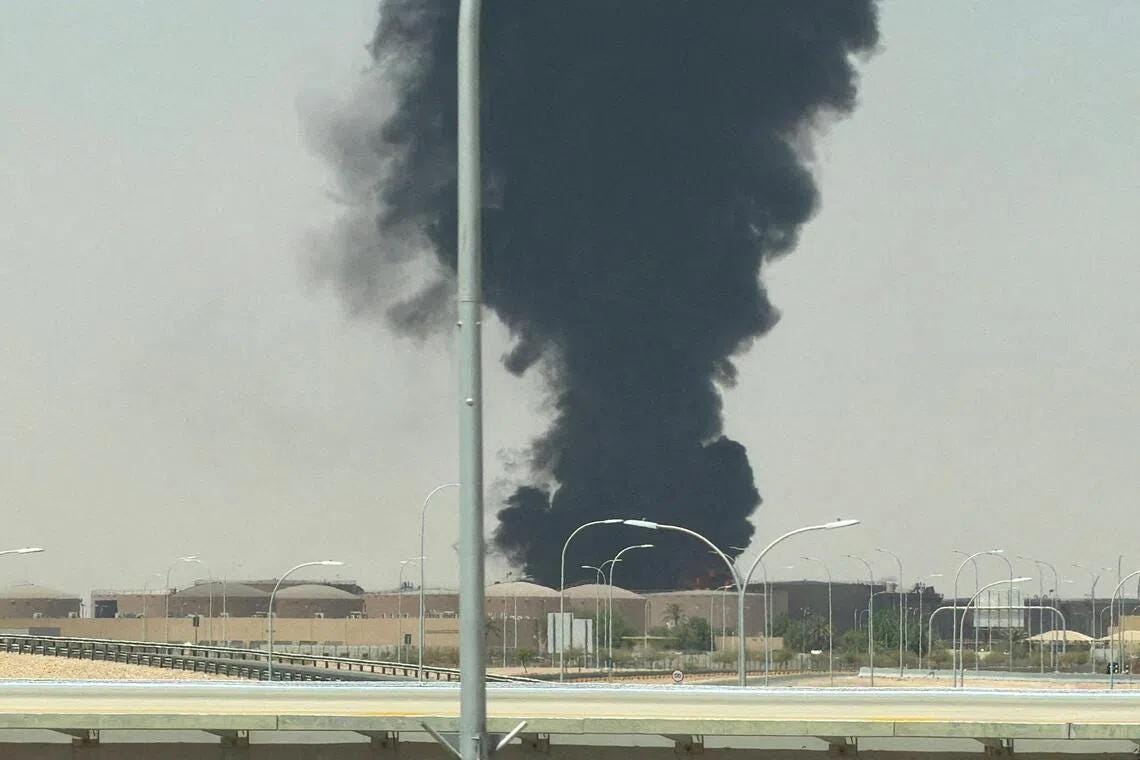
Saudi Arabia’s King Khalid International Airport in Riyadh came under renewed attack on October 11, leaving one person dead and 11 injured, according to Saudi authorities. The strike followed a deadly attack the previous day that killed 13 people and wounded more than 300, marking a major escalation in the conflict’s spread across the Gulf.
The latest attack has put fresh pressure on the kingdom as it attempts to maintain its position as a regional hub for energy, finance and international investment. Despite airport disruptions and travel warnings, Saudi officials have indicated that major international events in Riyadh will proceed with heightened security measures.
Second Strike Hits Riyadh Airport
Saudi Arabia’s civil aviation authority said the October 11 attack on King Khalid International Airport killed a Pakistani resident and injured 11 others. The incident caused material damage that authorities were assessing.
The Saudi-led coalition fighting the Iran-backed Houthi movement in Yemen said an unidentified projectile struck the airport’s Terminal 4 and triggered a fire. Saudi air defenses also intercepted additional threats near the capital.
The renewed attack came just one day after a missile strike on the airport killed 12 people. An Indian national later died from injuries sustained in that earlier attack, bringing the death toll to 13.
The victims of Saturday’s strike included Saudi citizens and foreign nationals from several countries, underscoring the risk to civilians and international travelers as the conflict expands.
Houthis Claim Responsibility as Regional Fighting Escalates
Yemen’s Houthi rebels claimed responsibility for the attacks, describing them as retaliation for Saudi military operations in Yemen.
The Saudi-led coalition has supported forces aligned with Yemen’s internationally recognized government in its fight against the Houthis. The latest escalation followed a campaign by Saudi-backed forces to regain territory captured by the rebels.
The Houthis also claimed attacks involving King Fahd International Airport in Dammam and facilities belonging to Saudi oil giant Aramco. Saudi authorities confirmed an incident at Dammam airport and said damage assessments and safety inspections were underway.
The attacks have raised concerns about the vulnerability of Saudi infrastructure and the potential for the conflict to disrupt aviation, energy operations and regional commerce.
Riyadh Keeps Major Energy Conference on Schedule
Despite the security crisis, Riyadh proceeded with the five-day WPC Energy Congress, which opened on October 11 at a convention center roughly 10 kilometers from the airport.
The gathering brings together energy executives, policymakers and industry representatives. The International Energy Forum’s ministerial meeting also went ahead, although media access to parts of the proceedings was restricted.
The decision to continue the events reflects the kingdom’s effort to preserve its international business calendar during the conflict. But travel disruptions have affected attendance.
BP canceled its participation, citing difficulties caused by the airport attack. Other major energy-company executives were also reported to have withdrawn or faced travel complications. Italian Energy Minister Gilberto Pichetto Fratin had planned to participate in the ministerial meeting remotely.
Airport Closures and Travel Warnings Complicate Business
The attacks have severely disrupted air travel through Riyadh. The airport was closed following Saturday’s deadly strike, while airlines faced cancellations and delays.
The British Embassy in Saudi Arabia advised citizens against all but essential travel to Jeddah and Dammam and urged travelers to avoid Saudi airports other than Medina. U.S. aviation authorities also advised American airlines to exercise caution when flying to or over the kingdom.
These warnings create challenges for executives, diplomats, conference delegates and ordinary passengers who depend on the kingdom’s airports as regional transit points.
Saudi Arabia’s ability to restore normal airport operations and reassure international travelers will be important to its efforts to maintain business confidence during the conflict.
Future Investment Initiative Still Planned for October
Riyadh is also scheduled to host the Future Investment Initiative, the kingdom’s flagship investor gathering, from October 26 to 29.
Organizers said they were preparing to welcome thousands of delegates and that comprehensive security measures would be implemented at airports, conference venues, hotels and transportation points.
The event is expected to attract prominent financial and business figures, including executives from Goldman Sachs and BlackRock. Whether the recent attacks affect attendance further remains uncertain.
For Saudi Arabia, the stakes extend beyond individual conferences. The kingdom has spent years promoting itself as a destination for international capital, tourism and large-scale business events. Continued attacks on its transport infrastructure could undermine those efforts if companies and visitors perceive travel to the country as increasingly risky.
A Wider Threat to Energy and Shipping Routes
The airport attacks come amid a broader regional conflict that threatens energy supplies and critical maritime routes.
The Houthis have expanded their control in parts of Yemen and strengthened their position near the Bab el-Mandeb Strait, a key passage for commercial shipping between the Red Sea and the Gulf of Aden. Further escalation could threaten an alternative route for oil and other cargo if shipping through the Strait of Hormuz is also disrupted.
U.S. President Donald Trump said he was considering whether the United States should join Saudi strikes against the Houthis. Any direct U.S. involvement could widen the conflict and increase risks to regional infrastructure and shipping.
Saudi Arabia is therefore confronting two linked challenges: defending critical sites from further attacks and preventing the conflict from undermining its role in global energy markets and international investment.
Saudi Arabia Faces a Test of Security and Confidence
The latest airport strike highlights the difficulty of maintaining normal economic activity while critical infrastructure remains under threat. The decision to continue the energy congress signals that Saudi authorities are determined to keep international events on track, but travel restrictions and corporate withdrawals show that the security situation is already affecting participation.
The next major test will be whether the kingdom can restore reliable airport operations, protect civilian facilities and reassure international visitors ahead of the Future Investment Initiative later this month.
With the Houthis warning of further attacks and regional military operations continuing, the risk to aviation, energy infrastructure and commercial shipping remains a major concern for Saudi Arabia and its international partners.