

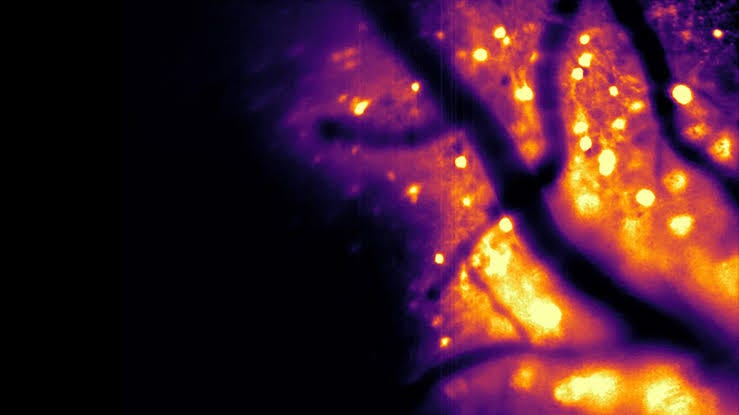
The 2026 Nobel Prize in Physiology or Medicine has been jointly awarded to three visionary scientists who have profoundly transformed our understanding of the nervous system. Karl Deisseroth of Stanford University, Peter Hegemann of Humboldt University in Berlin, and Georg Nagel of the University of Würzburg will share the prestigious 12 million Swedish kronor (approximately $1.2 million) prize for their pioneering work in “light-gated ion channels and optogenetics.”
A Molecular Switch for the Brain
The foundation for this year’s Nobel-winning science began with a simple, curiosity-driven question about nature: How do single-celled green algae (Chlamydomonas) manage to rapidly swim toward the sun?
Hegemann and Nagel discovered that these algae contain a unique protein that acts as an ion channel. When exposed to blue light, the protein opens and generates a tiny electrical impulse.
Building upon this foundational biology, Karl Deisseroth took the specific gene responsible for this light-sensitive protein and successfully transferred it into the nerve cells of living mice. The result was a revolutionary scientific milestone—a literal “molecular switch” that allows researchers to turn specific neural circuits on or off using precise bursts of light.
Mapping the Mysteries of the Mind
Before this discovery, mapping complex brain activity was an incredibly difficult and often imprecise task. Today, optogenetics provides a high-fidelity window into the brain’s inner workings.
By illuminating these genetically modified neurons, researchers can now study how the nervous system functions in real-time. This breakthrough technology enables scientists to isolate the specific neural pathways responsible for bringing memories to life, driving emotions, and dictating behaviors. Furthermore, it has become an indispensable tool for studying the specific neurons involved in complex psychiatric and neurological disorders.
The real-world applications are also extending beyond the laboratory. A clinical technique dubbed “direct optogenetics” is already being utilized to test experimental treatments for retinitis pigmentosa, a severe genetic condition that causes progressive vision loss.
Announced at the Karolinska Institute in Stockholm, this medical milestone officially kicks off the 2026 Nobel Prize week—celebrating the brilliant minds who finally brought the intricate wiring of the human brain out of the dark.