

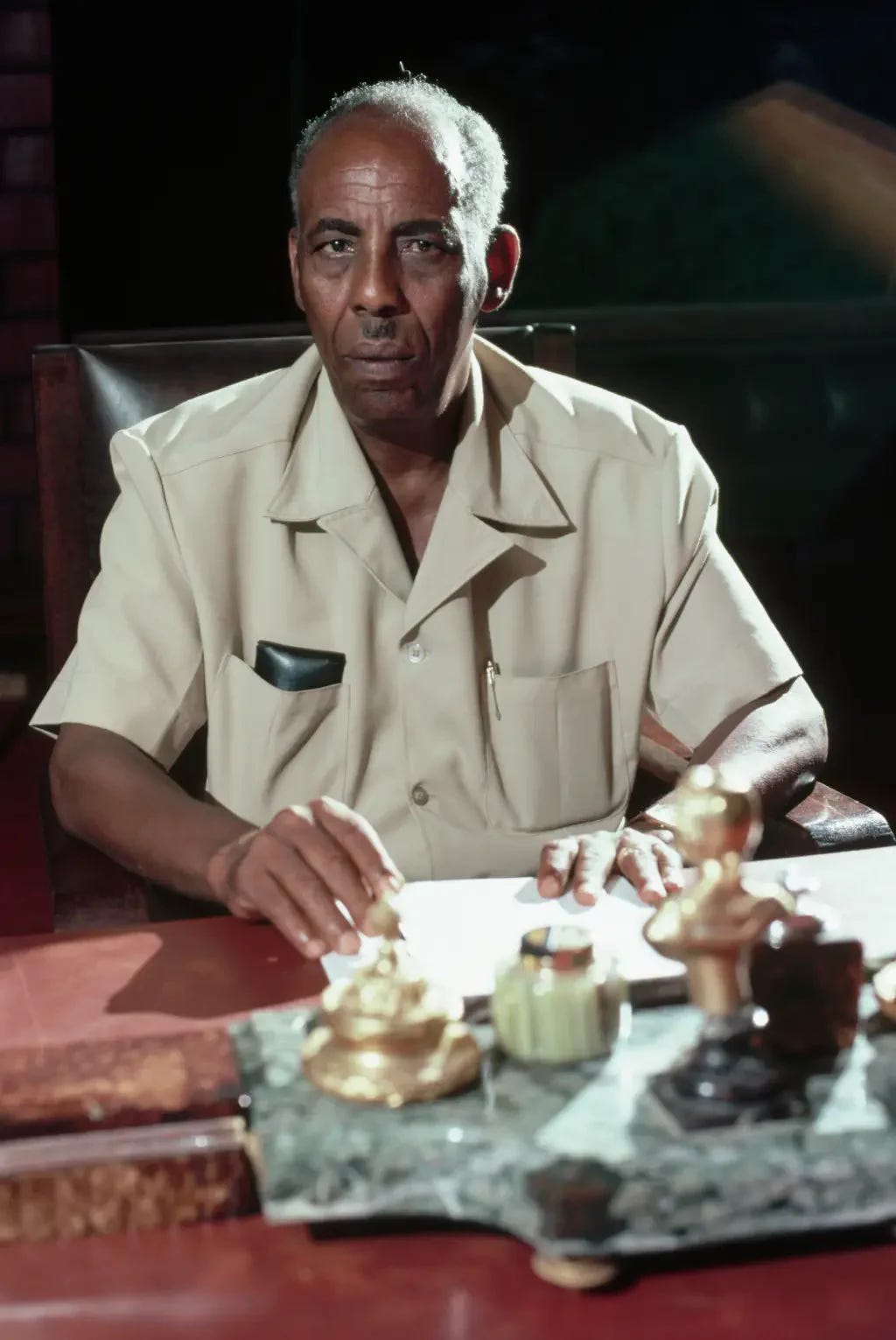
The son of former Somali dictator Siad Barre, who served as a high-ranking military commander during his father’s notoriously brutal regime, is reportedly living a quiet life in the state of Ohio, decades after fleeing the East African nation.
According to a recent investigation, Maslah Mohamed Siad Barre, a former general in the Somali National Army, has been residing in a suburb of Columbus. Columbus is home to one of the largest Somali diaspora communities in the United States, raising significant questions about how a prominent figure from a widely condemned regime was able to immigrate and settle there undetected.
A Legacy of Brutality
Major General Siad Barre ruled Somalia with an iron fist from 1969 until he was violently overthrown in 1991, an event that triggered a catastrophic civil war that has destabilized the region for over 30 years. His regime was heavily backed by both the Soviet Union and, later, the United States during the Cold War.
Under his father’s rule, Maslah Siad Barre served as a powerful military figure. Human rights organizations have long accused the Siad Barre regime of widespread atrocities, including arbitrary detention, torture, and the systematic massacres of political opponents and targeted clans. The most infamous event occurred in 1988, when the regime ordered the devastating aerial bombardment of Hargeisa, the capital of what is now the self-declared Republic of Somaliland, resulting in the deaths of thousands of civilians.
While there are currently no formal criminal charges pending against Maslah Siad Barre in the United States or internationally, his reported presence in Ohio has sparked outrage among many Somali-Americans. For years, survivors and advocacy groups, such as the Center for Justice and Accountability (CJA), have worked to track down former officials of the Barre regime who fled to North America, often launching civil litigation against them under the Torture Victim Protection Act.
Immigration Questions
The revelation has also prompted questions regarding the U.S. immigration vetting process. It is currently unclear what type of visa or legal status Maslah Siad Barre holds, or whether immigration authorities were aware of his identity and military background when he entered the country.
The investigation notes that many former Somali officials fled the country using pseudonyms or forged documents during the chaotic collapse of the government in the early 1990s.
U.S. Immigration and Customs Enforcement (ICE) and the Department of Homeland Security have not publicly commented on the report or confirmed his immigration status.