

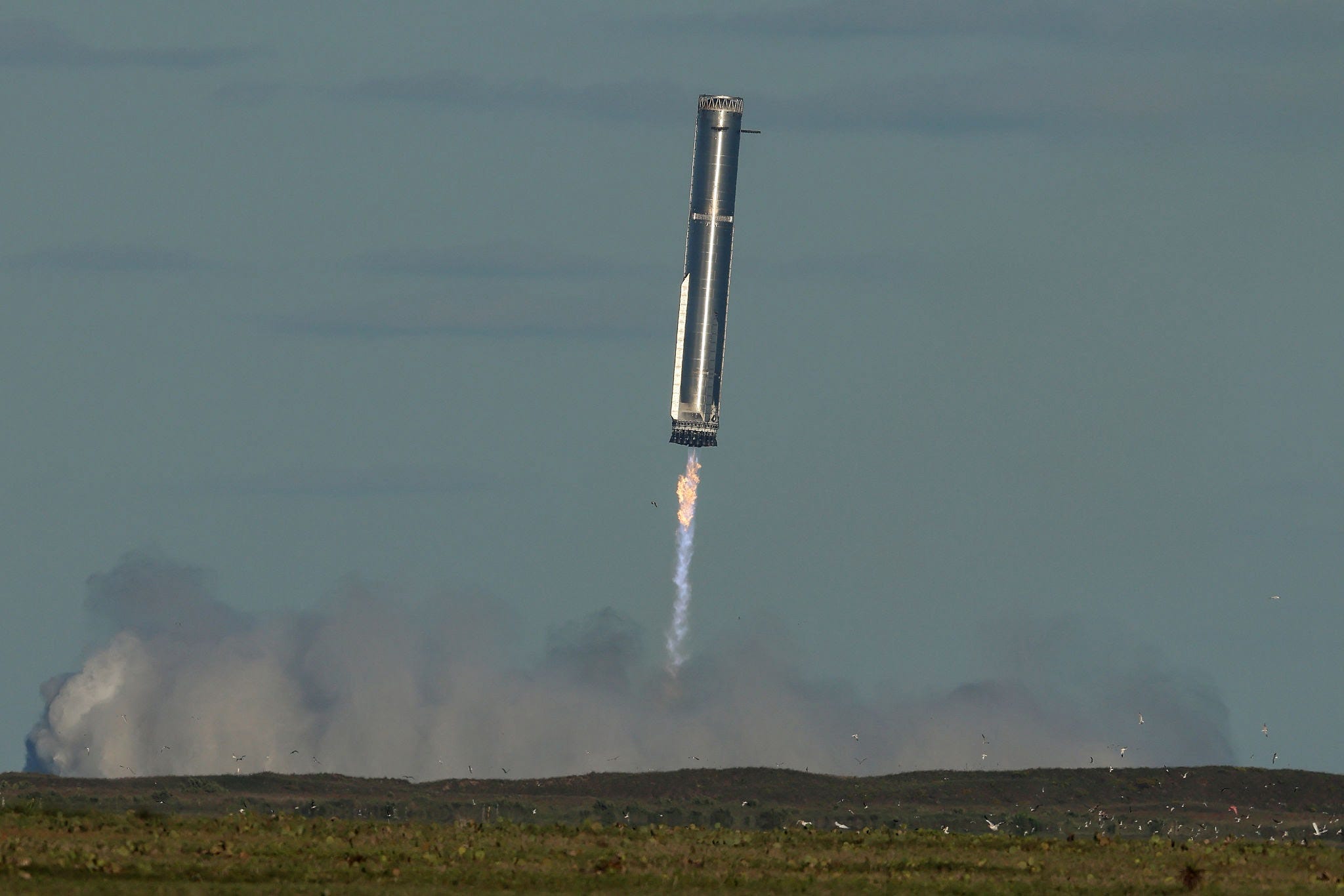
SpaceX’s highly anticipated Starship Flight 15 test yielded a partial success on Friday, with the upper stage successfully reaching orbit while an ambitious attempt to catch the Super Heavy booster ended in a fiery explosion in the Gulf of Mexico.
The 407-foot-tall rocket lifted off from the company’s Starbase facility in Texas at 5:47 p.m. ET. The test was planned as a major milestone attempt to execute a double catch, recovering both the Super Heavy booster and the Ship 42 upper stage using the launch tower’s “chopsticks” mechanical arms. However, the first half of that recovery plan was quickly thwarted. Following stage separation, the booster’s automated guidance and navigation control system aborted the planned tower return. According to CEO Elon Musk, the rocket was “slightly low on fuel.” Instead of returning to the pad, Booster 22 diverted to the Gulf of Mexico, hovered briefly, and burst into flames above the water.
Despite the setback with the booster, the upper stage executed a flawless ascent. Ship 42 reached a nominal orbit approximately 170 miles above Earth, marking only the second time Starship has entered orbit. Roughly 27 minutes after liftoff, the spacecraft successfully deployed 26 Starlink V3 internet satellites, furthering SpaceX’s goal of expanding its constellation’s operational capabilities in space.
The mission is far from over. Ship 42 is scheduled to complete 14 orbits over 22.5 hours before attempting an unprecedented return-to-launch-site landing. If systems check out, SpaceX will attempt to catch the upper stage with the launch tower’s mechanical arms on Saturday afternoon, a maneuver that would mark a profound leap forward for fully reusable orbital launch systems.