

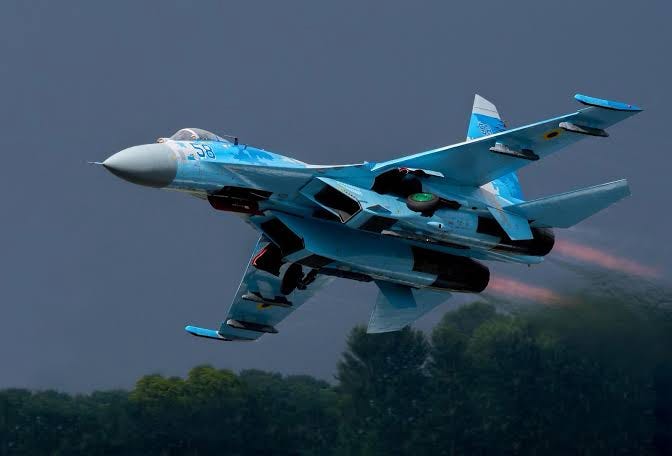
Finnish and Swedish fighter jets were scrambled on Sept. 24 for their first joint interception mission, successfully identifying and shadowing a formation of Russian military aircraft flying over the Gulf of Finland. This marks a significant milestone in Nordic defense cooperation following their recent integration into the NATO alliance.
The rapid response occurred just a day before Russian President Vladimir Putin publicly dismissed warnings about Moscow’s potential military threat to the region.
According to the Swedish Armed Forces, Finnish F/A-18 Hornets and Swedish JAS 39 Gripens were deployed after Russian aircraft were detected in international airspace. The Russian formation was notable for its composition, which included a Tu-134 transport plane flanked by high-performance combat aircraft: high-altitude, supersonic MiG-31 interceptors designed for long-range engagements, and Su-30 multirole fighter jets built for air-to-air and air-to-ground combat.
“This is what close cooperation looks like in practice,” Maj. Gen. Jonas Wikman, commander of the Swedish Air Force, stated following the operation. “Built over years on trust and strong personal relationships, we can now operate seamlessly together — as air forces, as nations and as Allies.”
The incident underscores growing anxieties regarding Russian military activity along NATO’s eastern flank, which has seen a series of airspace violations and incursions. Recent events include Russian drones penetrating Polish airspace, a Mi-8 helicopter crossing the border from Kaliningrad into Poland, and armed Russian jets entering Estonian airspace before being intercepted on Sept. 18.
In response to the shifting security landscape, Estonian Defense Minister Martin Herem recently warned that Russia could potentially mount a military offensive against Estonia within a year, urging a reassessment of the country’s defensive capabilities.
However, speaking at the St. Petersburg International United Cultures Forum, Putin rejected these assertions. “I want to emphasize once again: we are not preparing for military action against Europe,” he stated, characterizing the warnings as “nonsense” and “political clowning.”
Estonia, Finland, and Sweden represent key components of NATO’s fortified northern and eastern defenses. Finland’s accession to NATO in April 2023 doubled the alliance’s land border with Russia, while Sweden finalized its membership in March 2024.
The Baltic Sea region remains on high alert due to ongoing concerns over sabotage, hybrid threats, and the protection of critical infrastructure since the escalation of the Russia-Ukraine conflict in 2022. NATO maintains that its posture along the eastern flank is strictly defensive, with Secretary General Mark Rutte recently reiterating the alliance’s preparedness and unity in the face of potential provocations.