

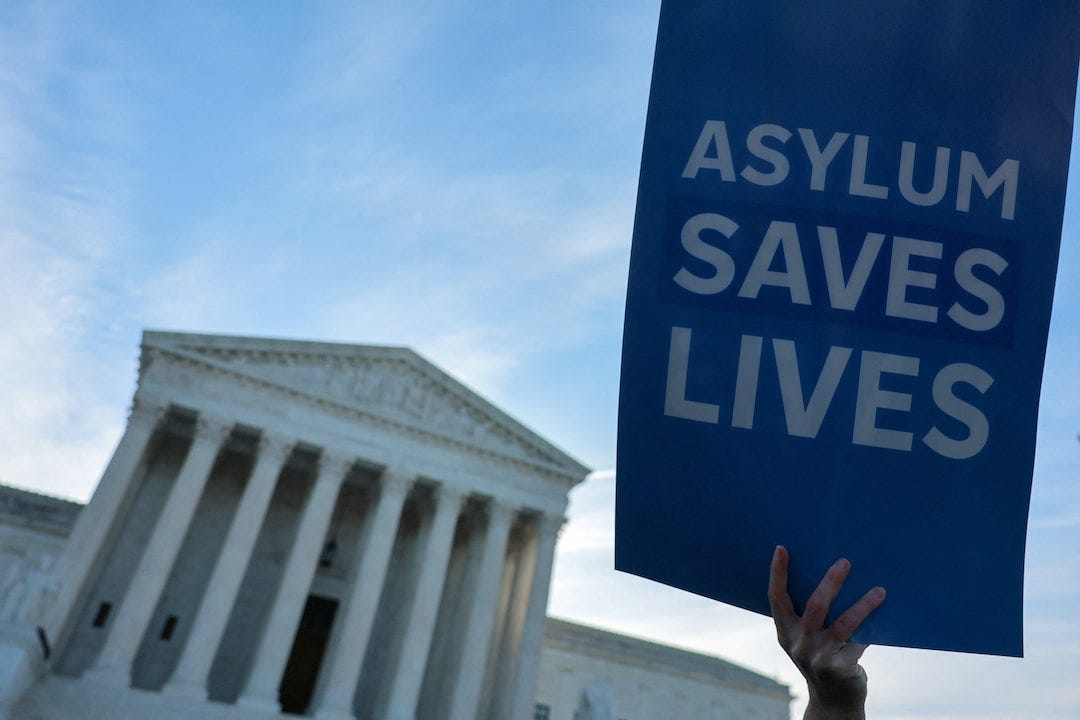
The U.S. Supreme Court has agreed to hear a major challenge to President Donald Trump’s sweeping restrictions on asylum access at the southern border, setting up a high-stakes legal showdown over executive authority and federal immigration law.
The justices announced they will review lower court decisions that struck down the president’s Jan. 20, 2025,proclamation, which heavily restricted the ability of migrants crossing the U.S.-Mexico border to seek safe harbor.Trump’s directive, which characterized the influx of border crossings as an “invasion,” has remained actively enforced while the litigation winds its way through the federal court system.
At the heart of the dispute is whether the president possesses the unilateral power to override established federal statutes.Under the Immigration and Nationality Act (INA), Congress explicitly granted migrants physically present in the United States the right to apply for asylum, regardless of how they entered the country. Thirteen individuals and several immigrant rights organizations sued the Trump administration over the ban, arguing the executive branch cannot unilaterally rewrite laws passed by the legislative branch.
In previous rulings, both a federal judge in Washington, D.C., and the U.S. Court of Appeals for the District of Columbia Circuit ruled against the administration. The lower courts determined that the president’s proclamation unlawfully bypassed the procedures created by Congress and exceeded his authority. However, the appellate court stayed its own decision, allowing the administration to continue enforcing the stringent asylum restrictions pending a final ruling from the Supreme Court.
The Trump administration has argued the policy is necessary to curb unauthorized immigration, claiming that many migrants exploit the system by claiming asylum simply as a way to stall their deportations and remain in the U.S. for years while their cases are adjudicated.
The upcoming arguments arrive before a Supreme Court that features a 6-3 conservative majority, which has shown a willingness to defer to the president on border enforcement in recent terms.