Tesla has officially initiated high-volume production of the Semi electric truck at its dedicated manufacturing facility in Nevada, which boasts a targeted annual capacity of 50,000 units.
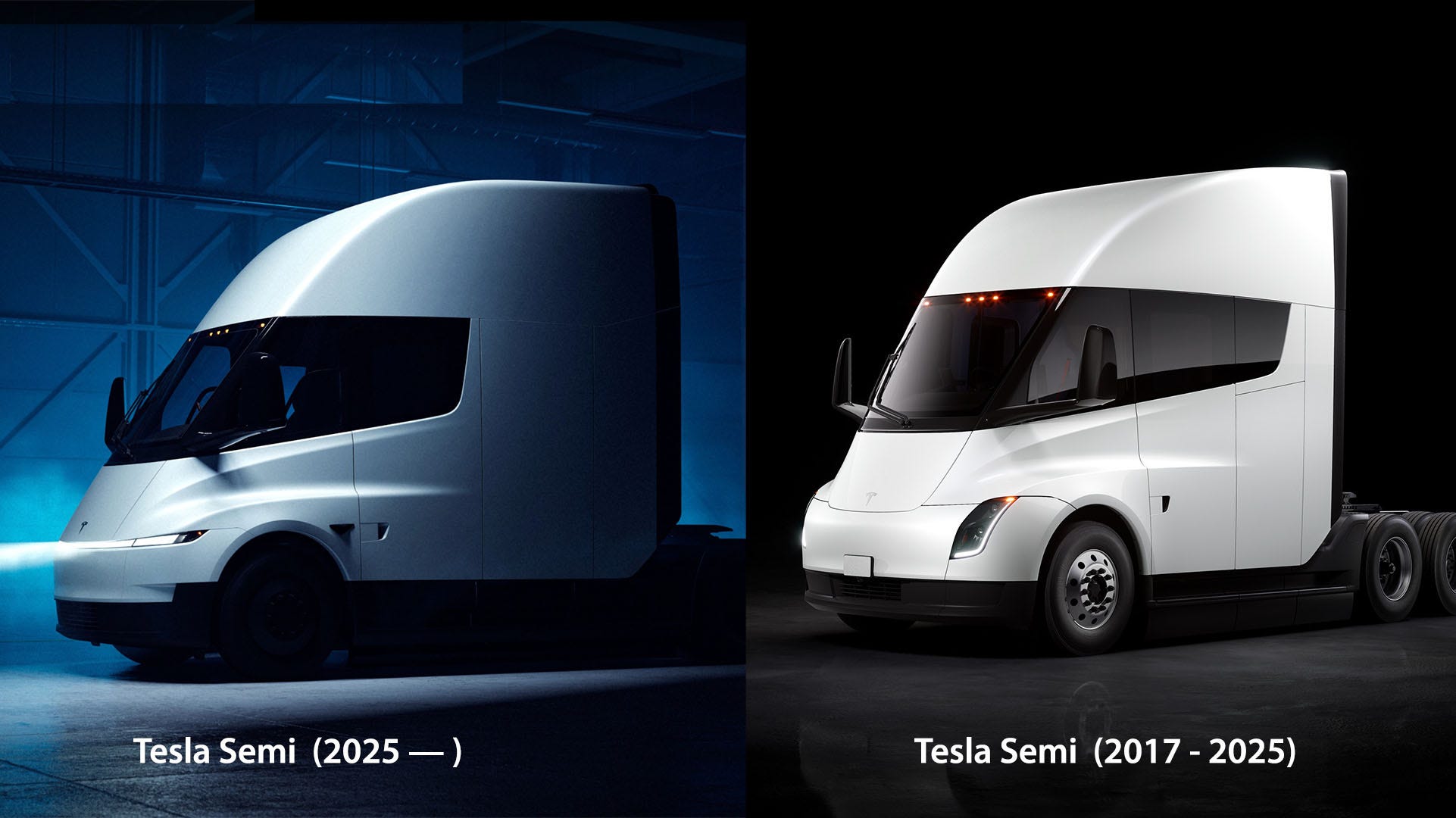
While the Class 8 vehicle was first unveiled to the public in 2017 as a prototype, the production versions hitting the road today feature sweeping engineering changes. According to presentations led by Tesla engineering executives Dan Priestley and Lars Moravy, the lengthy delay between unveiling and production was largely utilized to completely redesign the truck’s underlying architecture for mass-market viability.
A Shift to 4680 Battery Cells
The most significant change to the production Semi is its power source. Tesla has abandoned the supplier-provided 2170 battery cells used in earlier prototypes in favor of its proprietary 4680 cells.
These new packs are assembled on Tesla’s most highly automated battery production line to date. The 4680 cells are organized into 14 modules per sub-pack, with the truck utilizing two or three sub-packs depending on whether it is the Standard Range or Long Range configuration.
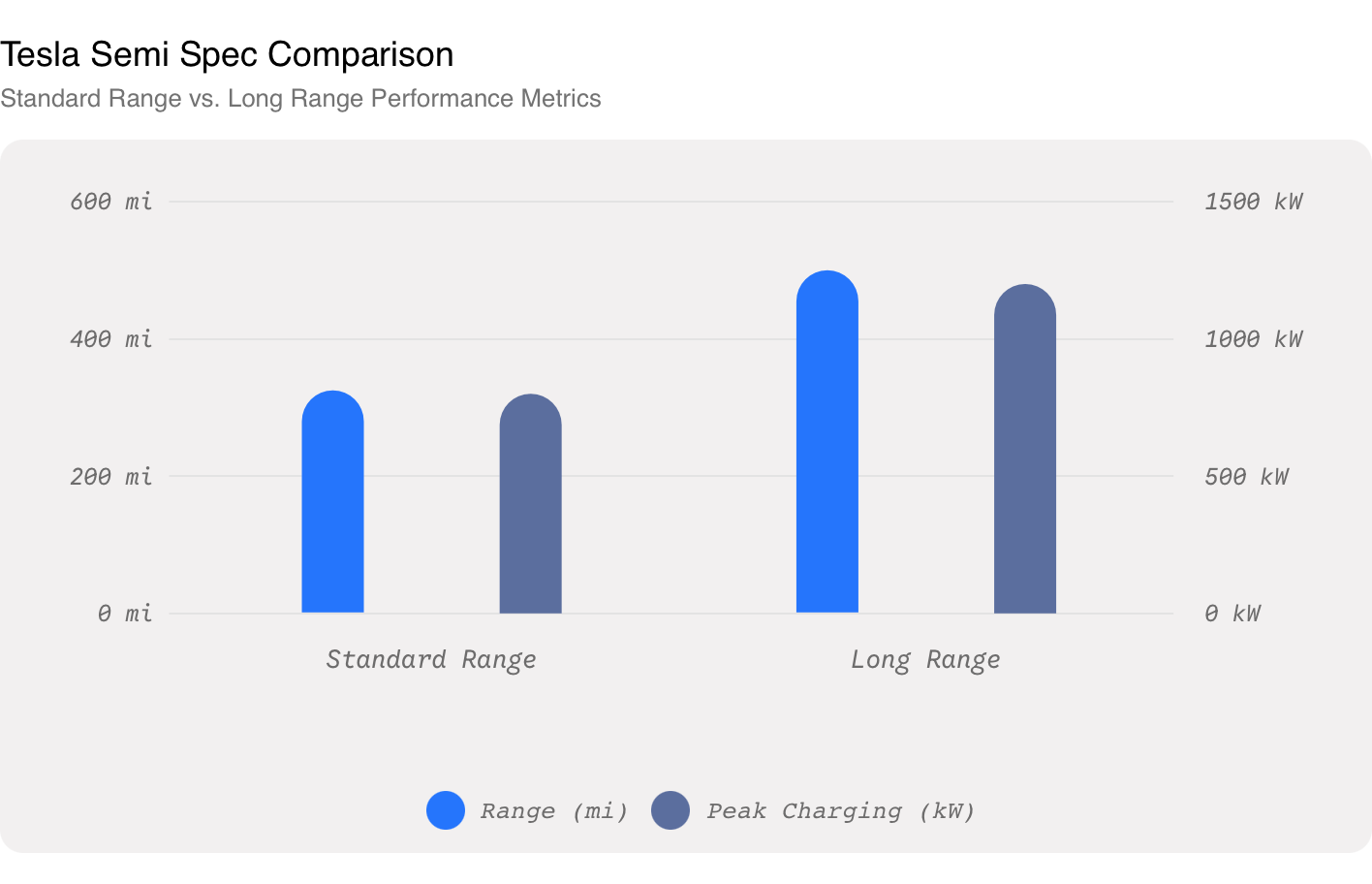
This shift in battery chemistry and packaging has notably lowered the truck’s overall energy consumption while simultaneously driving down manufacturing costs. Furthermore, Tesla claims the Long Range variant is capable of sustaining peak charging speeds of 1.2 megawatts, allowing the massive battery to recharge to 60% in roughly 30 minutes.
Redesigned Drivetrain and Thermal Management
Beyond the battery, the Semi’s drivetrain has been heavily optimized.
Engineers swapped out the prototypes’ carbon-sleeved rotors for highly durable, steel-caged rotors, which the company states are cheaper, more reliable, and more efficient. The Semi also utilizes bar-wound stators that are directly shared with the Cybertruck production line, taking advantage of existing high-volume manufacturing.
The vehicle’s thermal management has also been entirely overhauled. The Semi now relies on the “Megamanifold”—an advanced heat pump system responsible for both cabin climate control and the heating and cooling of the entire powertrain. This is the identical thermal architecture utilized in the newly introduced Cybercab.
Additionally, Tesla executives highlighted that the Semi is the first heavy-duty truck to feature electric steering. This innovation completely eliminates the need for hydraulic pumps and fluids, stripping away a major source of traditional commercial vehicle maintenance while quietly laying the mechanical groundwork for future autonomous driving capabilities.