

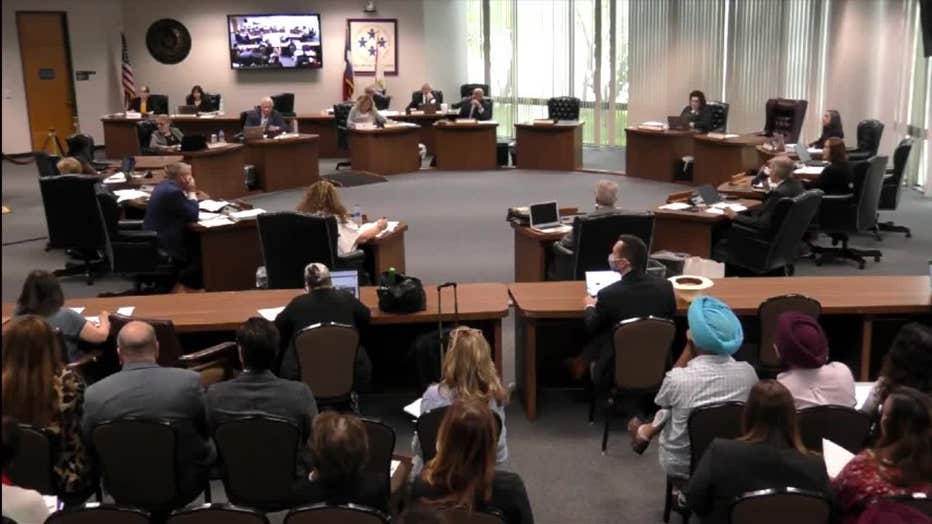
The Texas State Board of Education has voted to adopt sweeping and controversial changes to its high school social studies curriculum, which will formally take effect in 2030. The Republican-majority board approved the revisions despite strong pushback from students, educators, and civil rights groups who argued the new material portrays Islam in a negative, distorted light.
Under the finalized standards, Texas public school students will be required to learn that “radical Islam” and the “teachings of jihad” motivated the September 11 terrorist attacks, rather than focusing the instruction solely on the geopolitical extremism of Osama bin Laden and al-Qaeda.
Additionally, the newly approved framework will teach students about early Islamic history through the lens of Prophet Muhammad’s “brutal military campaigns against Jewish and Christian tribes,” as well as the “normalization and regulation of slavery” and the capture of female slaves. At the same time, the board opted not to reinstate a previously removed standard that would have taught students about Muslim contributions to fields like algebra and astronomy.
Widespread Backlash
The decision has sparked immediate backlash from the Muslim community and several curriculum experts. The Council on American-Islamic Relations (CAIR) in Texas condemned the board’s vote, stating that the decision to “single out and denigrate Islam” is an affront to the education system and the First Amendment.
During days of highly charged public testimony, Muslim students expressed fear that the new curriculum would lead to bullying and alienation. Critics point out that the language used to describe Islamic history sharply contrasts with the “neutral, descriptive standard” applied to other major world religions within the same coursework. Even some of the board’s own appointed experts warned that the claims surrounding early Islamic history lack reliable secular sourcing and do not hold up to rigorous historical scrutiny.
A Broader Push for Conservative Education Standards
State Board of Education Chair Aaron Kinsey defended the revisions, suggesting that opponents have “sensationalized” the topics to make them seem more divisive than they are. Kinsey maintained that the board worked democratically to make choices on behalf of its constituents and did an “exceptional job overall.”
The overhaul of the social studies curriculum follows a multi-year effort by conservative lawmakers and activists to reshape what Texas students learn. Earlier this year, the board approved a statewide reading list for K-12 students that includes numerous Bible passages, and in April, the Fifth Circuit upheld a Texas law requiring the Ten Commandments to be displayed in every public school classroom. Many educators argue these moves demonstrate a deliberate effort to privilege Western, Christian traditions while marginalizing minority groups and non-Western histories.