

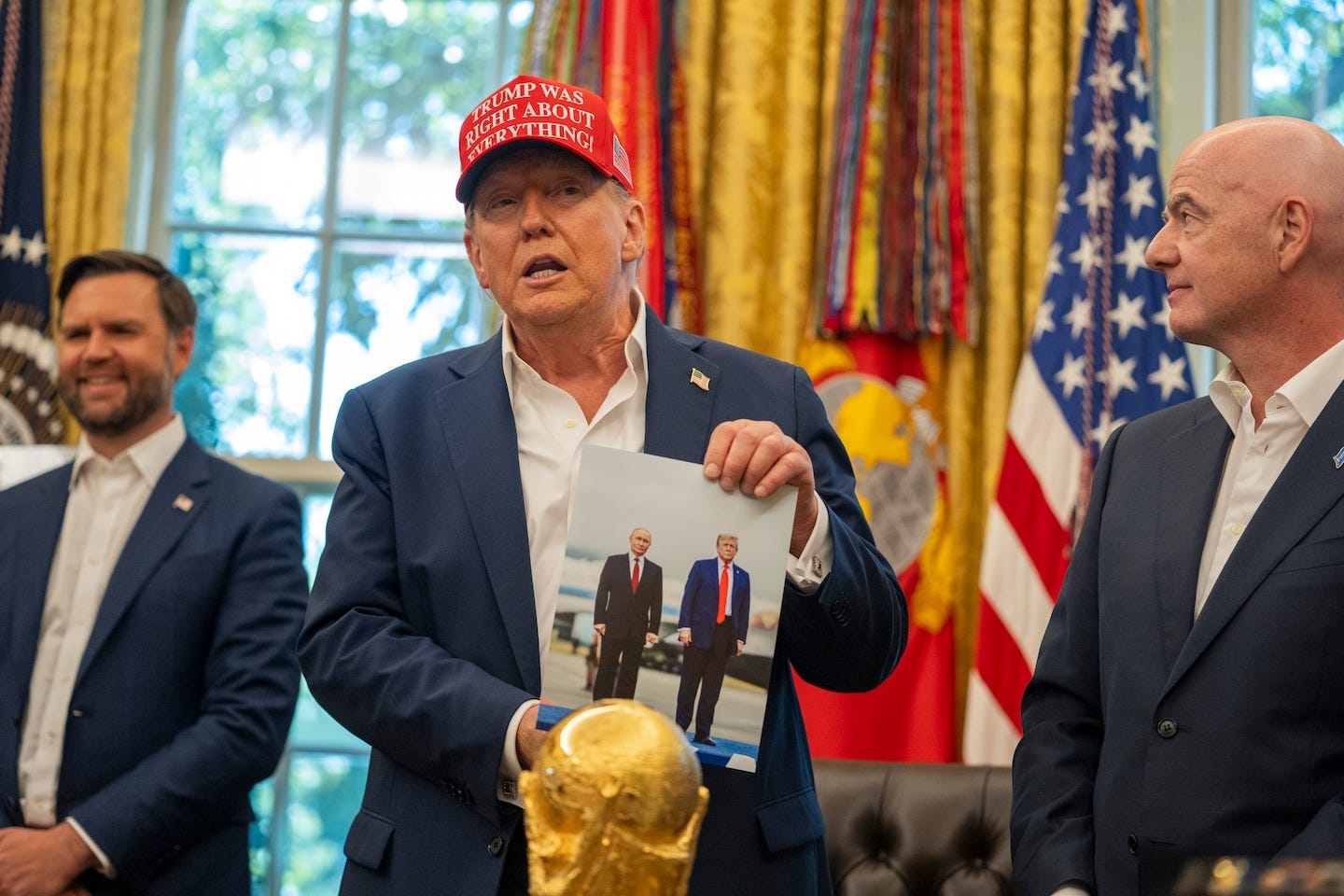
For over four years, Washington’s foreign policy establishment offered the American people only one answer to the conflict in Eastern Europe: write another multi-billion-dollar check, utter high-minded platitudes, and let the meat grinder churn on. There was no endgame, no vision for de-escalation, and zero accountability to the American taxpayer.
That era of strategic paralysis is over.
President Donald Trump’s special envoys, Steve Witkoff and Jared Kushner, recently sat down in the Kremlin with Vladimir Putin before heading directly to Kyiv. Predictably, the usual chorus of media skeptics and beltway hawks rushed to dismiss the talks as a photo-op. But if you look past the noise and examine the deliberate makeup of the American delegation, it becomes clear that the Trump administration is playing a sophisticated game of geopolitical chess grounded in cold, hard economic reality.
The Real Leverage: Gene Lange and the Art of Sanctions
The most revealing detail of the Moscow summit was not who sat directly across from Putin, but who laid the groundwork beforehand: Gene Lange, the acting sanctions czar at the U.S. Department of the Treasury.
Lange joined Witkoff and Kushner in Moscow, participating in high-level preparatory meetings with Putin’s key economic envoy, Kirill Dmitriev. While Lange did not sit in the final room with Putin himself, his presence at the negotiating table speaks volumes. It confirms what serious realists have argued for years: real peace will not be signed with empty diplomatic slogans—it will be forged through economic statecraft.
For years, the foreign policy establishment treated economic sanctions like a quasi-religious badge of honor. Sanctions were piled on indiscriminately, not as dynamic leverage to achieve a concrete objective, but as an end in themselves. The establishment forgot the cardinal rule of economic warfare: sanctions only work if they can be conditionally relieved in exchange for verifiable behavior. A sanction that can never be removed ceases to be leverage; it simply becomes a permanent barrier to negotiation.
By dispatching Lange to sit across from Dmitriev, the Trump team sent an unmistakable message to the Kremlin: America is prepared to use its ultimate trump card—its control over the global financial system—to dictate terms.
Carrots, Sticks, and Common Sense
Bringing the Treasury’s top sanctions official into early discussions with Dmitriev, who heads the Russian Direct Investment Fund and serves as Putin’s financial point man, demonstrates textbook “peace through strength.”
Here is how real dealmaking works:
The Carrot: Russian leadership desperately wants a path back to normalized commerce, unfreezing sovereign assets, and reintegration into global markets.
The Stick: The United States holds the keys to that economic gate. Lange’s direct involvement signals that sanctions relief is on the table—if, and only if, Moscow agrees to meaningful, binding concessions that secure a lasting peace and protect Ukrainian sovereignty.
The Alternative: If Moscow refuses to deal, the Trump administration knows exactly where the Russian economy is vulnerable and can dial up maximum financial pressure without hesitation.
Liberal pundits will predictably cry “appeasement” at the mere thought of discussing sanctions. But this view misunderstands the fundamental difference between weak surrender and tough-minded negotiation. Ronald Reagan did not sit down with Mikhail Gorbachev in Reykjavik to surrender; he sat down from a position of economic and military dominance to negotiate the end of the Cold War.
Putting America First
The inclusion of economic envoys and discussions around “mutually beneficial joint projects” reveals an administration focused on tangible incentives rather than perpetual hostility. With American attention and resources stretched thin—particularly as the U.S. manages tensions in the Middle East—prolonging a static trench war that risks World War III serves no American interest.
Peace is not made with friends; it is made with adversaries. By pairing seasoned business negotiators like Witkoff and Kushner with technical sanctions firepower like Lange, President Trump is proving that pragmatic, America-First diplomacy is capable of breaking the stalemates created by a decade of failed neoconservative and liberal-interventionist policies.
It’s time to stop the bloodshed, protect the American taxpayer, and let true economic leverage do the work the establishment could never accomplish.