

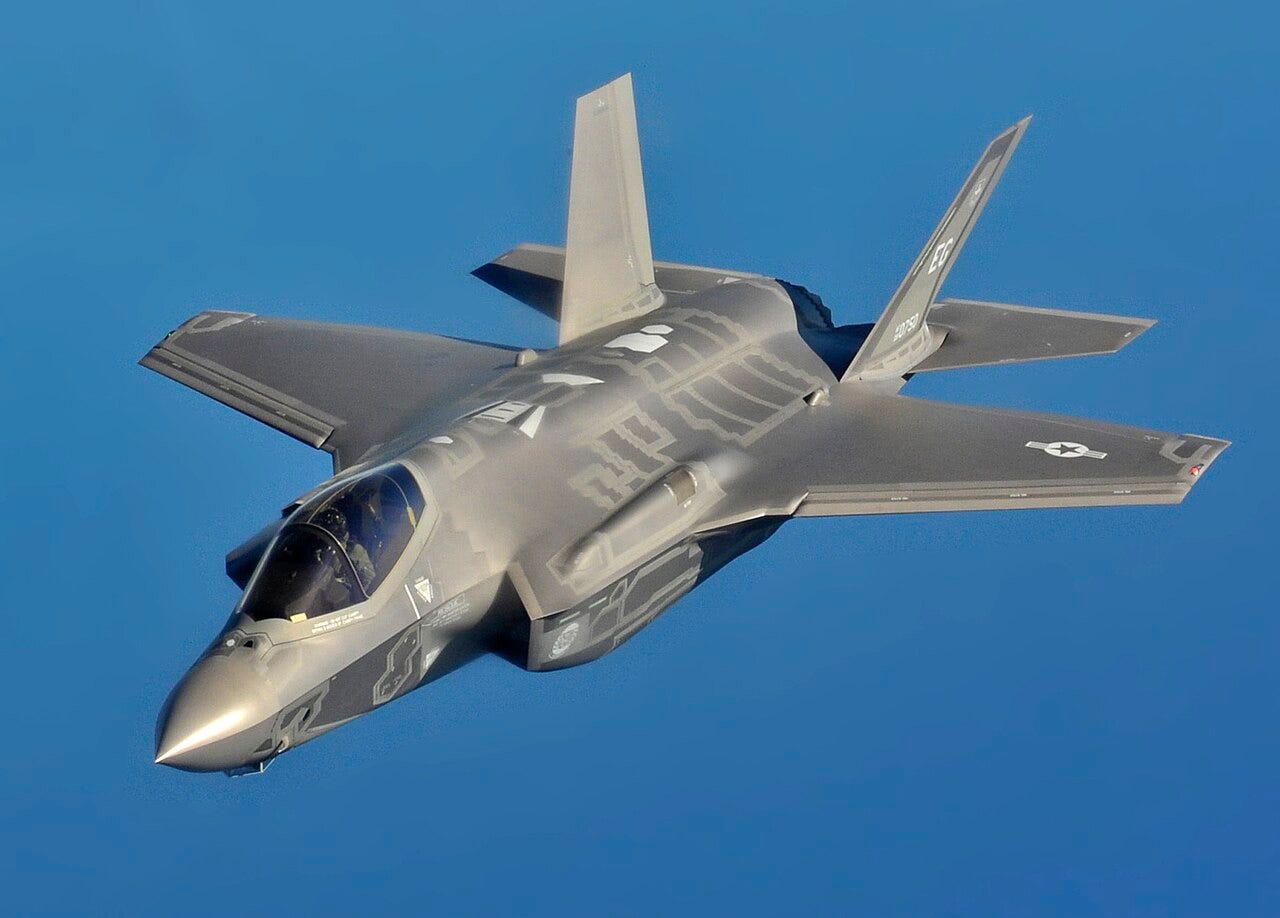
The United States spent hundreds of billions of dollars engineering a fighter jet nearly impossible for adversaries to detect, but a startling logistical failure has just handed a potential security windfall directly to China.
A shipment of unserviceable F-35 components, which departed Australia earlier this year destined for repairs in the U.S., was inexplicably diverted across the Pacific and ended up in Hong Kong. The incident, currently under investigation by the Pentagon, highlights a massive and persistent vulnerability within the global supply chain managing America’s most sophisticated weapons program.
Stealth Technology at Risk
The diverted cargo wasn’t just routine hardware. According to reports, the shipment included an F-35 cockpit canopy—a component that incorporates specialized radar-absorbing materials critical to the aircraft’s low-observable design.
This detail elevates the incident from a standard logistical headache to a potential national security crisis. If adversarial intelligence services were to examine the canopy, it could provide critical insights into the F-35’s highly classified stealth characteristics and advanced manufacturing methods.
While there is currently no public evidence indicating that the Chinese military or government officials have intercepted or examined the missing parts, the mere fact that the components wound up in a Chinese special administrative region has amplified concerns on Capitol Hill.
“The F-35 exists partly because America expects to fight technologically sophisticated adversaries capable of exploiting tiny advantages,” wrote defense analyst David Manney for PJ Media. “Its supply chain shouldn’t depend upon everyone hoping a box takes the correct turn somewhere over the Pacific.”
Key insight: The F-35 operates on a shared, global pool of spare parts managed heavily by commercial contractors, meaning sensitive components frequently cross multiple international borders for routine maintenance.
A History of Accounting Failures
Unfortunately, this isn’t the first time the F-35 program has struggled to keep track of its hardware.
The missing canopy is a symptom of a much larger, systemic issue. A 2023 report from the Government Accountability Office (GAO) revealed that since 2018, one prime contractor alone had recorded losses of over 1 million spare parts valued at more than $85 million. The GAO further noted that another 900,000 lost parts hadn’t even been reported to the F-35 Joint Program Office for review.
Because operators worldwide share a global pool of government-owned spare parts—largely managed by contractors like Lockheed Martin and transported by commercial shippers—the system often lacks the rigorous, real-time oversight required for military assets. The Joint Program Office confirmed it is dealing with the current “shipment issue” and is working to retrieve the components while implementing new safeguards.
While investigators hope the diversion to Hong Kong was simply a bureaucratic shipping error, the incident underscores a glaring irony: The U.S. military knows exactly how to make the F-35 hide from China, but it is currently struggling to find its own parts.