

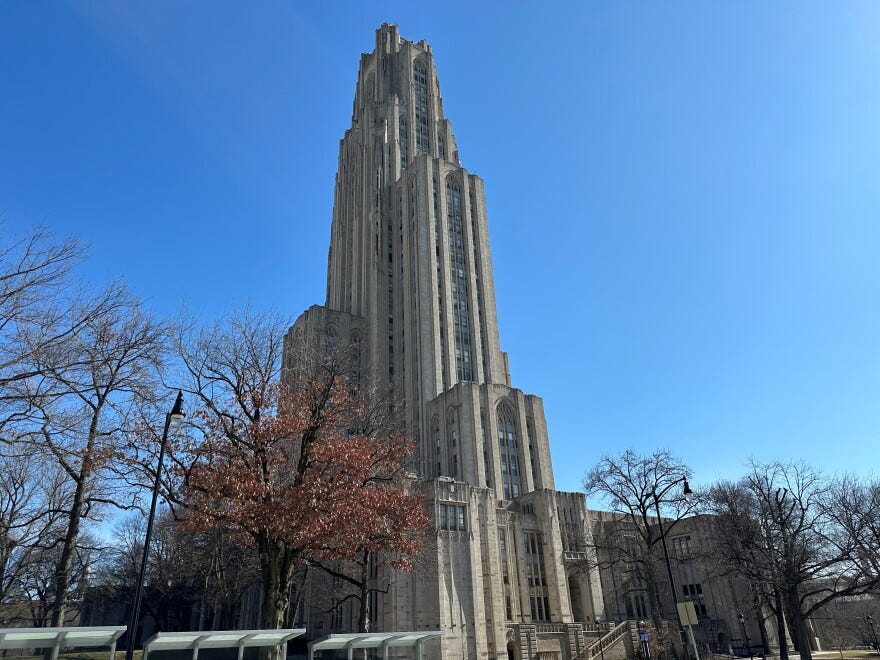
Can a university accurately assess and address antisemitism on its campus without directly consulting its Jewish student body? That is the question currently dividing the University of Pittsburgh after an internal working group published an eight-page report outlining recommendations to combat campus antisemitism—without polling or soliciting input from the school’s estimated 1,400 Jewish students.
The July report, drafted by a working group consisting of faculty and staff (including Jewish members), has faced criticism from multiple sides of the campus community. Faculty union members and progressive groups have raised concerns that some recommendations could threaten free speech and shared governance. Meanwhile, members of the campus Jewish community—including the Pitt Jewish Community affinity group—have expressed disappointment over the lack of direct consultation with Jewish students, faculty, and local Jewish organizations during the data-gathering process.
Katherine Blee, a sociologist and the faculty chair of the Pitt working group, defended the methodology, stating that the group’s specific charge from university leadership “was not to provide data” but rather to form recommendations based on the diverse perspectives of the committee members themselves. The university has already agreed to take action on the group’s suggestions, which include strengthening Title VI compliance, clarifying free speech guidelines, and creating new “Dialogue and Discourse” programming.
The publication of the brief report arrives at a tense moment for the university. Prior to the working group’s formation, two Jewish Pitt students were attacked off-campus, and the community continues to live in the shadow of the 2018 Tree of Life synagogue shooting that occurred just two miles away. As universities nationwide grapple with the best methods to protect students, critics at Pitt argue that ignoring the direct experiences of the students most affected leaves the process incomplete.